News
Inside Luxembourg: Robert Schuman and Europe Day
6 May 2026
By Isabelle Frisch-Koopmans
There are some historical figures who feel especially relevant in difficult times and Robert Schuman is one of them. Some names belong not only to history books but also to the places we pass every day and in Luxembourg his name is very much part of our everyday landscape. When we look at the conflicts and wars shaping the world today, it becomes even more important to remember why he believed Europe had to be built differently after the devastation of the Second World War and why his vision of a more peaceful Europe still matters now.
For me, that is what makes Europe Day on 9 May more than a symbolic date. Children growing up in Luxembourg are surrounded by European institutions, different languages and neighbours from many countries. The European idea did not grow out of comfort, but out of destruction, loss and the determination to prevent another catastrophe on the scale of the wars that had torn Europe apart – and Robert Schuman’s life helps explain why all of that matters, because he himself came from a world shaped by several identities at once.
And perhaps that is why Robert Schuman’s story still speaks so clearly to Luxembourg today. When we speak about one of the “fathers of Europe”, we are also speaking about someone whose life began here, in Clausen, now part of Luxembourg City: Jean‑Baptiste Nicolas Robert Schuman, born on 29 June 1886, who grew up with German citizenship in a multilingual environment, in which Luxembourgish played an important role and which would later shape his vision of reconciliation.
A life shaped by borders
Robert Schuman was born in a region where nationality and belonging were far from simple. He was born as a Reichsdeutscher in Luxembourg, his mother tongue was Luxembourgish and his upbringing brought him into close contact with German and French culture from an early age.
He studied law in Bonn, Munich, Berlin and Strasbourg. During the First World War, he worked in the German administration and after Lorraine returned to France, he became a French citizen and entered public life in French politics.
This complex background helps explain why Schuman later became such an important figure for European reconciliation. He understood from personal experience that identity in this region could be layered rather than exclusive, and that cooperation across borders was not weakness, but wisdom.
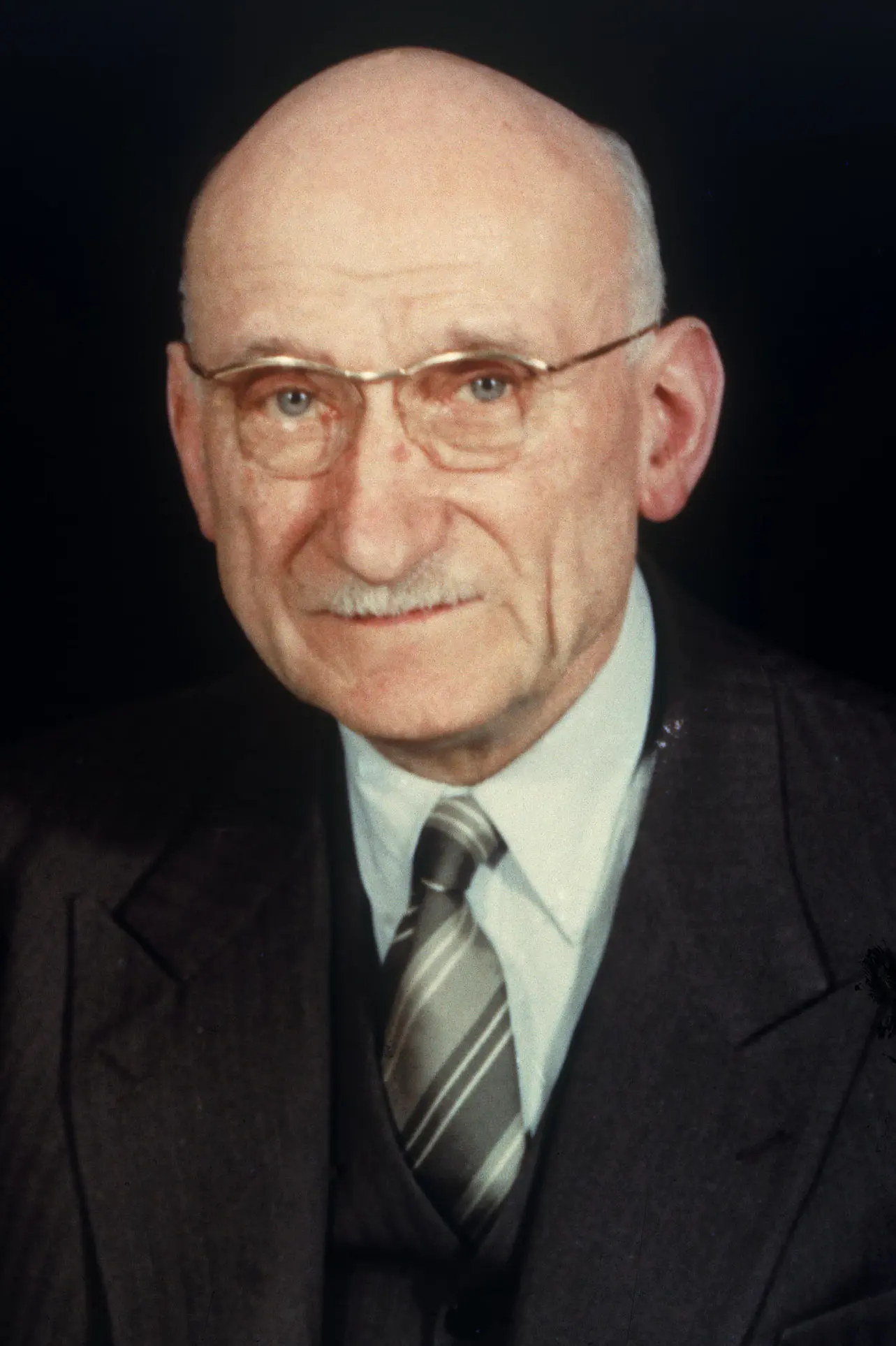
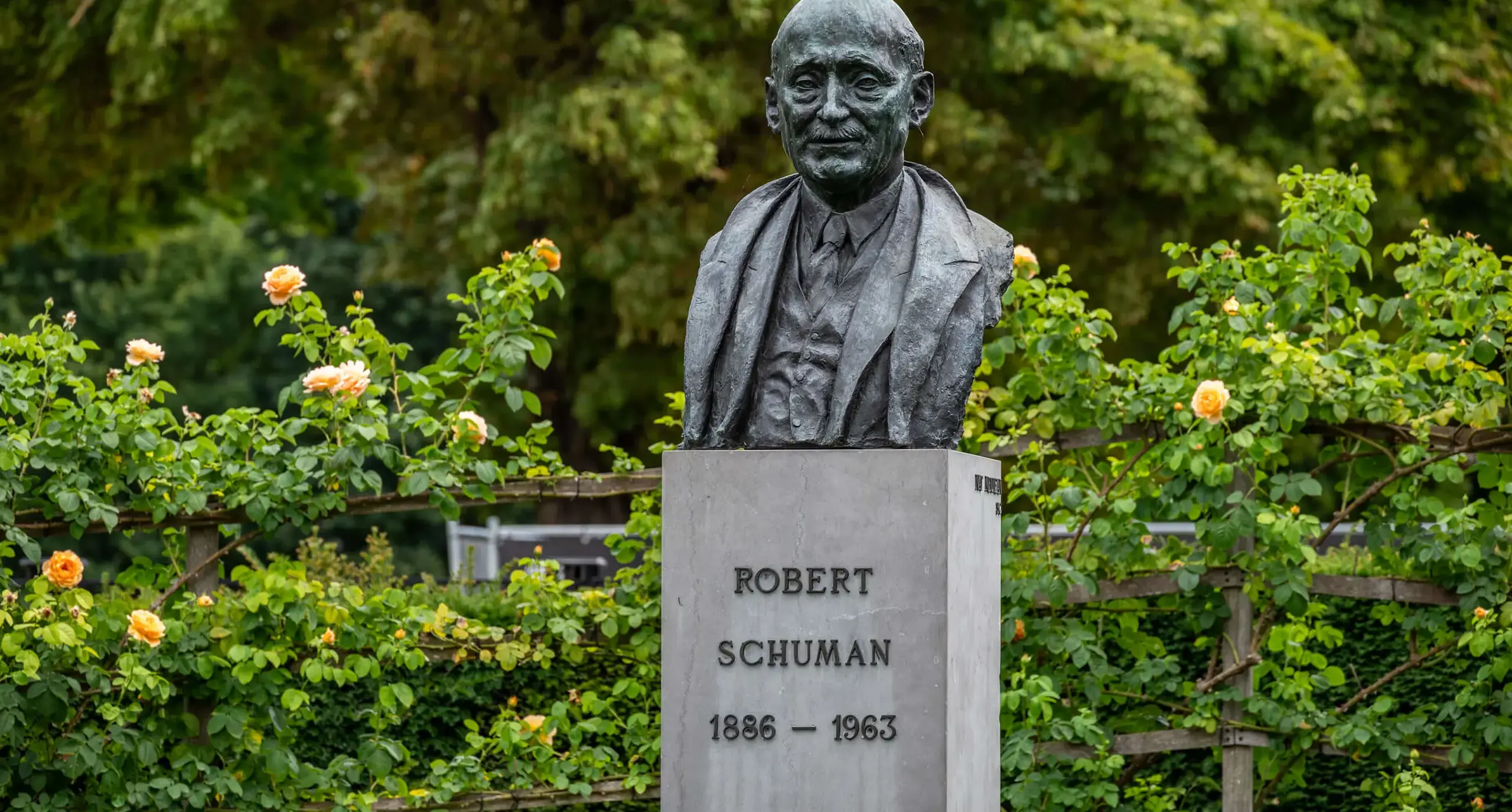
Robert Schuman © European Union
From war to peace
The first half of the 20th century left deep marks on Europe and Schuman’s life moved through both world wars. During the Second World War, he was linked to the French Resistance and after the war he became one of the political voices most committed to reconciliation between France and Germany.
He later served as French Prime Minister and, more importantly for European history, as Foreign Minister. In that role he helped prepare one of the most important declarations in modern European history.
On 9 May 1950, Schuman proposed that France and Germany place their coal and steel production under a common authority open to other European countries. This became known as the Schuman Declaration and is widely seen as the starting point of the European Coal and Steel Community, the first supranational step toward what would later become the European Union.
Why Europe Day matters
Europe Day is celebrated on 9 May because it marks the anniversary of the Schuman Declaration. The idea behind it was both practical and visionary: if the raw materials used for war were managed together, then another war between France and Germany would become “not only unthinkable, but materially impossible”.
For children, this can be explained very simply. Instead of waiting until countries become enemies again, Schuman wanted them to build trust early — by sharing responsibility, working together and creating rules that would make peace stronger.
That is also why Robert Schuman is often remembered, alongside Jean Monnet, as one of the founding fathers of the European project. He later became President of the European Parliamentary Assembly, a predecessor of today’s European Parliament, which linked his name not only to the beginning of European integration but also to the institutions that continued to grow from it.
A Luxembourg story with a European echo
For Luxembourg, Robert Schuman is not a distant European figure. He was born here, spoke Luxembourgish and his life reflects the borderland experience that so many families in this region still understand in one way or another.
This gives Europe Day in Luxembourg a very special meaning. One of the six founding states of the first European community was Luxembourg itself and one of the central figures behind the idea of European unity was born in the capital.
In this way, Europe Day is not only a date for institutions. It is also a reminder that Luxembourg, though small in size, has played a remarkable role in shaping Europe’s modern story.
Family activities
If you would like to turn this history into a real family outing, one of the most meaningful places to visit is the Robert Schuman House and Museum in Scy-Chazelles near Metz. The museum presents Schuman’s life, his home and the origins of European integration, and describes the house as a journey to the roots of Europe.
This is also the place where the story becomes especially tangible for children. Nearby stands the fortified church of Saint-Quentin, a 12th-century church that the museum describes as the place where “the father of Europe” found his final resting place.
The site also includes the “Garden without Borders”, a peaceful green space where Schuman used to rest. Together, the house, museum, church and garden create a wonderful opportunity to speak with children about peace, memory, borders and what it means to build a shared future.
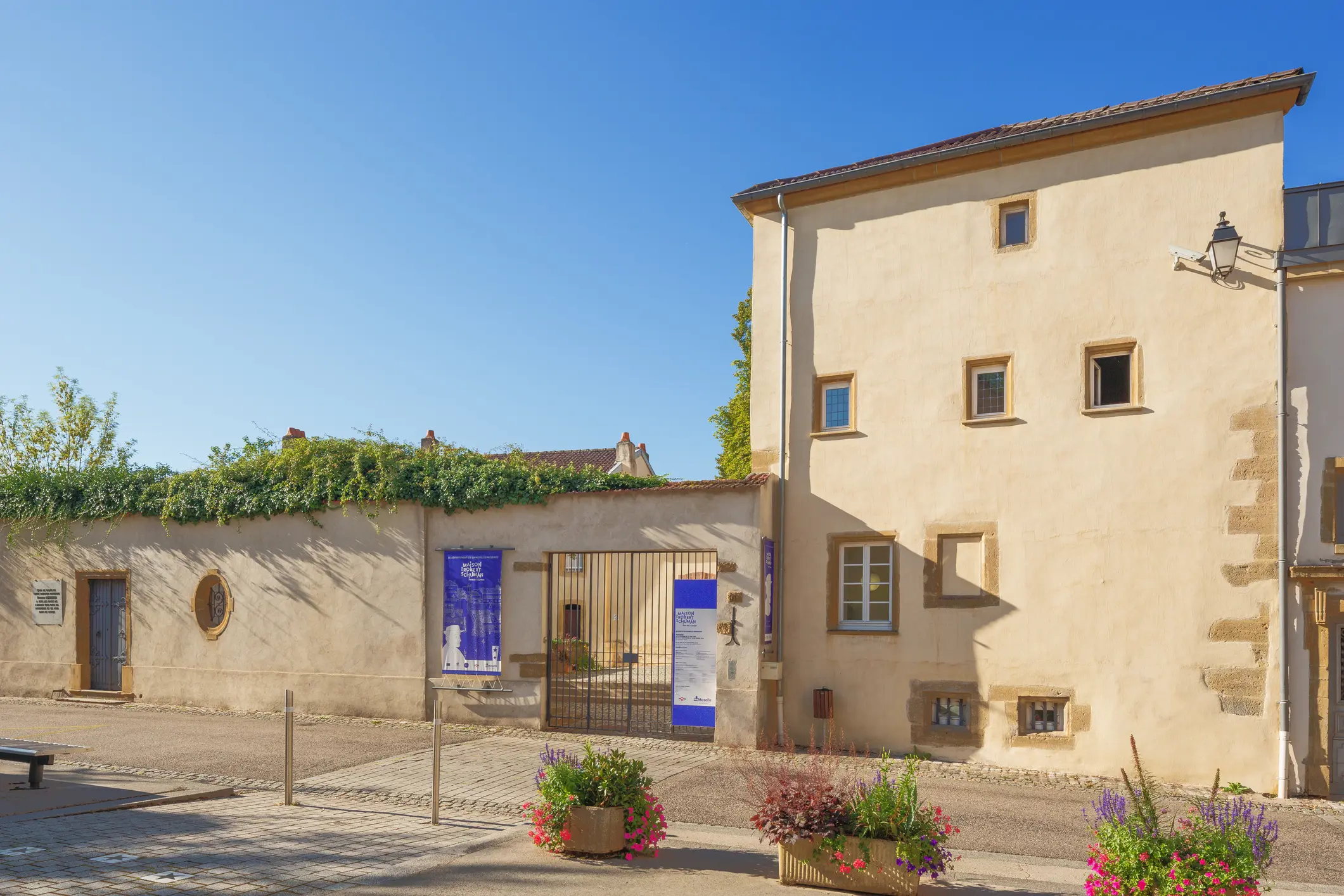
Robert Schuman House and Museum. © Vof Vermeulen Perdaen & Steyaert | Dreamstime.com
Looking for simple ways to mark 9 May with children? Here are a few ideas inspired by Robert Schuman’s story and Luxembourg’s European heritage.
- Visit Clausen or Luxembourg City and tell children that one of the best-known figures in European history was born there.
- Create a small map at home and mark the six founding countries of the European Coal and Steel Community: Luxembourg, France, Germany, Italy, Belgium and the Netherlands.
- Talk together about what countries need in order to live peacefully side by side: trust, fairness, rules and the willingness to listen.
- Plan a family visit to the Robert Schuman House and Saint-Quentin church in Scy-Chazelles and connect Europe Day to a real place.
Word of the Week
Europa-Dag – Europe Day
Phonetics: [ɔɪʀˈoːpaː daːχ]
Luxembourgish example: “Den Europa-Dag erënnert un d’Schuman-Erklärung vum 9. Mee.”
In English it means: “Europe Day commemorates the Schuman Declaration of 9th May.”
Recipe: Mini Europe picnic skewers
A simple Europe Day snack for children and families.
Ingredients
- Strawberries
- Bananas
- Blueberries
- Grapes
- Cubes of mild cheese
- Wooden skewers
Instructions
- Cut the fruit into child-friendly pieces.
- Add the cheese cubes and let children arrange colours inspired by different European flags.
- Place the skewers on a large plate and invite everyone to guess which countries the colour combinations might represent.
- Serve during a Europe Day picnic, after a city walk or before talking together about Robert Schuman and the idea of peace in Europe.
As 9 May approaches, Robert Schuman’s story feels more than historical. In a time marked once again by war, violence and deep international tensions, his message reminds us that peace must be built deliberately, patiently and courageously – especially after catastrophe.
That was the deeper reason behind his European idea. After the destruction caused by war, and especially by the Second World War, Schuman believed that Europe could not simply return to old patterns of rivalry. It had to create new forms of cooperation strong enough to protect peace.
In Luxembourg, that message feels especially close. One of the key architects of the European idea began his life here, in a small country that still shows every day how languages, histories and identities can live side by side. And perhaps, when we share Robert Schuman’s story with our children and show them what Europe Day stands for, we are already taking small steps in the same direction: helping a new generation to value peace, dialogue and living together in diversity.
Léif Gréiss,
– Isabelle
- This article is part of our “Inside Luxembourg” series, celebrating the stories, flavours and traditions that shape our local culture.
Learn more about Luxembourg
-

Inside Luxembourg: Harvest traditions and autumn flavours
October's Inside Luxembourg column by St George's Luxembourgish teacher Isabelle Frisch-Koopmans looks at the festivals, traditions and colours of autumn throughout the country.
-

Inside Luxembourg: September magic
September's Inside Luxembourg column by St George's Luxembourgish teacher Isabelle Frisch-Koopmans explores the Shueberfouer, wine festivals, Charly Gaul Randonée and offers a recipe for Gromperekichelcher.
-

Inside Luxembourg: Summer days
Inside Luxembourg with Isabelle Frisch-Koopmans this week provides an overview of summer activities grouped by age, a short preparation checklist, and two simple recipes for warm days.
-

Inside Luxembourg: Nobel Prize stories
Inside Luxembourg with Isabelle Frisch-Koopmans this week discovers two remarkable Nobel Prize laureates: Gabriel Lippmann and Jules Hoffmann.