
News
Inside Luxembourg: Fond-de-Gras and the Minett Park
13 May 2026
By Isabelle Frisch-Koopmans
There are places in Luxembourg where the landscape still remembers the sound of work. Fond-de-Gras is one of them. Today it feels peaceful, almost hidden away among green hills, but for a long time it was one of the most important mining centres in the country, tied closely to the iron ore that helped shape southern Luxembourg. That is what makes this place so fascinating for families.
At Fond-de-Gras, industrial history is not trapped behind glass. Children can ride old trains, discover how miners once moved through the region and see how a hard-working industrial valley was transformed into a place of memory, learning and adventure.
Fond-de-Gras grew in importance because of iron ore. In the late 19th century, railway lines were built to connect the mining sites near Pétange and Fond-de-Gras with the wider industrial network, making it possible to transport ore efficiently and helping the Minett region become one of the engines of Luxembourg's economic development.
For decades, this valley was part of the daily reality of miners, railway workers and their families. Underground extraction in Fond-de-Gras ended in 1955 and after a landslide in 1964 railway activity on the line came to a definitive end, marking the close of an entire industrial chapter.
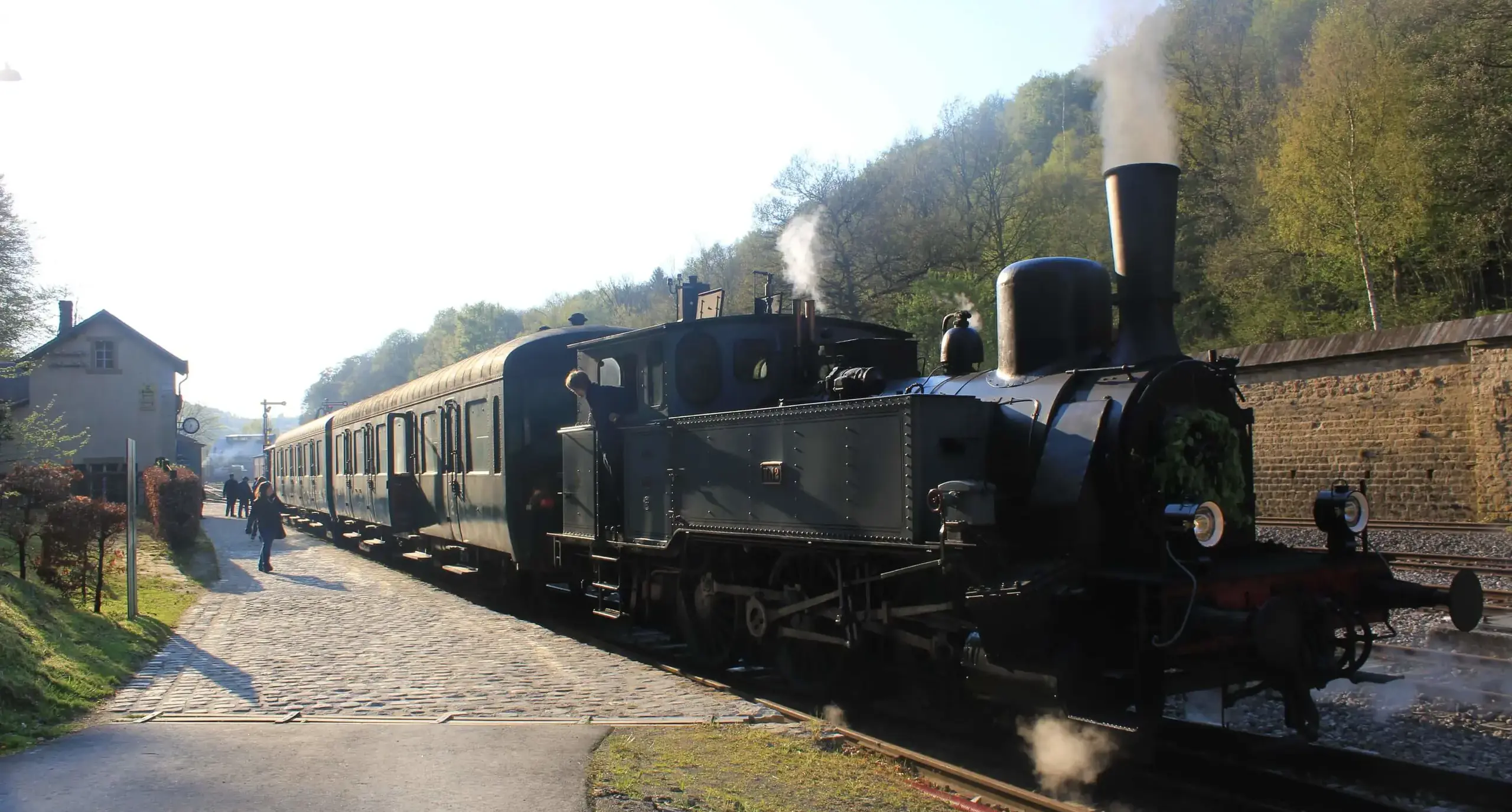
The park exists today because local volunteers chose not to let this history disappear. A few years after the mines and railway had fallen silent, volunteers began preserving part of the line so that historic trains could run again and the first Train 1900 operated in 1973.
From that effort grew today's Minett Park Fond-de-Gras, an open-air museum where the central thread is iron ore and the world built around it. The site now brings together railway heritage, mining history, industrial buildings and nearby places such as Lasauvage, allowing visitors to understand not just one train or one museum room, but an entire regional story.
What can families see at Minett Park?
One of the highlights is the Train 1900, the historic steam train linking Pétange and Fond-de-Gras along the former mining line. It gives children the rare experience of travelling in a way that connects directly to Luxembourg's industrial past, rather than simply reading about it.
Another memorable attraction is the Minièresbunn, the miners' train between Fond-de-Gras and Lasauvage, which takes visitors through the old mining environment and into a tunnel where iron ore was once extracted. In Lasauvage, families can also discover the Salle des Pendus, the Eugène Pesch museum with fossils, minerals and mining tools, and a local history museum that explains the village's past.
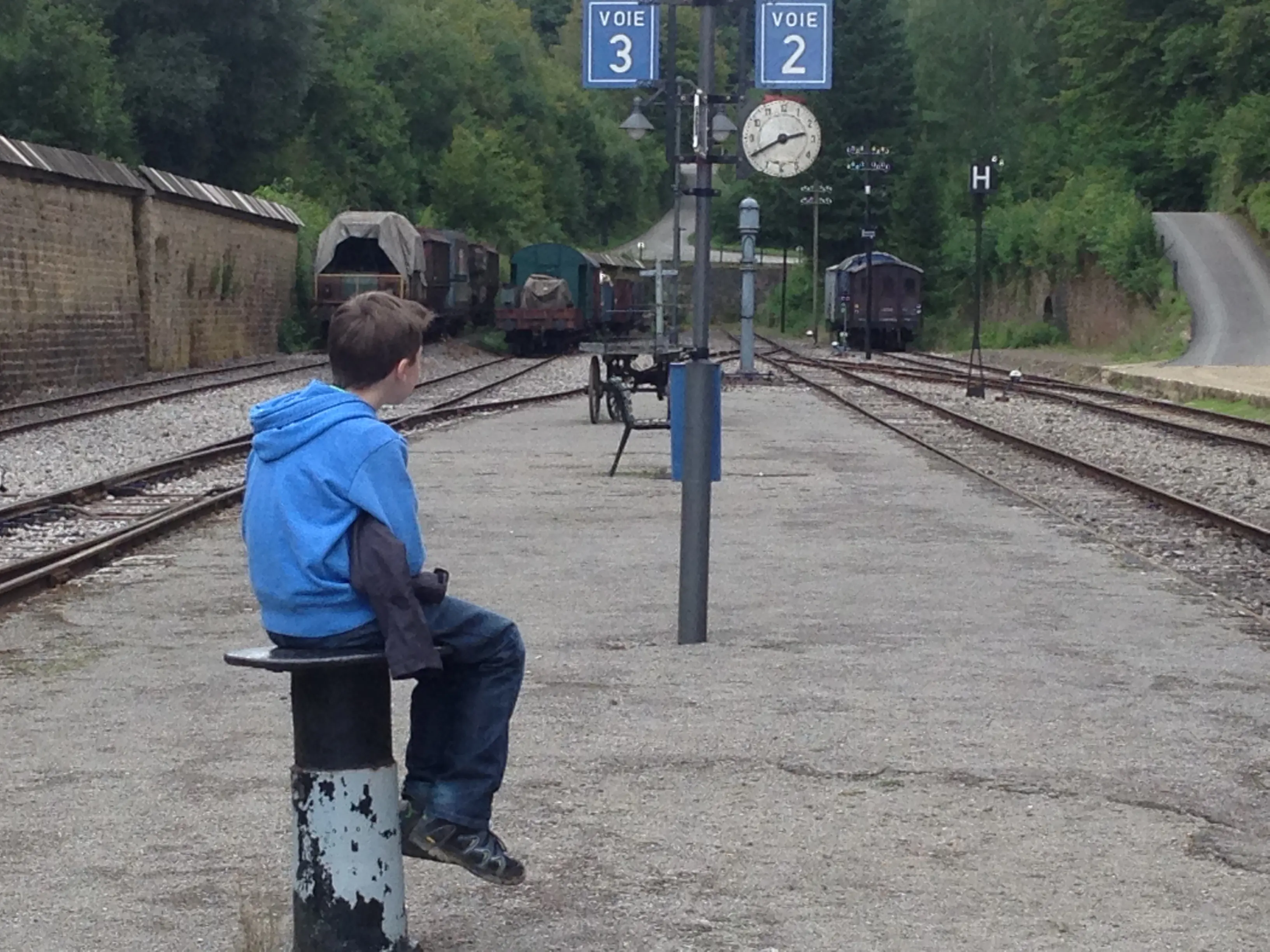
The site also includes historic buildings such as the old grocery shop, power plant areas and railway infrastructure, all of which help children imagine what everyday life once looked like in an industrial valley. What makes the visit special is the contrast: today there is quiet nature all around, yet almost every corner tells a story about labour, technology and community.
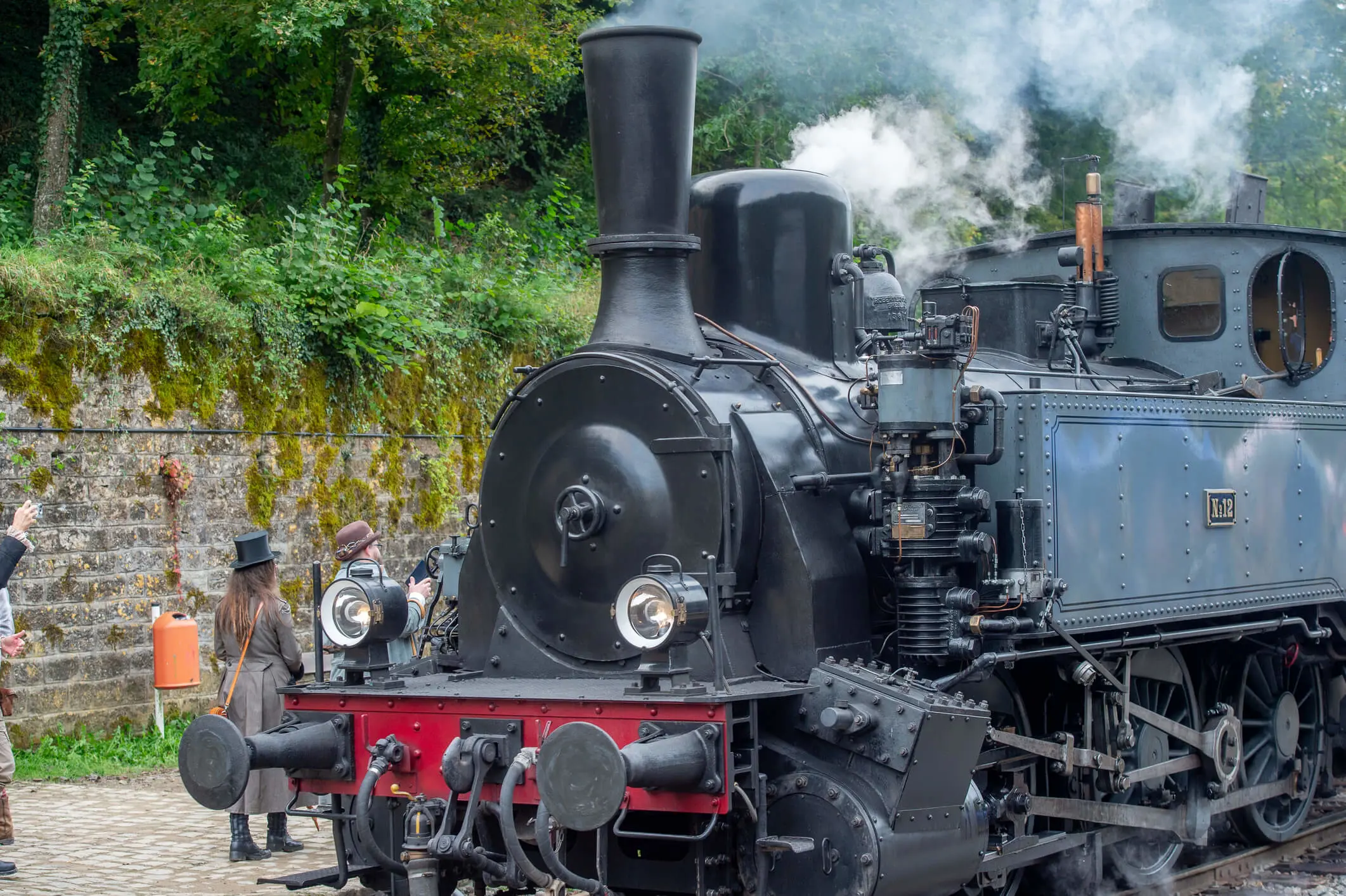
© Jean Marc Richard | Dreamstime.com
What to do with children
Fond-de-Gras works especially well for families because history and activity go hand in hand. Children can ride the steam train, take the mining train, walk between the different parts of the site, and turn the visit into a real exploration rather than a formal museum tour.
For slightly older children, Minett Park also offers holiday activities such as draisines and a smartphone-based track game with riddles and challenges for children from age seven. That mix of movement, play and discovery makes the industrial past much easier for young visitors to understand and enjoy .
A family visit can also become a conversation about change. Fond-de-Gras shows children that places do not stay the same forever: a mining centre can become a heritage park, old railways can become learning spaces, and difficult work from the past can still be honoured in meaningful ways today.
Word of the Week
Zuch – train
Phonetics: [tsuχ]
Luxembourgish example: "Mir fuere mam Zuch op de Fond-de-Gras."
In English it means: "We are going to Fond-de-Gras by train."
Recipe: Grandma Cécile's Bouneschlupp
Strictly speaking, Bouneschlupp belongs more to the green bean season, but its hearty simplicity makes it a wonderful match for a week about Fond-de-Gras and the Minett. Like the region itself, it is honest, filling and deeply connected to everyday life in Luxembourg.
And as every Luxembourgish family knows, there is one unwritten rule when it comes to Bouneschlupp: every family has its own recipe and every family is convinced that theirs is the only true one. What follows here is my grandmother's version, the one I learned by watching her cook by eye rather than by weighing everything carefully.
Ingredients
- 1 kg green beans
- 2 large onions
- 4 large potatoes
- 3 to 4 carrots
- Beef broth, enough to cover everything well
- 1 good tablespoon savory (Bounekräitchent)
- Salt and pepper
- Butter, by eye
- Wiener sausages
- Luxembourgish Mettwurst
- Cream
Instructions
First, I prepare all the vegetables in peace so that the cooking itself stays calm and easy. I clean the beans and cut them into pieces of about 1 cm. The carrots and potatoes are also cut into small cubes. I also chop the onions finely at this stage.
Then I slowly soften the onions in butter. I always do this gently, because they should become soft and fragrant rather than dark too quickly. Once the onions are ready, I add the rest of the prepared vegetables and let them sweat gently for a moment as well. Then I pour in the beef broth until everything is nicely covered.
Add the savory, a little pepper, and let the soup simmer over medium heat for about 10 to 15 minutes. If needed, a little more savory can be added later, but it is best to be careful: too much quickly becomes overpowering, so one good tablespoon is usually enough.
After that, add the Mettwurst whole and let the soup continue to simmer gently for another 20 minutes to half an hour. In fact, this is a soup that can also be left to cook slowly over a low flame after the first sweating stage; it takes longer, but it gives even more flavour.
Because Luxembourgish Mettwurst releases a lot of salt while cooking, the salt should only be added right at the end. That is how it has always been done in our family.
Finally, add the sausages whole and simply let them warm through in the soup. Then the whole pot goes on the table.
In our family, each person takes one sausage or one piece of Mettwurst, cuts it into smaller pieces on the soup plate, and then ladles the soup over it. Only at the very end does each person add a little splash of cream into their own plate. The cream can also be stirred into the whole pot, of course, but not everyone likes it, so at ours each person decides for themselves.
A small note
Since I learned this recipe from my grandmother entirely by eye, I can only give the quantities approximately and not always exactly in grams. But perhaps that is part of the charm: Bouneschlupp is one of those dishes that is passed on by watching, tasting, and adjusting along the way.
Family activity
For a lovely day out, families could take the Train 1900, continue with the Minièresbunn and then let the children look for details from the industrial past: rails, tools, workers' buildings and signs of how people once lived and worked here. Practical visitor information and an overview of the site can also be found on the official Visit Luxembourg page. In this way, the visit becomes both an outing and a small historical treasure hunt.
As spring moves toward summer and the hills of the south grow greener, Fond-de-Gras is a beautiful reminder that Luxembourg's story is written not only in castles and old city streets, but also in railway lines, mine tunnels and the lives of working families. Places like this help children understand that history is not far away at all – sometimes it is waiting in an old station, a steam engine, or a quiet valley that once helped build a whole country.
I wish you and your family a wonderful week full of discovery, curiosity and small journeys into Luxembourg's past.
Léif Gréiss,
– Isabelle
- This article is part of our “Inside Luxembourg” series, celebrating the stories, flavours and traditions that shape our local culture.
Learn more about Luxembourg
-

Inside Luxembourg: Harvest traditions and autumn flavours
October's Inside Luxembourg column by St George's Luxembourgish teacher Isabelle Frisch-Koopmans looks at the festivals, traditions and colours of autumn throughout the country.
-

Inside Luxembourg: September magic
September's Inside Luxembourg column by St George's Luxembourgish teacher Isabelle Frisch-Koopmans explores the Shueberfouer, wine festivals, Charly Gaul Randonée and offers a recipe for Gromperekichelcher.
-

Inside Luxembourg: Summer days
Inside Luxembourg with Isabelle Frisch-Koopmans this week provides an overview of summer activities grouped by age, a short preparation checklist, and two simple recipes for warm days.
-

Inside Luxembourg: Nobel Prize stories
Inside Luxembourg with Isabelle Frisch-Koopmans this week discovers two remarkable Nobel Prize laureates: Gabriel Lippmann and Jules Hoffmann.