
News
Inside Luxembourg: Echternach Hopping Procession
20 May 2026
By Isabelle Frisch-Koopmans
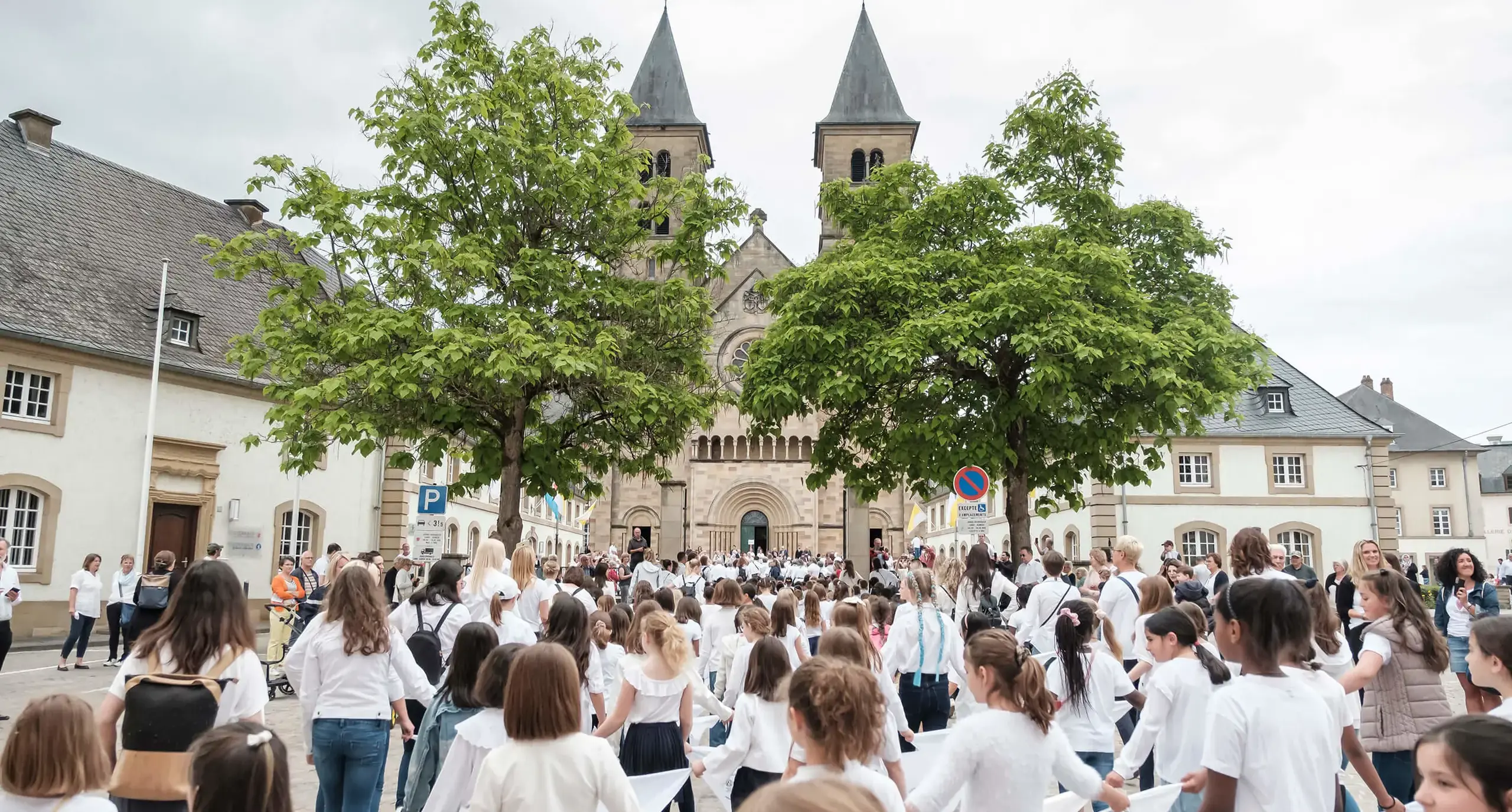
Some traditions in Luxembourg feel as if they belong not only to history, but also to the rhythm of the year itself. The Echternach Hopping Procession is one of them. Every year, on Whit Tuesday, thousands of people gather in Echternach for a ritual that is at once religious, historical and deeply rooted in Luxembourg’s cultural memory.
For me, this is one of those traditions that says so much about Luxembourg in a single image: music, movement, faith, community and a remarkable sense of continuity. Even for children who may not understand every religious detail, the procession leaves a strong impression, because it is so unusual, so solemn and yet so alive.
What is the Echternach Hopping Procession?
The Echternach Hopping Procession, or Iechternacher Sprangpressioun, takes place every year on Whit Tuesday in the old town of Echternach and leads pilgrims and visitors to the tomb of Saint Willibrord in the crypt of the basilica. It has been documented since at least the year 1100, and in 2010 UNESCO added it to the Representative List of the Intangible Cultural Heritage of Humanity.
What makes it so distinctive is its movement. Long rows of participants, often dressed in white shirts and dark trousers or skirts, move through the streets in hopping steps to a traditional tune, sometimes linked by white handkerchiefs. Seen from above, it almost looks like a single living ribbon that winds its way through the medieval town.
The procession is held in honour of Saint Willibrord, the founder of the Abbey of Echternach and the patron saint of Luxembourg. Over the centuries, people came to his tomb seeking healing, intercession and spiritual comfort, and what began as a pilgrimage gradually developed into the special form of procession for which Echternach is now known.
Its exact origins are still discussed by historians, which makes the tradition even more fascinating. UNESCO and regional sources point out that the practice has very deep roots, with different phases and influences over time, including connections to older forms of processions and popular piety in the region.
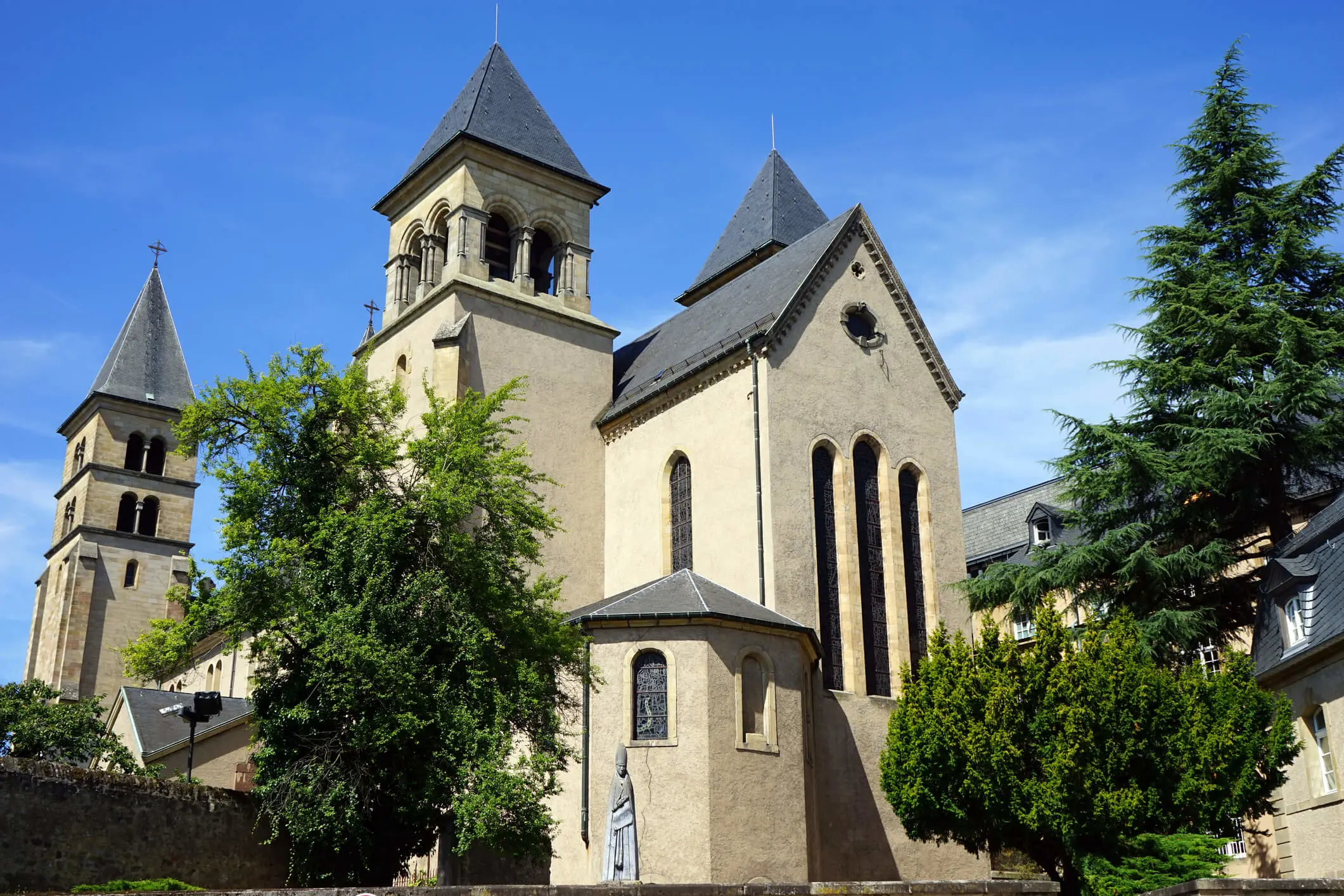
Basilica of Saint Willibrord © Valery Shanin | Dreamstime.com
Willibrord and the scriptorium
Willibrord was an Anglo-Saxon missionary, born around 658, who founded the abbey in Echternach in 698 and died in 739. He played an important role in the Christianisation of the region, and after his death his tomb became a place of devotion that shaped the town’s identity for centuries.
Soon after the foundation of the monastery, a scriptorium was established in Echternach. There, monks wrote and illuminated books for religious services and for the monastic school, and in the 8th and 11th centuries the Echternach scriptorium produced some of the most beautiful manuscripts in Europe. Today, the Abbey Museum presents high-quality facsimiles of famous works such as the Codex Aureus Epternacensis, alongside displays on the life and cult of Willibrord and archaeological remains from the abbey’s long history.
The Documentation Centre about the Hopping Procession, located near the basilica, complements this story. It shows paintings, texts, maps, photos and films that explain the history and organisation of the procession, as well as devotional objects and funerary monuments from the former abbey, helping visitors understand how the procession and the basilica belong together.
The legend of Long Veit
Like many old traditions, the Echternach procession also lives in stories and legends. One of the most famous is the legend of Long Veit.
According to this tale, a young man called Veit lived in Echternach many centuries ago. After converting to Christianity, he set off on a long pilgrimage. When he finally returned years later, his life had been shattered and his relatives had secretly shared out his belongings.
Accused of a crime he had not committed, Veit was sentenced to death. As a last request, he asked to be allowed to carry his strange violin with him. On the way to the gallows, he began to play – and something extraordinary happened. The townspeople started to dance and could not stop. Even the officials and the executioner were drawn into the wild dance, while Veit slipped away.
According to the legend, the people of Echternach were only freed from this dancing mania when Saint Willibrord intervened and broke the spell. Some say that this story of Veit and the unstoppable dancing later helped inspire the idea of a special hopping procession in Echternach, a ritual that would transform uncontrolled movement into a structured, prayerful form of worship.
Whether or not this is historically exact, it is a powerful image: a town that remembers both miracle and excess, and a saint who turns chaos into rhythm and prayer.
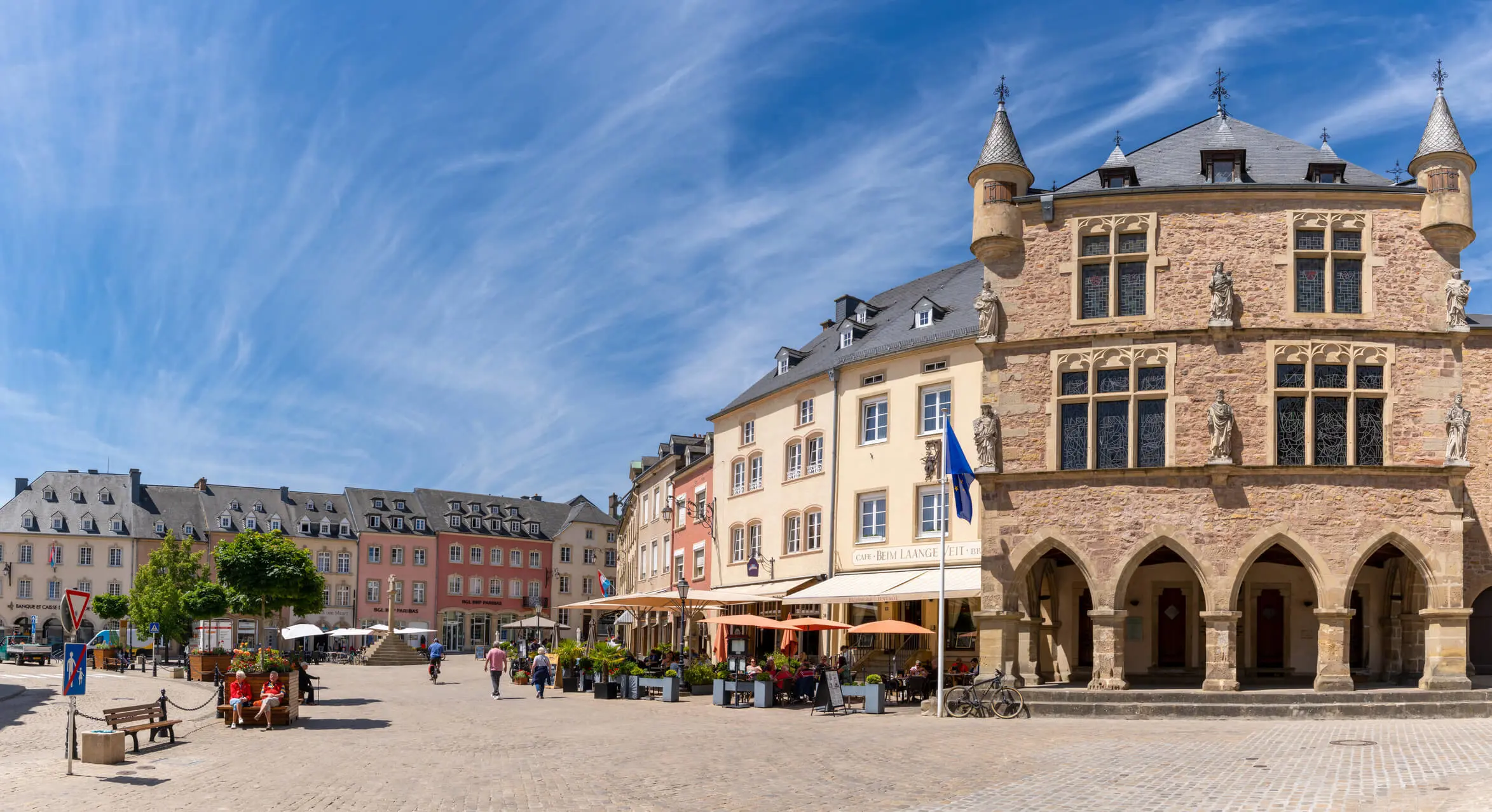
Echternach's historic city centre © Makasanaphoto | Dreamstime.com
Family ideas
If you would like to bring this topic closer to children, Echternach offers several wonderful starting points. Families can visit the basilica and the crypt of Saint Willibrord, explore the Abbey Museum to discover the old manuscripts of the scriptorium, and stop by the Documentation Centre to understand why the procession still matters so much today.
For children, it can also be beautiful to connect the visit with the legend of Long Veit. In that way, the day becomes more than a history lesson: it becomes a journey through ritual, music, story and memory in Luxembourg’s oldest town, where the past still walks through the streets every Whit Tuesday.
Word of the Week
Sprangpressioun – dancing procession
Phonetics: ʃpʀɑŋpʀɛsi̯oːn
Luxembourgish example: D’Sprangpressioun zu Iechternach ass eng al Traditioun.
In English it means: The dancing procession in Echternach is an old tradition.
Recipe: Simple pilgrim sandwiches
Since this week is so closely connected to pilgrimage, walking and time spent together in Echternach, a very simple family picnic fits beautifully here. Soft bread rolls, slices of cheese, cucumber, tomato and a little butter are often all that is needed for a meal that children can help prepare themselves.
You can pack them easily for a day trip, eat them by the lake or after a museum visit, and keep the focus on the outing itself. Sometimes the simplest food suits a meaningful day best.
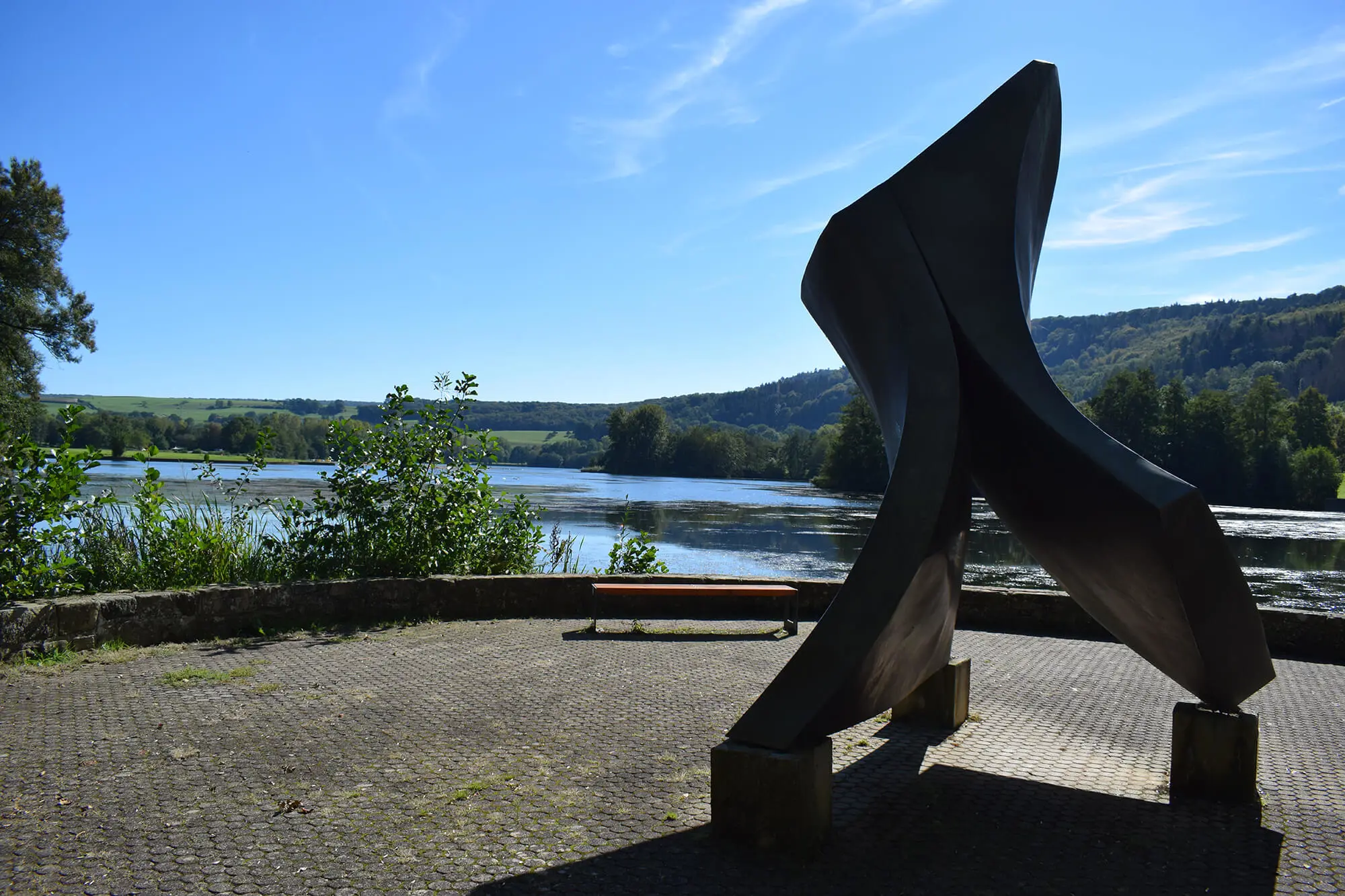
Sculpture at Echternach Lake © Markusvolk | Dreamstime.com
As Whit Tuesday approaches, the Echternach Spring Procession reminds us that Luxembourg’s traditions are not only preserved in books and museums, but also in movement, music and the footsteps of people who return year after year. It is one of those rare customs that still allows children and adults alike to feel that history is not finished, but still gently unfolding around them.
I wish you and your family a peaceful and inspiring week, full of stories, discovery and small moments of wonder.
Léif Gréiss,
– Isabelle
- This article is part of our “Inside Luxembourg” series, celebrating the stories, flavours and traditions that shape our local culture.
Learn more about Luxembourg
-

Inside Luxembourg: Harvest traditions and autumn flavours
October's Inside Luxembourg column by St George's Luxembourgish teacher Isabelle Frisch-Koopmans looks at the festivals, traditions and colours of autumn throughout the country.
-

Inside Luxembourg: September magic
September's Inside Luxembourg column by St George's Luxembourgish teacher Isabelle Frisch-Koopmans explores the Shueberfouer, wine festivals, Charly Gaul Randonée and offers a recipe for Gromperekichelcher.
-

Inside Luxembourg: Summer days
Inside Luxembourg with Isabelle Frisch-Koopmans this week provides an overview of summer activities grouped by age, a short preparation checklist, and two simple recipes for warm days.
-

Inside Luxembourg: Nobel Prize stories
Inside Luxembourg with Isabelle Frisch-Koopmans this week discovers two remarkable Nobel Prize laureates: Gabriel Lippmann and Jules Hoffmann.