News
Inside Luxembourg: Nobel Prize stories
24 June 2026
By Isabelle Frisch-Koopmans
Some discoveries change the way we see the world. Others change the way we live in it. Luxembourg, though small, is connected to both kinds of discoveries through two remarkable Nobel Prize laureates: Gabriel Lippmann and Jules Hoffmann. Their stories unfold across different centuries and scientific fields, yet they share something essential: curiosity, patience and the determination to understand how the world works.
For families, these stories offer a beautiful opportunity to explore science not as something distant or abstract, but as something deeply human — shaped by questions, imagination and perseverance.
Gabriel Lippmann: Capturing Light
Gabriel Lippmann was born on 16 August 1845 in Hollerich, near Luxembourg City, into a Jewish family. His father ran a glove-making business, but when Gabriel was still young, the family moved to Paris in 1848. At first, Lippmann was taught at home by his mother before entering the Lycée Napoléon (today Lycée Henri-IV). He was not considered a particularly attentive student, but he was thoughtful and showed a strong interest in mathematics.
Later, he was admitted to the prestigious École Normale Supérieure. Interestingly, he did not follow the traditional path into teaching: he failed the agrégation exam, which would normally have allowed him to become a schoolteacher. Instead, he continued to focus on physics and research. This makes his later career even more remarkable: he went on to become a professor at the Sorbonne, not because of a standard teaching qualification, but because of his scientific achievements.
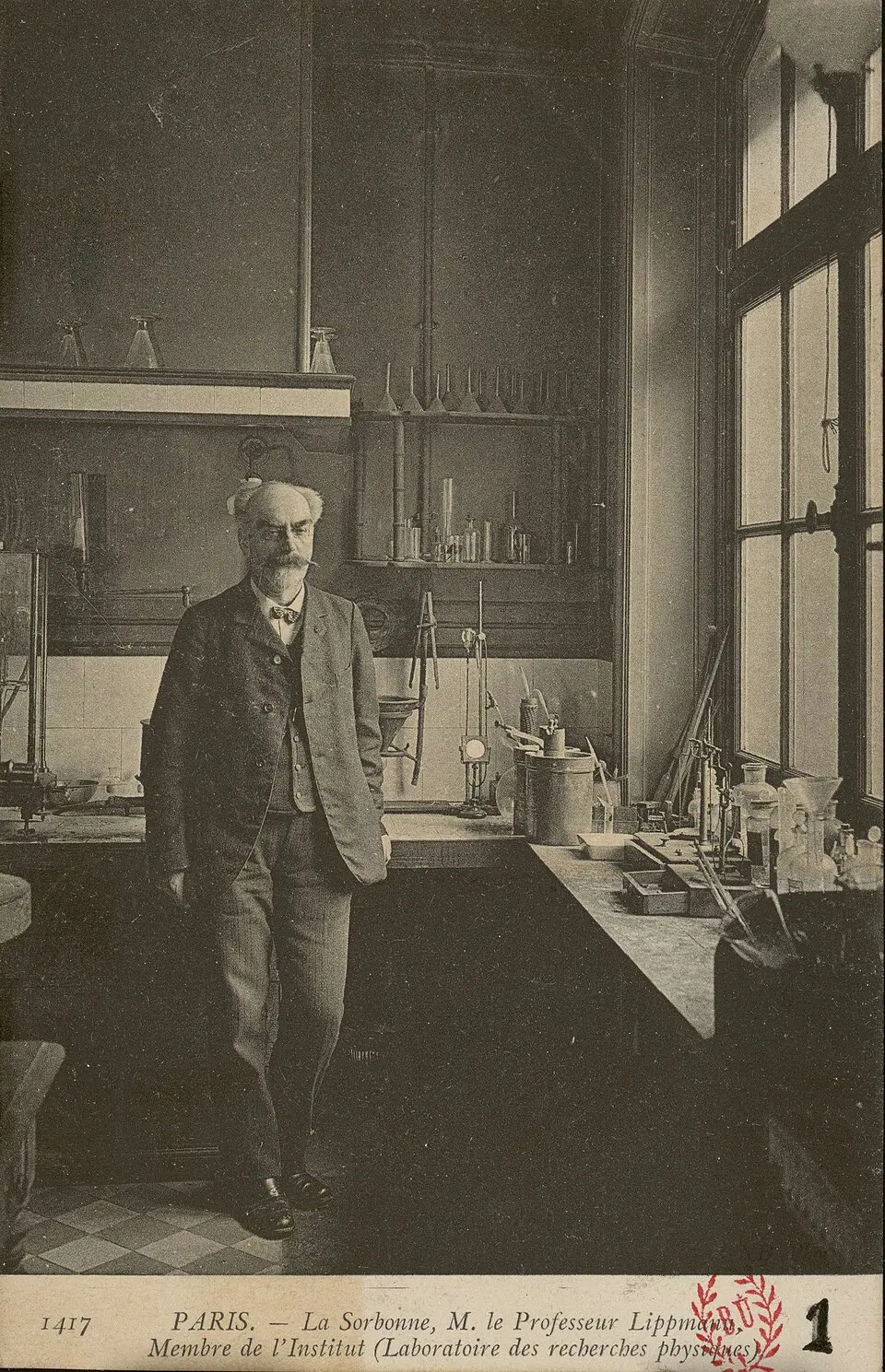
Professor Lippmann in the physics research laboratory at the Sorbonne | Wikimedia Commons
His most famous discovery was something both scientific and surprisingly poetic: he developed a method to capture colour in photography without pigments.
At a time when photographs were mostly black and white, Lippmann found a way to use interference of light waves to reproduce colours exactly as they appear in nature. Instead of adding colour, he let light itself create the image.
For this discovery, he was awarded the Nobel Prize in Physics in 1908.
Why this mattered
Lippmann’s work helped scientists better understand optics and wave physics, and his method showed that colour could be recorded through the very structure of light. Although his technique was complex and not widely used in everyday photography, it remains one of the most elegant scientific approaches to capturing colour.
Fun fact
Lippmann was known for his meticulous and quiet personality. His experiments required extreme precision – sometimes taking long exposure times – which meant he needed both patience and an almost artistic sensitivity to light.
Jules Hoffmann: Understanding Immunity
More than a century later, another Luxembourg-born scientist would explore a very different question: How does the body defend itself against infection?
Jules Hoffmann was born on 2 August 1941 in Echternach. He grew up in Luxembourg before studying biology in France, where he later built his scientific career. Hoffmann specialised in immunology, the study of how living organisms protect themselves from bacteria, viruses and other threats.
For many years, scientists believed that complex immune responses belonged mainly to higher organisms. Hoffmann changed this understanding through his research on insects, particularly fruit flies. He discovered that even these small organisms have a powerful innate immune system – a rapid, built-in defence mechanism that recognises and fights infections.
For this groundbreaking work, he was awarded the Nobel Prize in Physiology or Medicine in 2011.
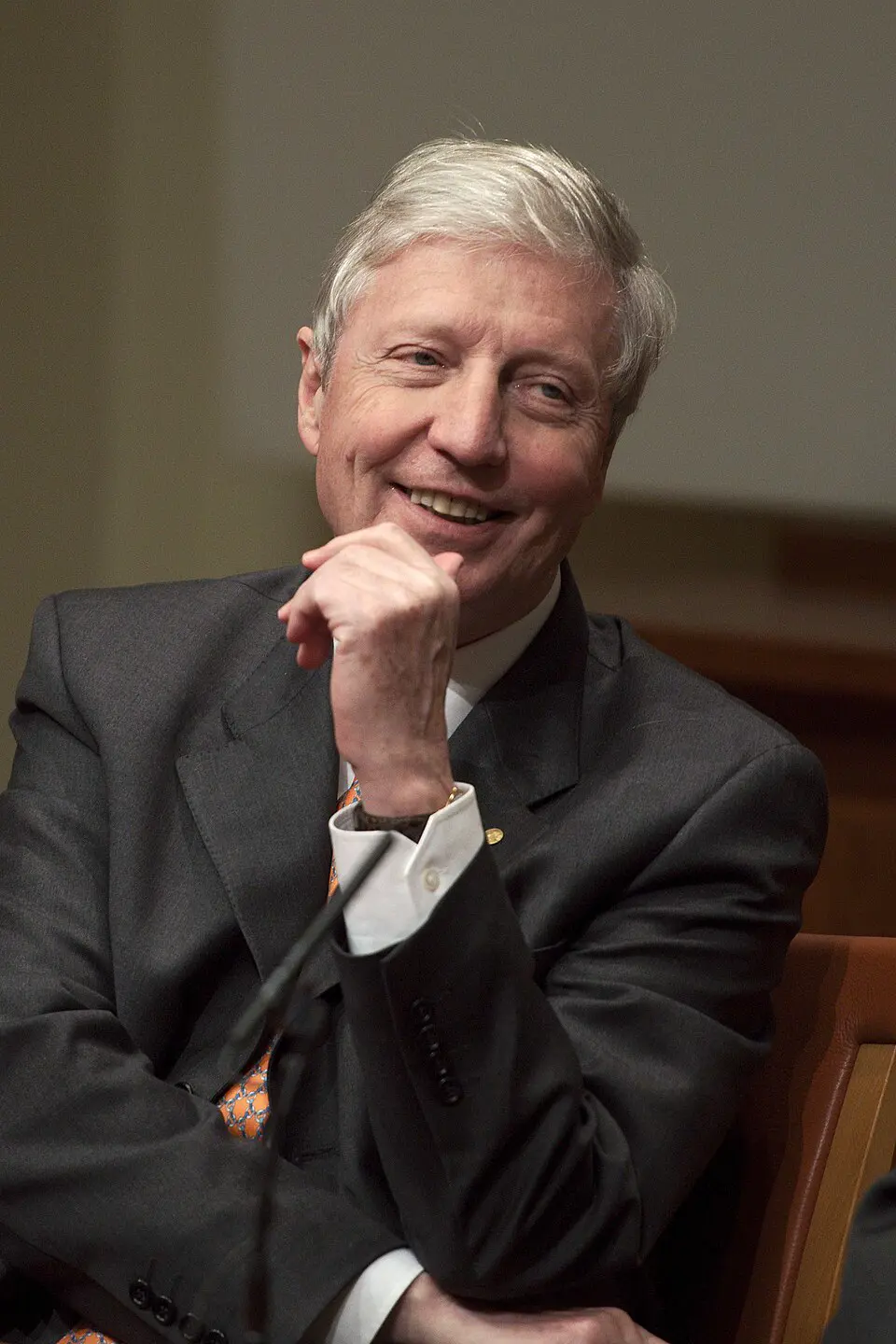
Nobel Prize 2011 press conference with the laureates of the Nobel prize in Physiology or Medicine, Jules Hoffmann | Wikimedia Commons
Why this mattered
Hoffmann’s discovery helped scientists understand the first line of immune defence, which is also present in humans.
His work has influenced modern research in:
- infectious diseases
- immunotherapy
- vaccine development
In simple terms, he helped explain how our bodies know when something is wrong – and how they react so quickly to protect us.
Fun fact
Although his research involved tiny insects, its impact reached global medicine. Hoffmann himself often emphasised how big discoveries can come from very small models, reminding students that size does not limit importance.
Two stories, one connection
At first glance, Lippmann and Hoffmann worked in completely different worlds: one studied light, the other life.
Yet both asked fundamental questions:
- How do we see the world?
- How do we survive in it?
Their Nobel Prizes – in 1908 and 2011 – show how Luxembourg’s scientific legacy stretches across generations, linking physics, biology and human curiosity.
For children, these stories open gentle but powerful reflections:
- How do colours exist?
- How does the body protect itself?
And how can one idea change the way we understand everything around us?
Recipe Corner: Rainbow Fruit Cups
On a warm day, science can move from the laboratory to the kitchen. This no-cooking recipe invites children to explore colours, layers and observation – just like a small scientific experiment inspired by Lippmann’s interest in light.
Ingredients
- Strawberries (red)
- Mango or peach (orange/yellow)
- Kiwi (green)
- Blueberries (blue/purple)
- Yogurt or plant-based yogurt
- Honey (optional)
- Clear cups or glasses
Instructions
- Wash and cut the fruit into small pieces.
- Take a clear cup so you can observe the layers, just like a scientist observing an experiment.
- Add the fruit in layers to create a rainbow effect:
- red → orange → yellow → green → blue
- Add a layer of yogurt on top.
- Drizzle with a little honey if you like.
What to observe
- How do the colours look when stacked together?
- Do they mix, or stay separate?
- How does light pass through the layers in the cup?
This simple activity connects beautifully to Lippmann’s work on light and colour, while the fresh fruit reminds us, in Hoffmann’s spirit, of keeping our bodies strong and healthy.
Word of the Week
Entdeckung – discovery
Phonetics (LOD): [æntdˈækuŋ]
Luxembourgish example: „Eng Entdeckung kann d’Welt veränneren.“
In English it means: “A discovery can change the world.”
The stories of Gabriel Lippmann and Jules Hoffmann remind us that science often begins with curiosity – with someone asking why or how and following that question further. Between light and life, physics and biology, these two Luxembourgish Nobel laureates show that even a small country can be connected to ideas that travel far beyond its borders. Perhaps this week brings a moment of discovery at home – in a question, a colour, or even in a simple experiment shared together.
Léif Gréiss,
– Isabelle
- This article is part of our “Inside Luxembourg” series, celebrating the stories, flavours and traditions that shape our local culture.
Learn more about Luxembourg
-

Inside Luxembourg: Harvest traditions and autumn flavours
October's Inside Luxembourg column by St George's Luxembourgish teacher Isabelle Frisch-Koopmans looks at the festivals, traditions and colours of autumn throughout the country.
-

Inside Luxembourg: September magic
September's Inside Luxembourg column by St George's Luxembourgish teacher Isabelle Frisch-Koopmans explores the Shueberfouer, wine festivals, Charly Gaul Randonée and offers a recipe for Gromperekichelcher.
-

Inside Luxembourg: Summer days
Inside Luxembourg with Isabelle Frisch-Koopmans this week provides an overview of summer activities grouped by age, a short preparation checklist, and two simple recipes for warm days.
-

Inside Luxembourg: Nobel Prize stories
Inside Luxembourg with Isabelle Frisch-Koopmans this week discovers two remarkable Nobel Prize laureates: Gabriel Lippmann and Jules Hoffmann.