
News
Inside Luxembourg: Energy and vineyards in Rosport
3 June 2026
By Isabelle Frisch-Koopmans
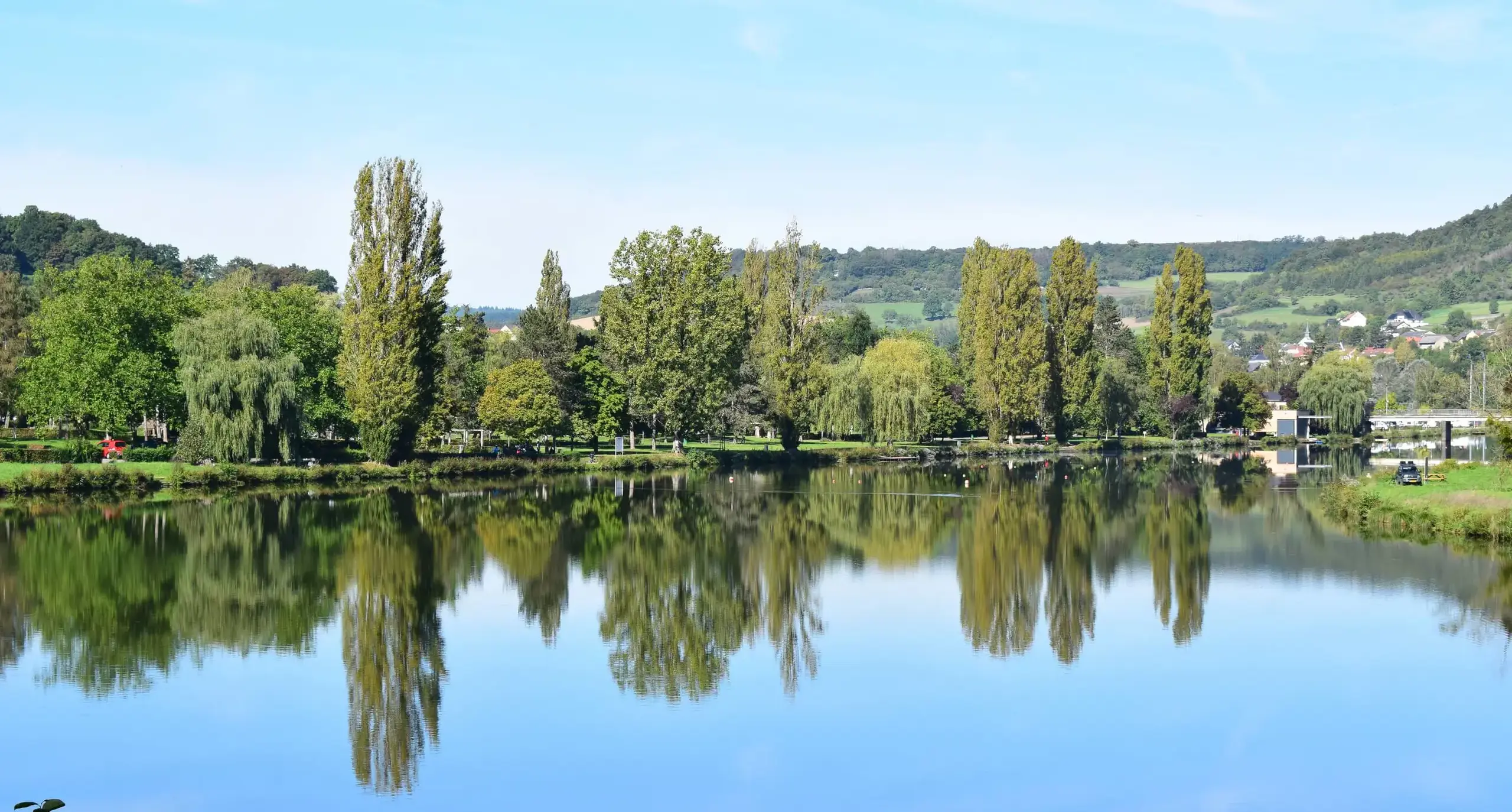
Some places in Luxembourg seem to bring together invention and landscape in a single setting and Rosport is one of them. Between the Sauer, the parkland, the vineyards on the Hëlt and the castle associated with Henri Owen Tudor, this quiet village tells a story not only about electricity, but also about family life, nature and the long continuity of local memory.
For families, Rosport can become a day where energy is not an abstract idea, but something you can encounter in buildings, paths, water and play. A visit to the Tudor Museum, the playground, the Hëlt and the little doll’s house behind the museum and the commune buildings allows children and adults alike to move between technology, landscape and imagination.
Who was Henri Tudor?
Henri Owen Tudor was born on 30 September 1859 on the Diesburgerhof near Ferschweiler and died on 31 May 1928 in Rosport. He is remembered as a Luxembourgish engineer, inventor and industrialist who developed the first commercially practical lead-acid accumulator and helped make the storage of electrical energy reliable enough for everyday use.
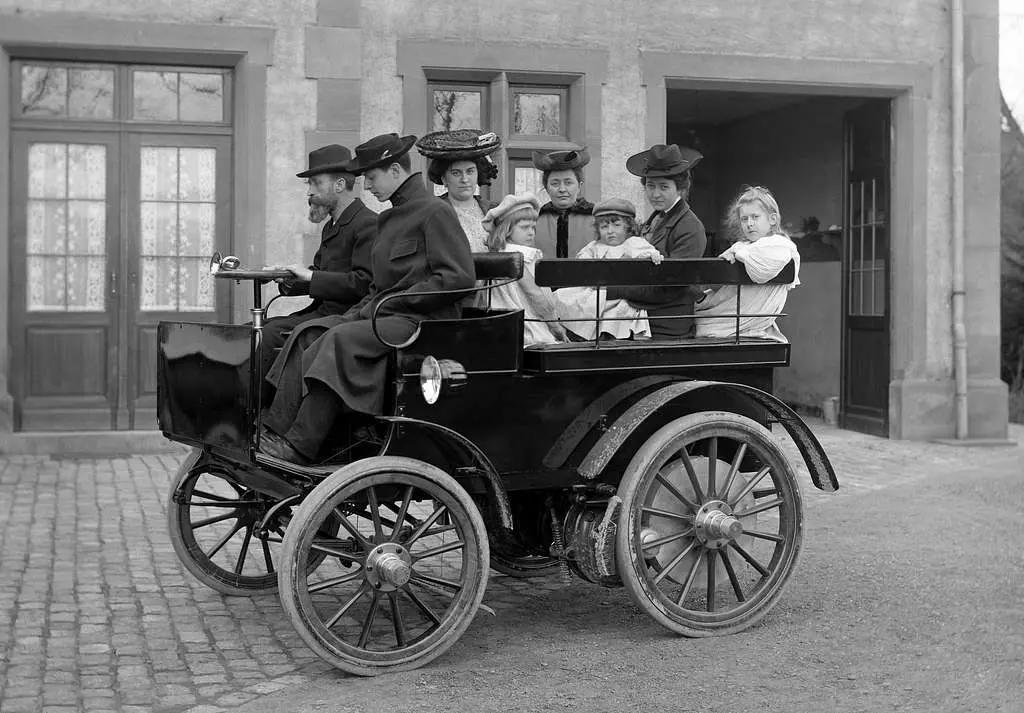
Henri Tudor at the wheel of his Break automobile, manufactured around 1902 and equipped with Tudor lead-acid batteries.
His family background already linked Rosport to a wider world. His father John Thomas Tudor came from Britain and is described in local historical writing as descending from a Welsh noble family, while his mother Marie Loser came from Rosport itself. Henri Tudor’s story therefore begins between English or Welsh family roots and a deeply rooted Luxembourgish local environment.
Henri studied engineering at the École Polytechnique in Brussels after earlier schooling in Chimay, and he also attended lectures on industrial electricity in Paris. This international formation helps explain why someone working from a small Luxembourg village could nevertheless shape a technology of global importance.
Family, marriage and the two residences
In 1891, Henri Tudor married Marie-Madeleine Pescatore. Their family life soon became connected with the estate, the park and the new residence in Rosport, where scientific work and domestic life stood very close to one another.
Before the castle became the family’s main home, Tudor carried out important early experiments at the Irminenhof in Rosport. There, he linked a dynamo to the waterwheel of the Bannmühle and used accumulators to power Edison lamps, making the property one of the earliest private homes in Europe with permanent electric lighting.
Around 1892, he had the new castle in Rosport built as a family residence. This later home, known today as Schloss Tudor, is the building that now houses the Tudor Museum as well as the Communal Administration and is usually the place visitors associate most directly with Henri Tudor.
The contrast between the older Irminenhof and the newer castle is especially meaningful. One speaks of experiments, mills and early electrical improvisation; the other speaks of family life, representation, a landscaped park and the more settled world of an inventor whose ideas had already begun to spread.
The museum, the park and the doll’s house
The Tudor Museum has been housed in the castle since 2009 and presents Henri Tudor’s life and work through a combination of interactive stations and more traditional displays. It is one of those museums where families can move between hands-on discovery and historical reflection without feeling that one excludes the other.
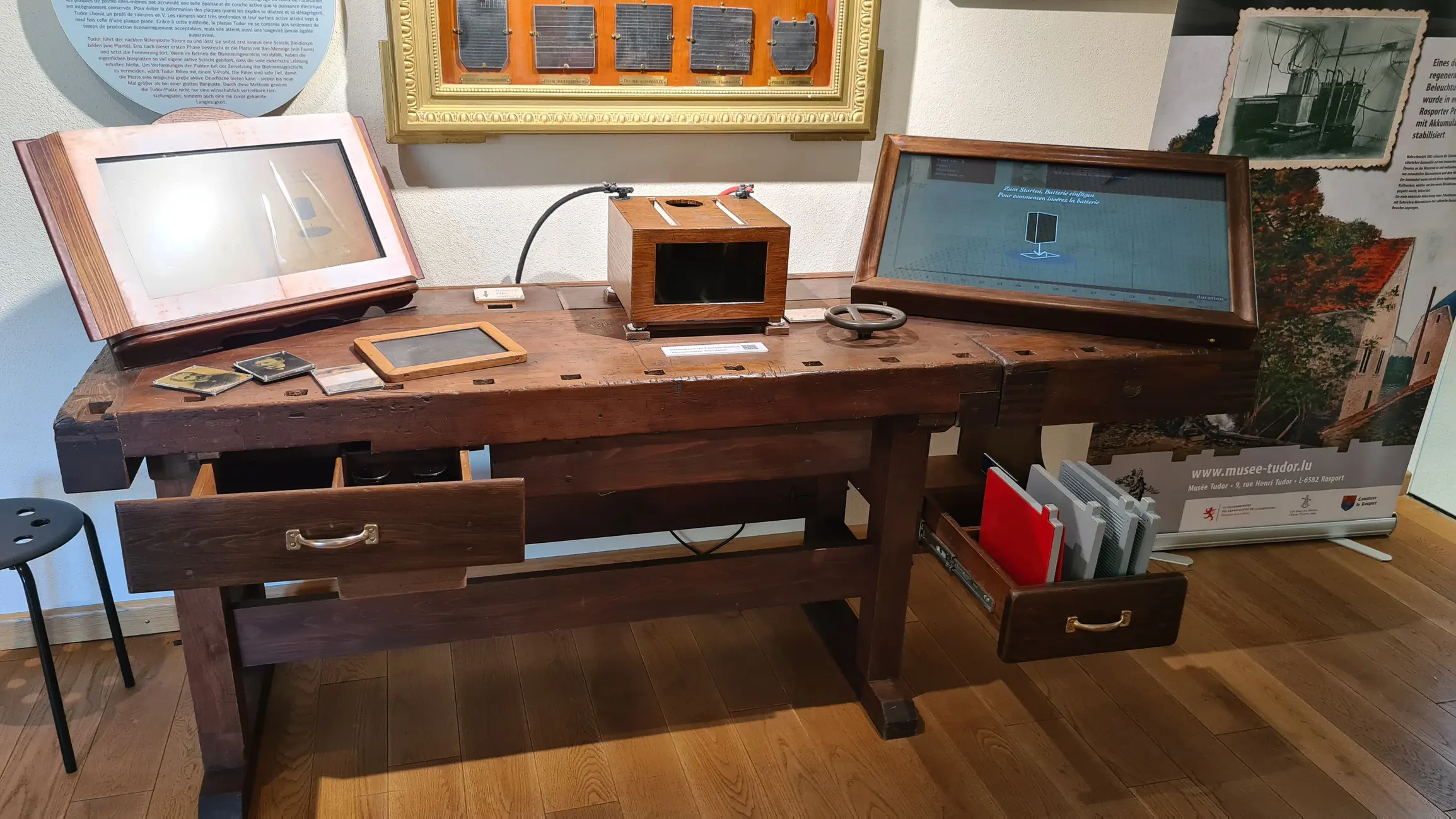
Tudor Museum in Rosport © Jfspic | Dreamstime.com
The surroundings of the castle are just as evocative as the museum itself. In the park, local historical accounts remember the “Poppenhaischen”, the little doll’s house built for Tudor’s two daughters and his son, where the laughter of children once mixed with the sounds of the estate and its technical activity.
That small detail changes the atmosphere of the whole place. Rosport is not only a place of batteries, dynamos and electrical systems, but also of children’s games, family routines and tiny corners of wonder hidden behind the larger history of invention.
Water, play and discovery
Near the Sauer lake, Rosport also offers a large adventure playground with numerous play structures and water games. Tourism sources describe it as a place that invites children to discover, explore and experiment, which makes it a very natural complement to the Tudor Museum.
For families, this creates a lovely rhythm for the day. After learning indoors about electricity and accumulators, children can move outdoors into a landscape of flowing water, movement and direct experience, where the idea of energy suddenly becomes playful and physical.
The Hëlt and its old vineyards
Rosport’s story does not end with Henri Tudor, because just beside the village rises the Hëlt, the hill inside the Sauer loop, which forms part of the Natur- & Geopark Mëllerdall. This landscape adds another layer to the visit: geology, orchids, vineyards and protected nature stand very close to the technical heritage of the castle.
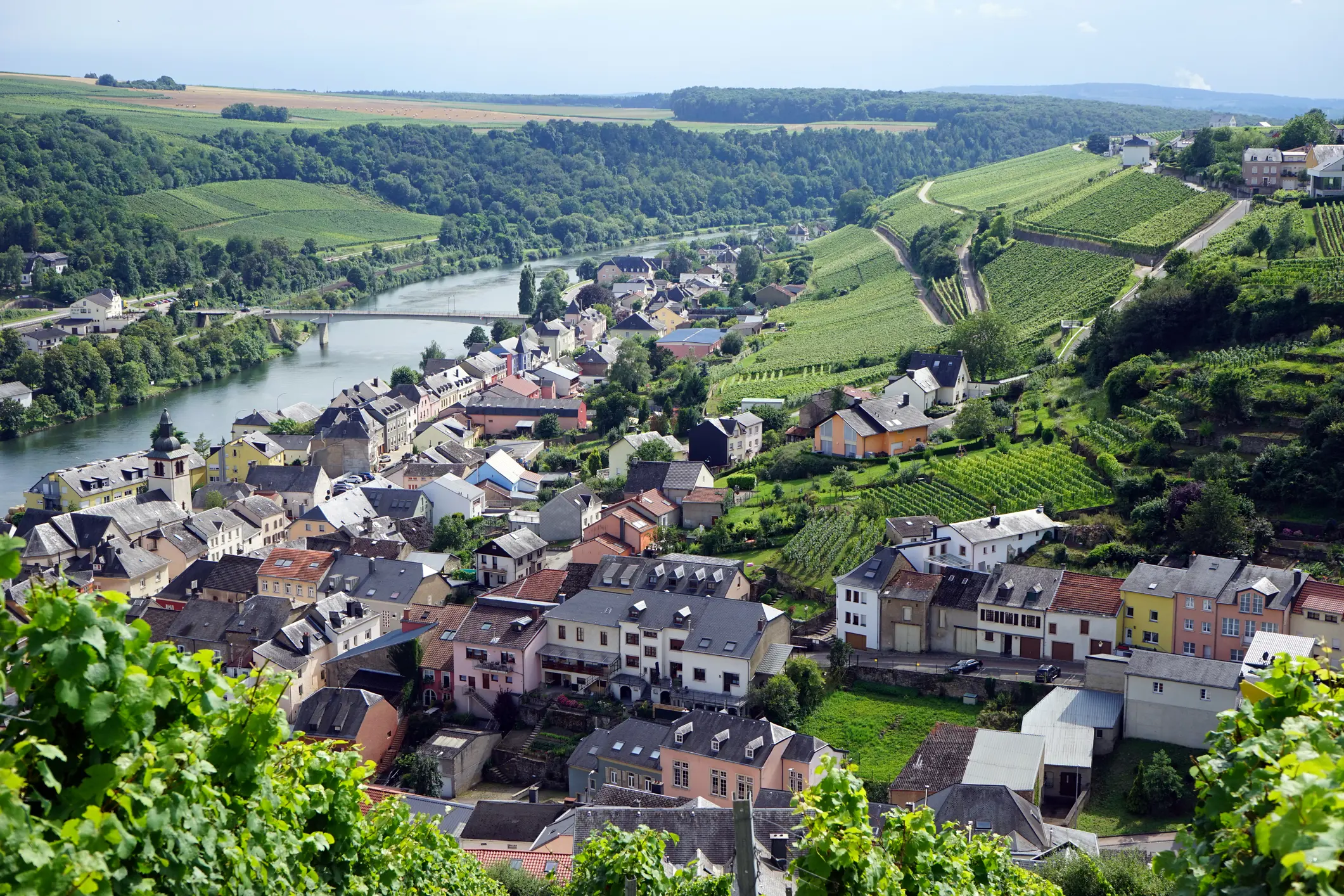
Vineyards line the hills behind Rosport © Valery Shanin | Dreamstime.com
The Hëlt is also home to a very old wine-growing tradition. Sources note that viticulture along the Sauer is documented as early as the 7th century, and Rosport’s vineyards were part of that long history before falling into decline during the 20th century. In recent decades, however, the vineyards have been renewed and brought back into cultivation by committed local winemakers, so that the old slopes once again produce wine today.
This makes the Hëlt especially beautiful in a family newsletter. It shows that Rosport is not only a place where energy was invented, but also a landscape where older traditions, once nearly forgotten, have been rediscovered and carefully renewed.
Walking on the Hëlt: R7 and Geo-Pad Hëlt
The Hëlt can be experienced on foot in two complementary ways. The local hiking trail R7 (about 3.5 km, around one hour, easy) and the Geo-Pad Hëlt (about 4.2 km, around 1.5 hours, easy) both start and end at the parking area in Rue du Barrage in Rosport, near the Sauerpark and the playground.
R7 reveals the two faces of the Hëlt: a moist, rocky northern side with fascinating rock formations and a cooler atmosphere, and a warm southern side where vines and orchids grow. The Geo-Pad Hëlt is marked with a fossil shell symbol and leads along eleven information boards that explain how the rocks were formed in an ancient sea, how landslides shaped the hill and how today’s landscape is used and protected.
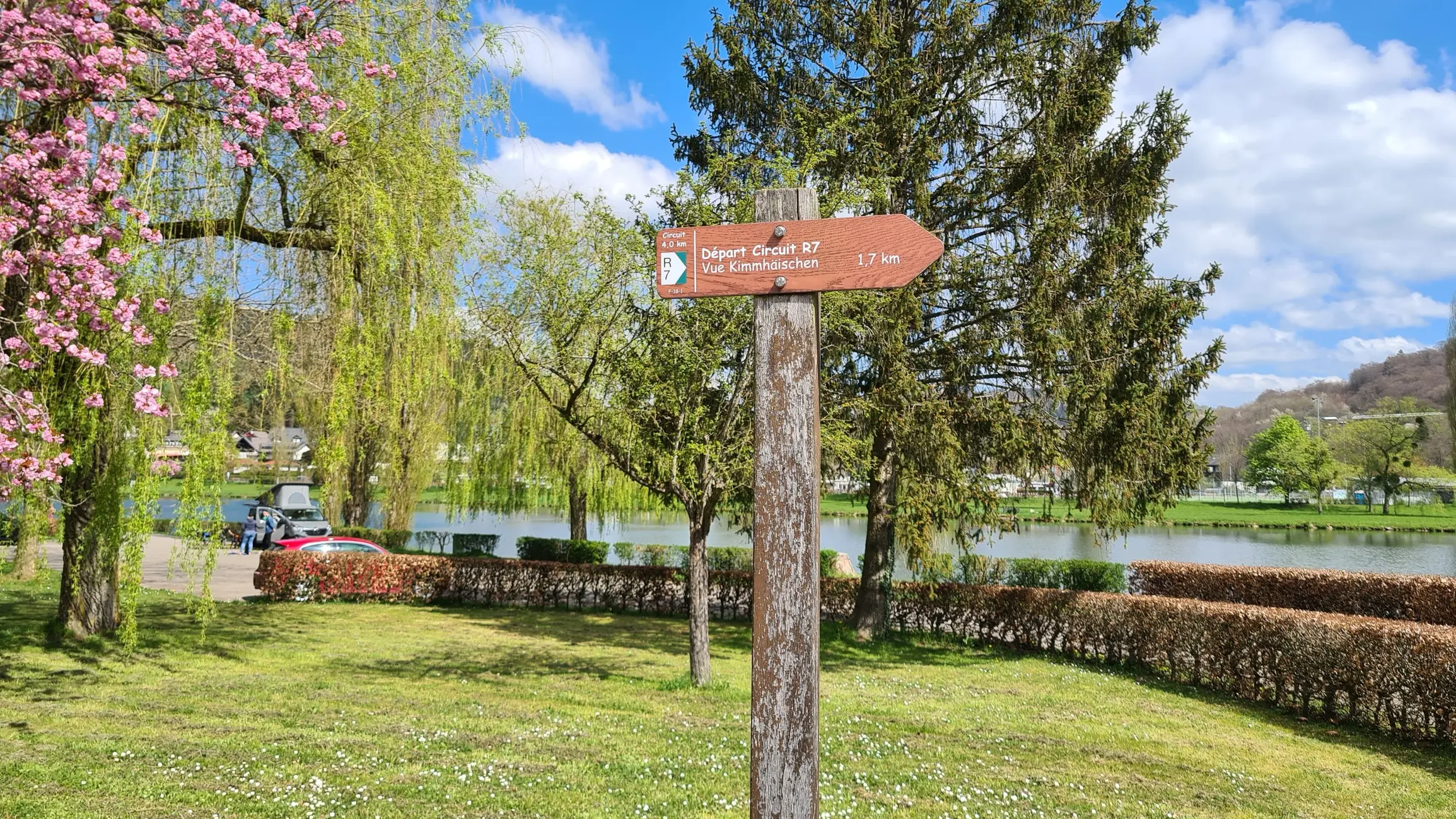
The R7 hiking trail in Rosport © Jfspic | Dreamstime.com
On the almost Mediterranean south-facing slope, the trail passes through the only wine-growing area of the region. Here, lizards sun themselves on the dry-stone walls, and on the dry grasslands visitors can discover rare orchids and other protected plants. On the warm southern side of the Hëlt, children can pause by the dry-stone walls and see why lizards seem to love this sunny landscape.
For families, this makes a gentle invitation. Children can look for the little stone symbols and the information boards, notice how different the hill feels on its two sides, and perhaps try to spot a lizard on the warm walls while the vineyards remind them that people have worked this landscape for many centuries.
Echternach and the first electric street lighting
Henri Tudor’s importance reaches beyond Rosport itself. In 1886, he offered Echternach a system to replace petroleum streetlamps with electric lighting, and a power station was established in an outbuilding of the abbey for that purpose.
The installation went into operation in October 1886. According to museum-related and encyclopaedic sources, Echternach thus became the first town in Luxembourg with electric street lighting and one of the early places worldwide to introduce such a system.
This creates a beautiful connection between two places many readers already know. A family can visit Rosport and learn about Tudor in the landscape where he lived, while also remembering that his work once illuminated the streets of Echternach.
Family ideas
A family day in Rosport can unfold in a gentle sequence. You might begin at the Tudor Museum, walk through the park, look for the little doll’s house behind the museum and the commune buildings, continue to the adventure playground near the Sauer and, if the weather is kind, add a short walk on R7 or the Geo-Pad Hëlt.
Along the way, children can ask wonderfully simple questions. How can energy be stored, why did electricity once feel so miraculous, why do vineyards return after being forgotten, and what can lizards, rocks, water and batteries all tell us about one small place in Luxembourg?
Word of the Week
Accumulator – storage battery.
Luxembourgish example: „Den Henri Tudor huet den Akkumulator verbessert.“
English: “Henri Tudor improved the accumulator.”
Recipe: Simple energy picnic
For a Rosport outing, simple food is often best. Bread rolls, cheese, fruit and a few nuts can be packed easily and enjoyed either near the playground or after a short walk on the Hëlt.
It also fits the theme of the day in a gentle way. Children can think about energy not only as something stored in batteries, but also as something their own bodies need for walking, climbing, discovering and playing.
Rosport reminds us that innovation does not always grow in great capitals or large laboratories. Sometimes it takes shape in a village between a mill, a castle, a vineyard, a park, a child’s doll’s house and a sunny slope where lizards rest on old stone walls.
Henri Owen Tudor’s story is therefore not only about invention. It is also about the way memory settles into landscapes, and how one family outing can reveal the links between technology, nature and everyday life in Luxembourg.
Léif Gréiss,
– Isabelle
- This article is part of our “Inside Luxembourg” series, celebrating the stories, flavours and traditions that shape our local culture.
Learn more about Luxembourg
-

Inside Luxembourg: Harvest traditions and autumn flavours
October's Inside Luxembourg column by St George's Luxembourgish teacher Isabelle Frisch-Koopmans looks at the festivals, traditions and colours of autumn throughout the country.
-

Inside Luxembourg: September magic
September's Inside Luxembourg column by St George's Luxembourgish teacher Isabelle Frisch-Koopmans explores the Shueberfouer, wine festivals, Charly Gaul Randonée and offers a recipe for Gromperekichelcher.
-

Inside Luxembourg: Summer days
Inside Luxembourg with Isabelle Frisch-Koopmans this week provides an overview of summer activities grouped by age, a short preparation checklist, and two simple recipes for warm days.
-

Inside Luxembourg: Nobel Prize stories
Inside Luxembourg with Isabelle Frisch-Koopmans this week discovers two remarkable Nobel Prize laureates: Gabriel Lippmann and Jules Hoffmann.