News
Tea offers more than a taster
28 January 2026
Year 3 students have been immersed in a rich and imaginative English unit based on the book Cloud Tea Monkeys. Through drama, discussion and sensory experiences, the children explored how power and authority can be conveyed through language, character and behaviour – while also making meaningful links to their wider learning about the world.
The learning began with an intriguing character from the story – the Royal Tea Taster. Using an illustration as a starting point, children freeze-framed how they imagined such an important figure might stand or move. This led to thoughtful discussions about what makes someone appear powerful, with students considering posture, facial expression and body language. As the story unfolded, they examined how the Royal Tea Taster’s arrival transformed the setting and affected the workers around him, noticing details such as silence, positioning and emotional reactions.
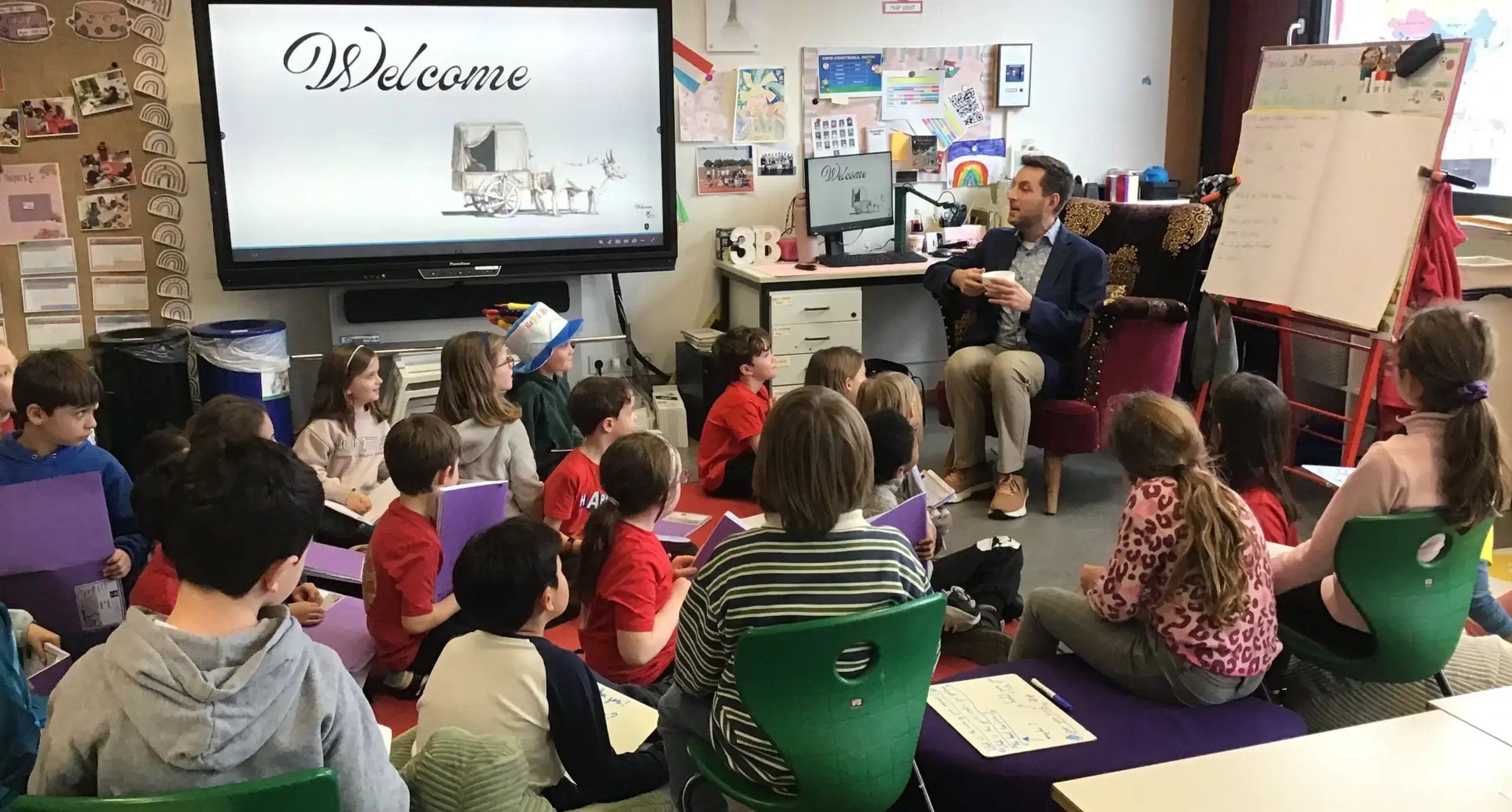
As part of their English learning, pupils explored the difference between formal and informal language. They practised writing thoughtful, formal questions in preparation for a very special visitor. The lesson culminated in an energetic hot-seating activity, where the visitor took on the role of the Royal Tea Taster. This gave children the opportunity to practise speaking formally, listening attentively and responding appropriately. The students asked insightful questions and learned a great deal about the life and responsibilities of such an important role.
These activities also supported an important literacy focus on authorial choice. Children observed how authors create a sense of authority through careful language choices, detail and tone, deepening their understanding of how meaning is shaped in texts.
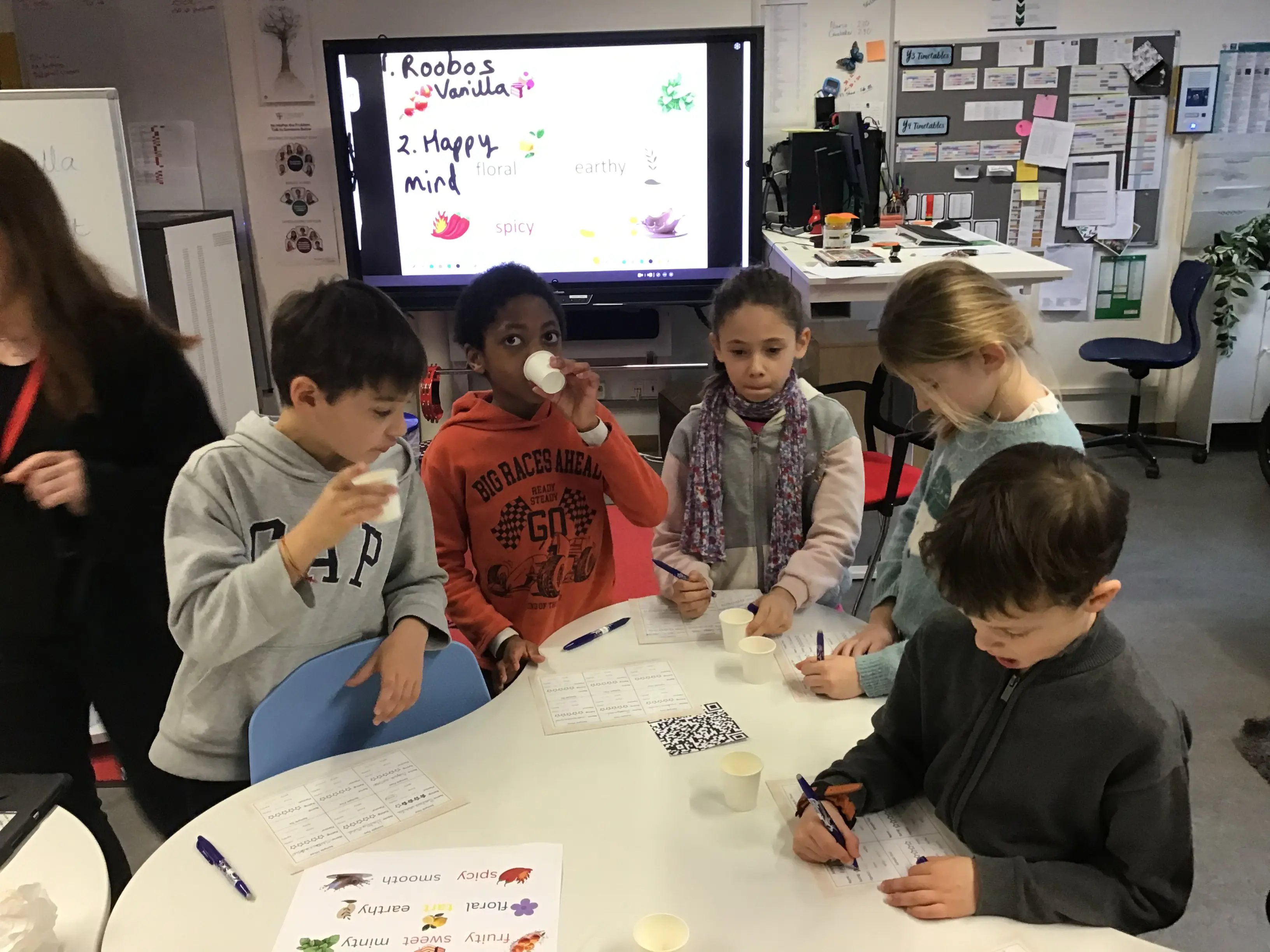
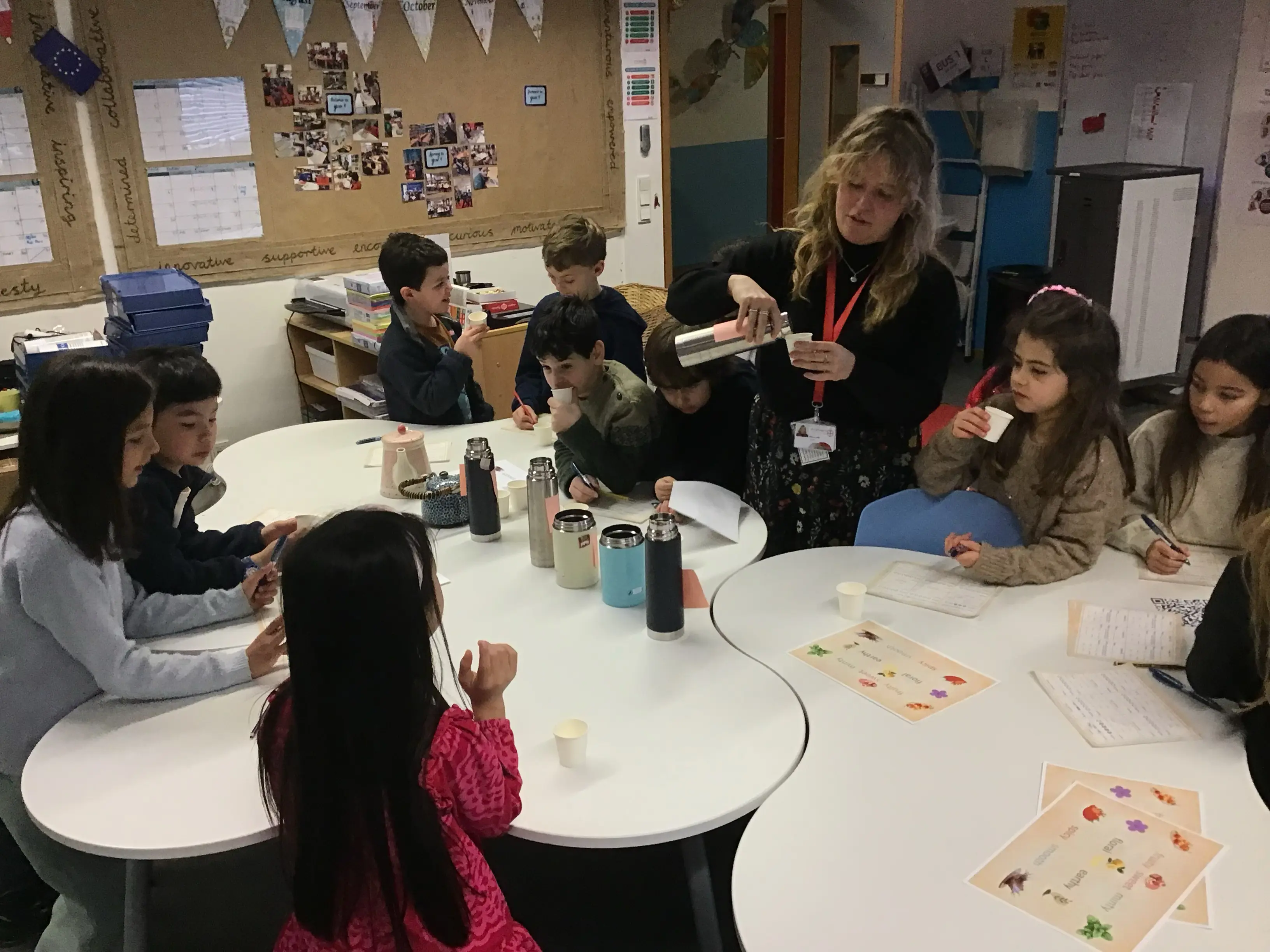
In the following lesson, the learning continued with a sensory tea-tasting experience inspired by the story. Acting in role as tea tasters, the students applied what they had learned about tone and formality in their actions and words. They were introduced to the tea-tasting process and encouraged to taste mindfully, using their senses of smell and taste. With optional blindfolds and a calm, focused atmosphere, children explored rich sensory vocabulary to describe flavours, aromas and surprises.
Pupils recorded their reflections independently before sharing ideas with a partner. The lesson concluded with a whole-class discussion. Together, they compared preferences and considered how their opinions changed once they knew which tea they had tasted, helping them understand how expectations can influence perception.
This experience also linked closely with their Understanding the World topic, Adventures Through Asia. Having recently explored foods made from plants grown in Asian countries, the tea tasting provided another powerful example of a plant-based product with its origins in Asia.
Overall, these lessons brought together literacy, drama and global learning in an engaging and memorable way. Through stepping into role, using formal language and exploring their senses, students developed confidence, curiosity and a deeper understanding of how language and behaviour can convey power and authority – both in stories and in the real world.