News
Students discover Luxembourgish inventor
21 January 2026
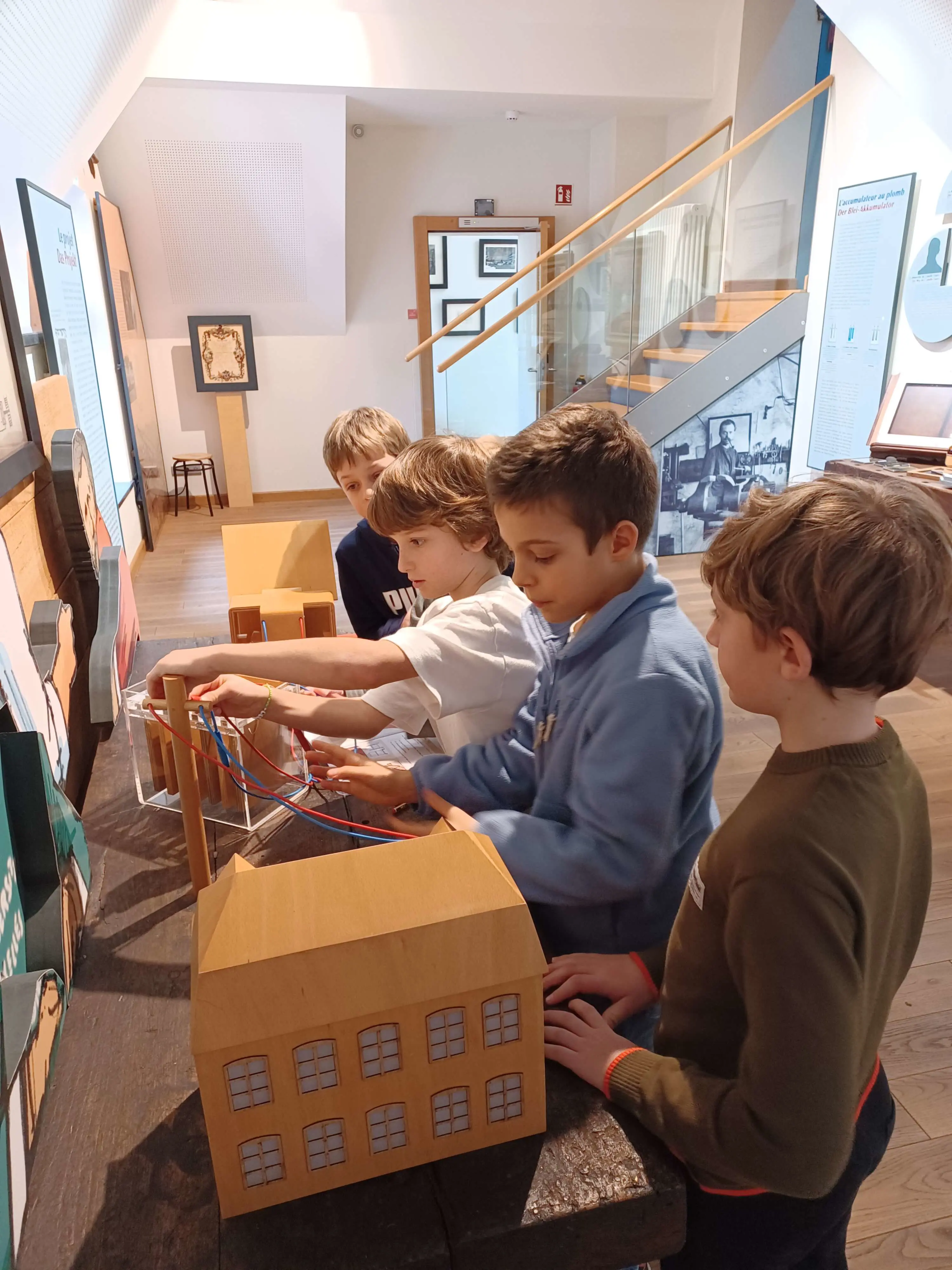
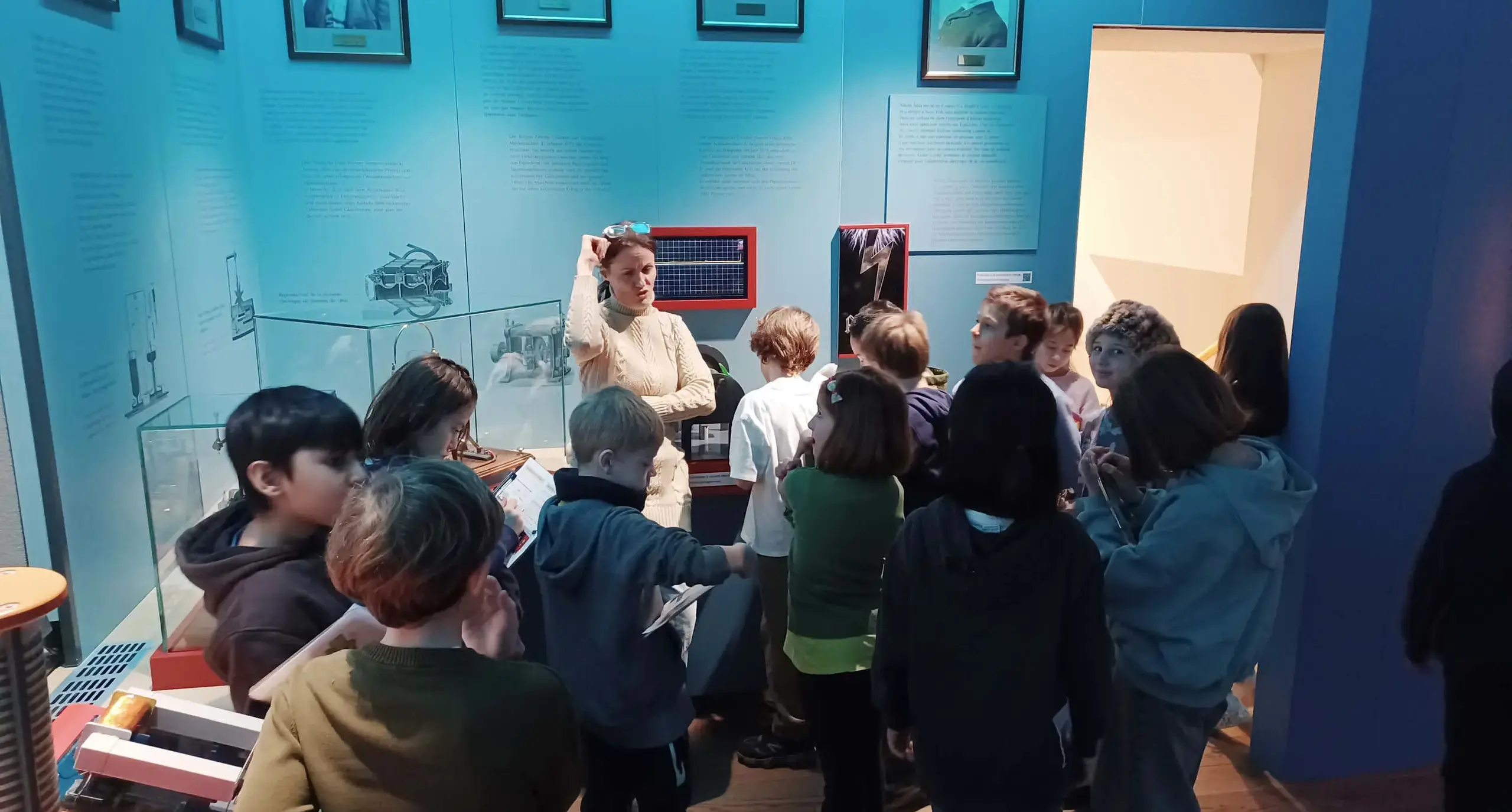
Year 4 visited the home of Luxembourgish inventor Henri Tudor last week. Students explored batteries and early electrical inventions in the museum while learning about Henri Tudor's role in storing energy.
Henri Tudor (1859–1928) was a pioneering Luxembourgish engineer and industrialist who revolutionided energy storage by developing the first commercially viable lead-acid battery. While the concept of the rechargeable battery existed, Tudor perfected the technology in 1881 by creating a robust electrode system (the "Tudor plate") that solved previous issues of reliability and short lifespan. He applied this innovation to immense practical success, most notably by installing the world’s first public electric street lighting powered by buffer batteries in the town of Echternach in 1886. This effectively kickstarted the battery technology revolution we use today.
The museum was very hands on with the children enjoying, among other activities, watching how the sections of the voltaic pile could be combined to create electricity and using the Wilmshurst machine to create electrical sparks – not to mention the simulation of how Galvani had first noted electric energy being used to create movement in frogs legs.
In addition to the museum visit, the children were also able to take part in a STEM workshop during which they built a light sensitive robot. The robot, when assembled, uses an LDR (Light Dependent Resister) to sense low light and then illuminate the LED (Light Emitting Diode). The children pushed and hammered together the wooden sections, screwed in the wires and discussed how the electricity flowed through the newly assembled circuit.
This was a great opportunity to learn about the history of electricity and to put it into practice with hands on activities.