
News
Speaker puts focus on mental health
20 January 2022
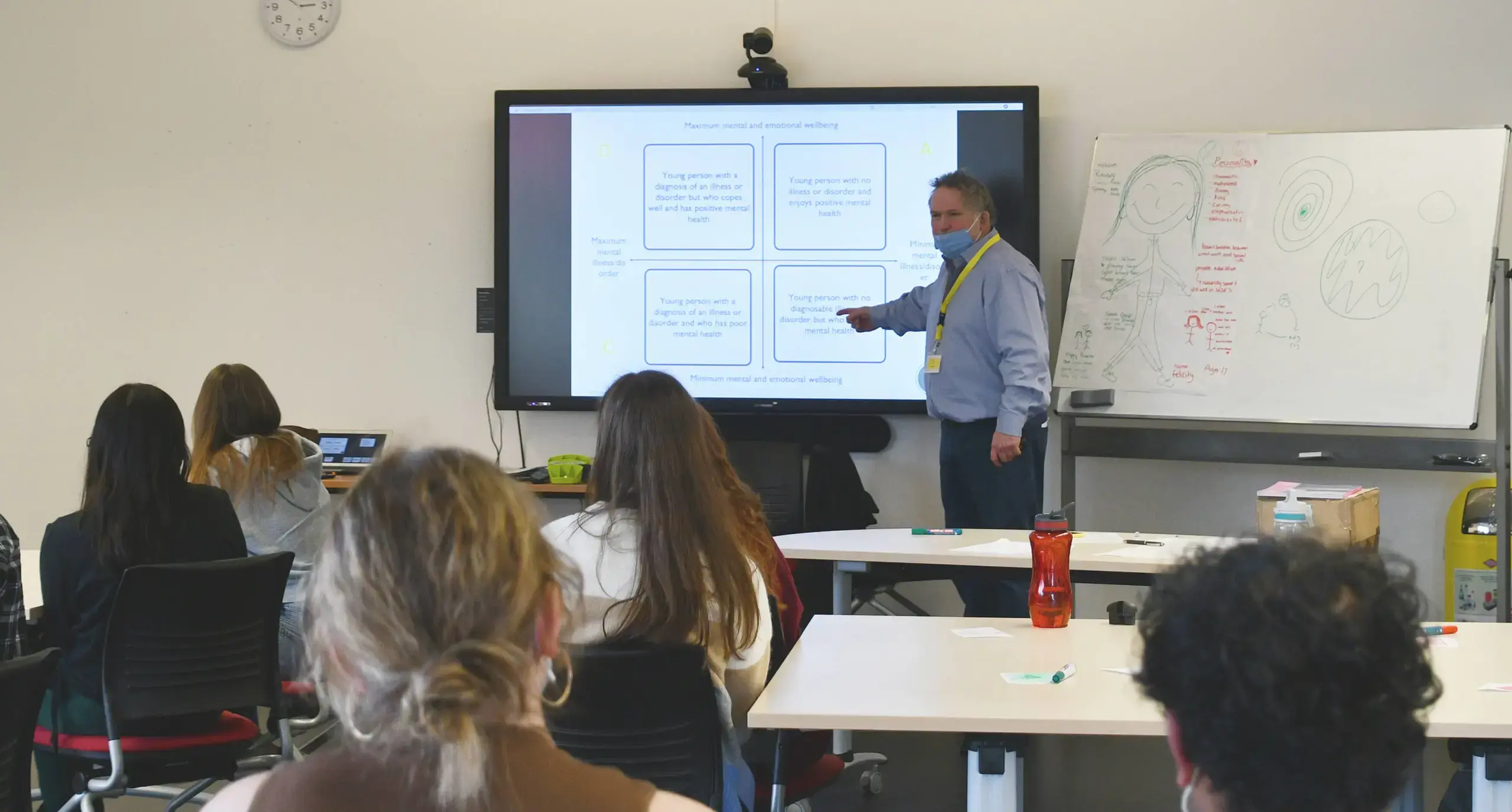
St George's hosted two days of mental health workshops for parents, students and teachers with youth mental health educator Dick Moore.
On Tuesday, 11th January, Mr Moore spoke to Years 7 and 8, Year 9, Years 10 and 11, and Years 12 and 13. His talks were tailored for each age group and focused on the impact of Covid, symptoms and causes of anxiety, balancing the 'stress bucket', depression and its warning signs.
"In doing so Dick Moore encouraged us to look after ourselves and to be conscious of those around us," said Mr Smale, Director of Sixth Form. "We were then provided with tips and ideas for how we could protect ourselves and what to do if we were feeling any of the symptoms."
Speaking to the students afterwards, Mr Smale said they were inspired by Mr Moore's message and approach, and related to the importance of the content. "Our students are incredibly reflective and conscious that Covid has made things tougher. Having someone providing advice and guidance on how to prioritise mental health was really well received."
In the evening Mr Moore delivered a workshop for parents on mental health, and while providing the physiological and emotional background to some of the mental health concerns many teens have, he also provided reassurance and proactive strategies. Many parents said afterwards that they had taken on board the advice and were doing more to talk, talk, talk to their children.
On Wednesday, 12th January, 16 students completed a Youth Mental Health First Aid Champions course, equipping them with insight and knowledge about mental health. It has allowed them to be certified in responding to mental health situations in their peer groups and enables St George's to provide a mental health aspect to the Wellbeing Ambassadors and Student Leader. It also allows these students to offer a support service to younger students.
The Youth Mental Health First Aid Champions course has the following aims:
- To preserve life where a young person may be a danger to themselves or others
- To provide help to prevent the mental health problem developing into a more serious state
- To promote the recovery of good mental health
- To provide comfort to a young person experiencing a mental health problem
- To raise awareness of mental health issues in the community
- To reduce stigma and discrimination