News
Inside Luxembourg: Liichtmëssdag
28 January 2026
By Isabelle Frisch-Koopmans
As the long winter slowly gives way to softer light and the first hints of spring, Luxembourg celebrates one of its most charming and deeply rooted traditions – Liichtmëssdag, also known as Candlemas. This week, I would love to take you on a small cultural journey into its origins, its meaning and the ways children still bring this tradition to life today.
At the same time, our Year 4 children at St George's will begin learning the traditional Liichtmëssdag song “Léiwer Härgottsblieschen” as part of their homework. Many of you may not know this song yet, so here is a small glimpse into its beginning:
“Léiwer Härgottsblieschen,
Gitt ons Speck an Ierbessen…”
The rest of the song continues in the same joyful spirit: children offer warm wishes for health and prosperity and, in return, ask playfully for small treats. It is a cheerful, light‑hearted song that has been sung in Luxembourg for generations – and it opens the door to one of the country’s most beloved traditions.
From Celtic rituals to Candlemas
Liichtmëssdag has surprisingly ancient roots. Long before Christianity, Celtic farming communities in this region celebrated Imbolc on the eve of 2 February. They honoured Brigid, the goddess of cattle, crops and fertility, by walking through fields with burning torches and asking for blessings on the soil. These rituals welcomed the return of light and the hope of spring — ideas that still echo in today’s lantern tradition.
With the arrival of Christianity, these customs gradually merged with Candlemas, one of the oldest Christian feasts. Candlemas marks the day Mary and Joseph presented Jesus in the temple, 40 days after his birth. According to the Gospel of Luke, the old man Simeon joyfully took Jesus in his arms and called him the “Light of the World” — a symbol of hope for all people. Since the 10th century, Christians have held candlelit processions and blessings of crosses on this day to welcome the light and the coming spring.
Liichtmëssdag is also closely linked to Saint Blaise (Härgottsblieschen), whose feast day falls on 3 February, just one day later. Saint Blaise is one of the Fourteen Holy Helpers in Catholic tradition and is believed to protect people from throat illnesses. According to legend, he once saved a child choking on a fishbone and to this day, many churches offer a Blessing of the Throat using two crossed candles, either on Candlemas or on his feast day.
Pancakes and candlelight
In some European regions, Candlemas is also connected to pancake making. The custom dates back to Pope Gelasius I, who in the 5th century gave pancakes to pilgrims arriving in Rome for the feast.
For good luck, people would fry their pancakes by candlelight, holding a coin in one hand while flipping the pancake with the other. If the pancake landed safely back in the pan, the year was said to bring health and happiness.
When is Liichtmëssdag celebrated?
Liichtmëssdag always falls on 2 February, exactly 40 days after Christmas. Even if the world around us continues to change rapidly, Liichtmëssdag remains a moment of warmth and continuity – one of those small cultural treasures that truly allow us to understand Luxembourg from the inside.
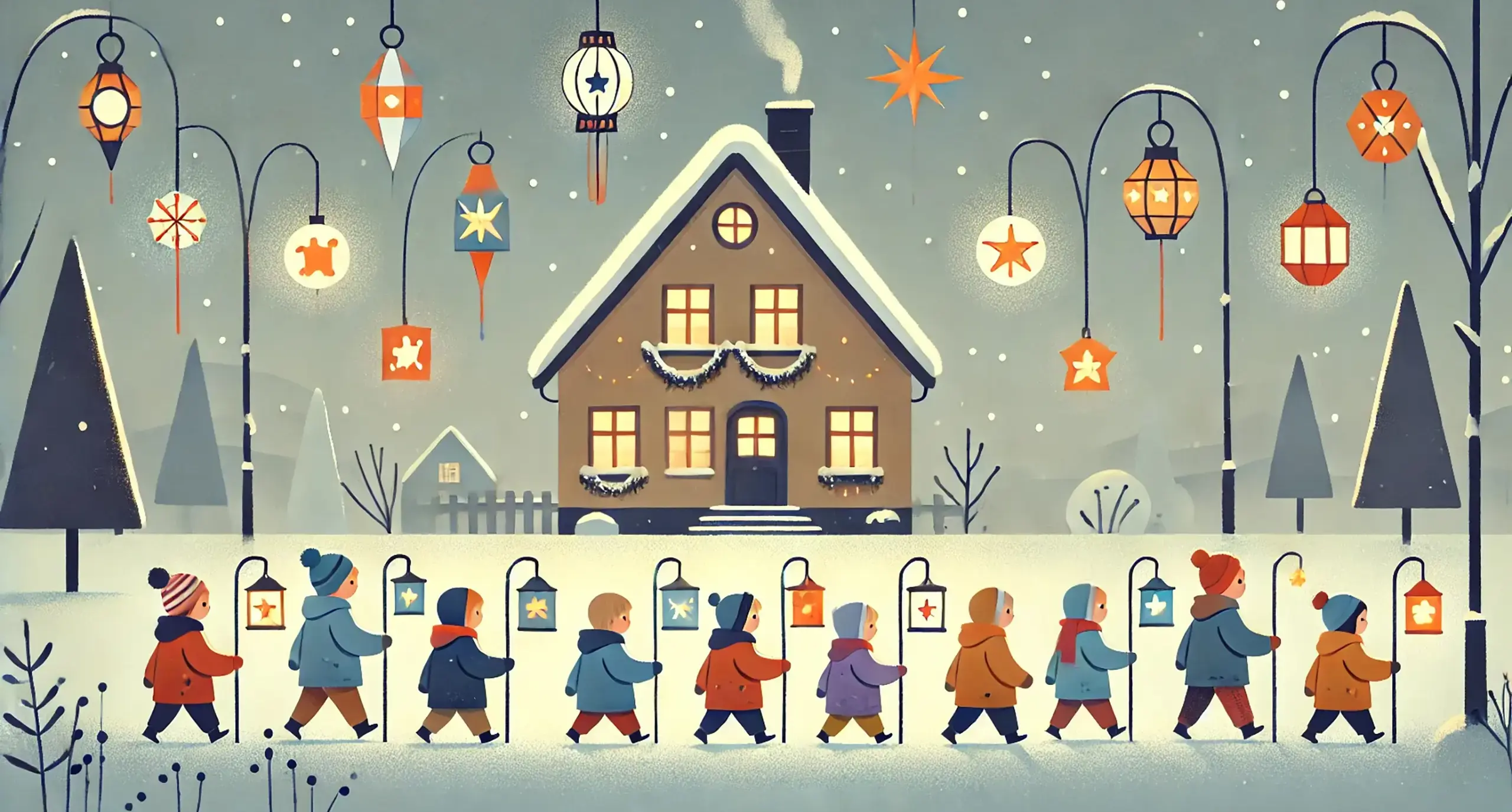
Why do children walk from house to house with lanterns?
Many families know the custom, but not always the meaning behind it. Here is what makes Liichtmëssdag special:
- Children bring light into the community, symbolically brightening the winter evening.
- They sing the traditional song and wish households good health and good fortune.
- In return, they receive small treats or coins. In earlier times, families gave sausages, bacon, or other winter provisions.
- The tradition takes place in the evening, so the lanterns can shine and the symbolism of light becomes visible.
For this reason, it’s a lovely idea to keep a few sweets ready on the evening of 2 February, just in case a group of cheerful singers rings your doorbell.
Many national schools celebrate Liichtmëssdag actively and children often enjoy taking their friends along. It’s a wonderful way for families of all backgrounds to experience this tradition together.
For families and children
Here is a little inspiration if your children want to discover more about this tradition at home.
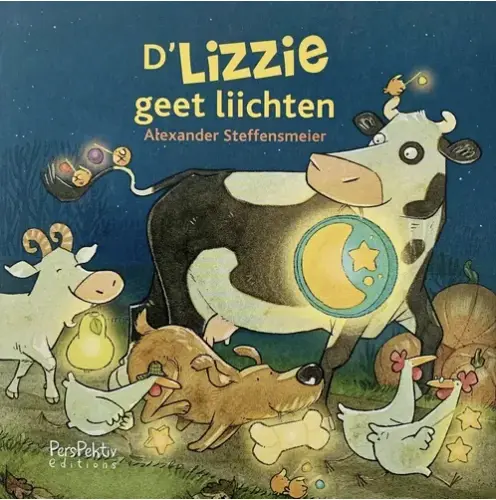
D'Lizzie geet liichten
This beautifully illustrated picture book tells the story of Lizzie, a friendly farm cow who lives on a cosy Luxembourgish farm. Lizzie loves helping the village postman deliver the mail — and when Liichtmëssdag arrives, she goes liichten on the farm with her own lantern.
It’s a charming and humorous way for children to discover the tradition through the eyes of a very special cow.
At the moment, the book is sold out, but many public libraries in Luxembourg have copies available to borrow. If your family would like to enjoy the story together, it’s definitely worth checking your local library.
Isabelle's Candlemas pancakes
Ingredients
Makes 8–10 pancakes
- 200 g flour
- 2 eggs
- 300 ml milk
- 1 tbsp sugar
- 1 pinch of salt
- 1 tsp melted butter (plus more for the pan)
- Optional: a little vanilla or lemon zest
Instructions
- In a bowl, whisk together the flour, sugar and salt.
- Add the eggs and half of the milk and mix until smooth.
- Add the remaining milk and the melted butter. The batter should be thin and silky.
- Heat a little butter in a pan and fry each pancake until golden, like a little circle of Candlemas light.
- Serve with jam, applesauce, cinnamon sugar or fruits.
Liichtmëssdag reminds us that light can be found not only in candles, but also in community, kindness and shared traditions. I hope this small glimpse into Luxembourg’s February celebration brings a bit of brightness into your week as well.
– Isabelle Frisch-Koopmans
- This article is part of our “Inside Luxembourg” series, celebrating the stories, flavours and traditions that shape our local culture.