News
Inside Luxembourg: Women who shaped the Grand Duchy
25 February 2026
By Isabelle Frisch-Koopmans
As I prepared this week’s edition, I found myself thinking about the stories that quietly shape the place we live in. Some of the most inspiring among them come from women whose names we may have heard, yet whose impact we rarely take the time to rediscover.
This week, I wanted to shine a light on these remarkable figures — not as a history lesson, but as a reminder of how courage, resilience and determination have always been part of Luxembourg’s identity. These women led, taught, healed and opened doors long before it was common or easy to do so. I hope you enjoy revisiting their stories as much as I enjoyed bringing them together for you.
Medieval and monarchical figures
Saint Kunigunde (c. 980–1033)
Kunigunde, born into the early Luxembourg dynasty, became Empress of the Holy Roman Empire through her marriage to Henry II. She played an active role in imperial affairs, supported religious institutions and served as a mediator in political matters. After Henry’s death, she entered monastic life and was later canonised.
Why she matters:
- She strengthened the prestige and influence of the early Luxembourg dynasty.
- Her canonisation made her one of the most respected female figures in medieval Europe.
- She exemplifies the political and spiritual authority noblewomen could hold in the Middle Ages.
Countess Ermesinde (1186–1247)
Ermesinde is widely regarded as one of Luxembourg’s most important medieval rulers. As the only child of Count Henry IV, she fought to secure her inheritance and governed the county for more than 40 years. Her reign brought territorial expansion, administrative reforms and economic stability.
Why she matters:
- She consolidated Luxembourg’s territory at a decisive moment in its history.
- Her long and effective rule laid the groundwork for future prosperity.
- She remains one of the few medieval women in Europe to govern independently.
Princess Amalia of SaxeWeimarEisenach (1830–1872)
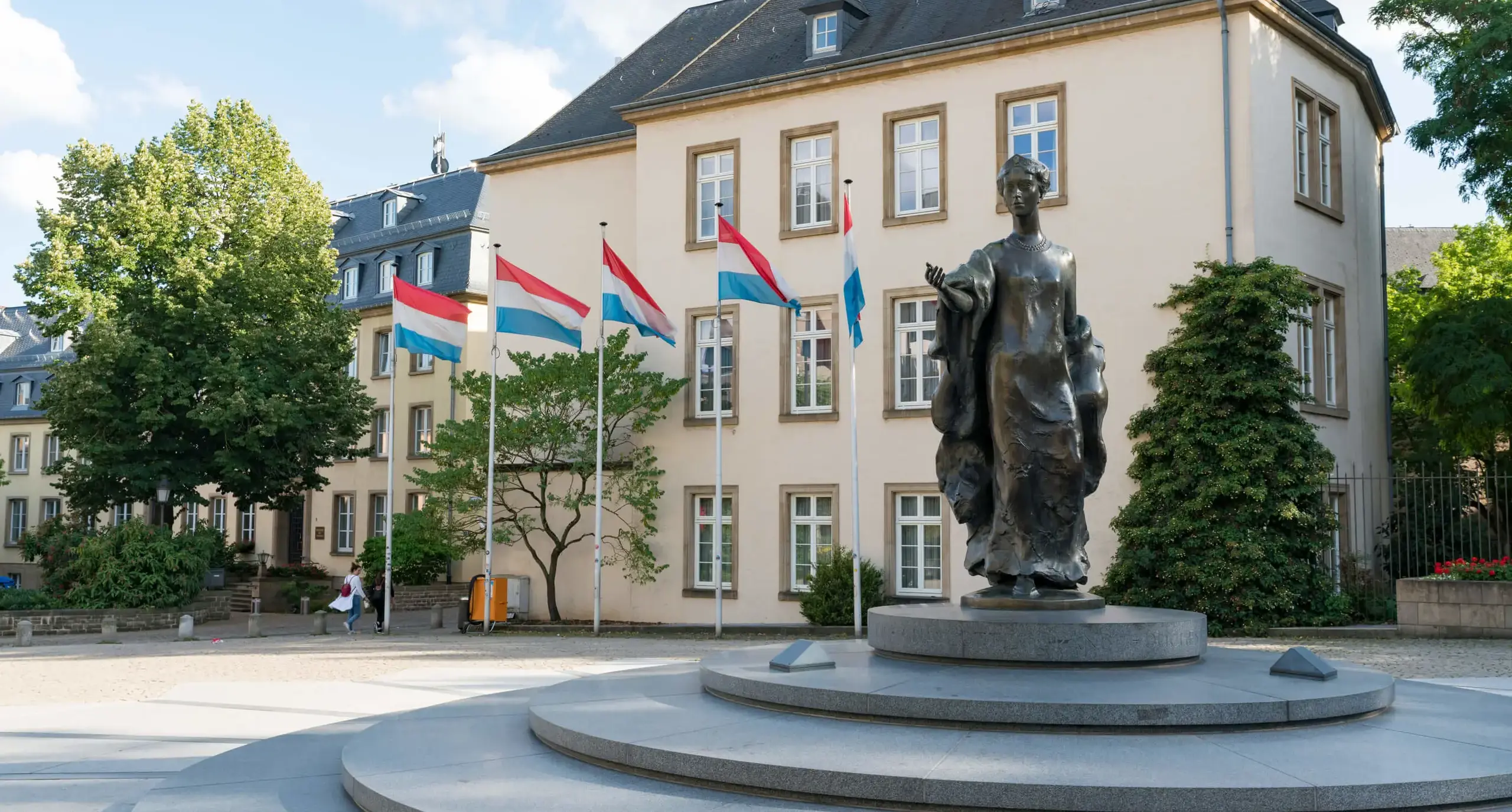
Princess Amalia was engaged to Prince Henry of the Netherlands, who served as Governor of Luxembourg. Although she died before the marriage took place, she became beloved during her stays in the city. In 1876, a statue was erected in her honour near the Boulevard Royal — one of the earliest public monuments dedicated to a woman in Luxembourg.
Why she matters:
- She became a symbol of culture, refinement and charitable engagement.
- Her statue reflects early public recognition of women in Luxembourg’s civic landscape.
- She represents the 19th-century ties between Luxembourg and the Dutch royal family.
Grand Duchess Charlotte (1896–1985)
Grand Duchess Charlotte is one of Luxembourg’s most iconic historical figures. During World War II, she became the voice of national unity, broadcasting messages from exile that encouraged resistance and strengthened morale. After the war, she guided the country through reconstruction and modernisation.
Why she matters:
- She embodied national identity and resilience during the war.
- Her leadership helped stabilise Luxembourg in the post-war period.
- She remains a deeply respected symbol of unity and continuity.
Modern pioneers in education, medicine and culture
Anne Beffort (1880–1966)
Anne Beffort was one of the first Luxembourgish women to earn a doctoral degree. She studied French literature at the Sorbonne and became a central figure in the development of girls’ education. In 1909, she joined the newly founded Lycée de jeunes filles as one of its first teachers.
Why she matters:
- She championed access to education for girls at a time of limited opportunities.
- Her academic achievements set a precedent for women pursuing higher education.
- She promoted literature, culture, and intellectual life in Luxembourg.
Marie Speyer (1880–1914)
In April 1909, Marie Speyer became the first Luxembourgish woman to earn a doctorate in philosophy, completing her studies at the University of Fribourg in Switzerland. Her achievement was exceptional at a time when many universities still restricted female enrollment.
Why she matters:
- She broke academic barriers in a male-dominated field.
- Her success encouraged other women to pursue university studies.
- She represents the early intellectual emancipation of Luxembourgish women.
Dr Louise Welter (1898–?)
Louise Welter made history in 1923 as Luxembourg’s first female medical doctor. She trained in general medicine, surgery and obstetrics — areas in which women were rarely accepted at the time.
Why she matters:
- She opened the medical profession to women in Luxembourg.
- Her work improved healthcare access for women and families.
- She demonstrated that women could excel in demanding scientific fields.
Marcelle Dauphin (born 1922)
Marcelle Dauphin became the first woman to practise dentistry in Luxembourg. Her career reflects the gradual expansion of professional opportunities for women in the mid20th century.
Why she matters:
- She established a female presence in a traditionally male profession.
- Her work contributed to the modernisation of dental care in Luxembourg.
- She helped normalise women’s participation in medical and technical fields.
Family activity
For families who enjoy exploring history together, the Luxembourg City Tourist Office offers a walking route that highlights locations connected to several of the women mentioned above. It’s a gentle, family-friendly way to discover the city’s heritage outdoors.
- Visit the Luxembourg City Tourist Office here for information.
As we look back at the women who shaped Luxembourg across the centuries, I hope their stories offer a moment of reflection — and perhaps even a spark of inspiration. Their courage, their persistence and their quiet strength remind us that progress is often built step by step, through the determination of individuals who choose to make a difference.
Thank you for taking the time to explore these remarkable lives with me this week. I look forward to continuing our journey together next week, when we turn to another rich part of Luxembourg’s heritage: its culinary traditions and food culture.
– Isabelle Frisch-Koopmans
- This article is part of our “Inside Luxembourg” series, celebrating the stories, flavours and traditions that shape our local culture.