News
Inside Luxembourg: Easter traditions
25 March 2026
By Isabelle Frisch-Koopmans
Easter in Luxembourg has its own rhythm — a mix of quiet moments, old village sounds and colourful traditions that children remember for years. As the days grow brighter and the first blossoms appear, the country prepares for a celebration full of music, legends and community.
For me, Easter has always been a season of small, shared rituals. When our children were younger, we spent entire afternoons crafting decorations together — cutting, gluing painting — and of course dyeing Easter eggs in every imaginable colour. Those moments, hands sticky with paint and the kitchen table covered in newspaper, are still some of my favourite memories of spring.
This week, I’d love to take you into some of the most charming Luxembourgish Easter traditions, from wooden clappers to flying bells, from the peaceful Easter Vigil to the joyful Emaischen.
Legend of the bells flying to Rome
In Luxembourg, children learn a beautiful story. On Maundy Thursday, the church bells stop ringing because they fly to Rome to confess their sins. During these silent days, something special happens in the villages and neighbourhoods… Klibberen: The Wooden Clappers of Easter
When the bells fall silent, children take over their job. Armed with wooden Klibberen (clappers), they walk through the streets at set times, creating a rhythmic, echoing sound that replaces the bells.
They call out traditional phrases such as:
- In the morning: “D’Moies Klack laut” (The morning bell is ringing.)
- At lunchtime: “D’Mëttesklack laut” (The midday bell is ringing.)
- In the evening: “D’Owesklack laut” (The vening bell is ringing.)
On Holy Saturday, children often go from house to house to collect small coloured Easter Eggs or coins as a thank you for their service. It’s a tradition that brings the whole community together and gives children a sense of pride and belonging.
To help children understand what Klibberen looks and sounds like, watch this child‑friendly, copyright‑safe video: 🔗 https://www.youtube.com/watch?v=7d9ab2VBlqM
Idea
Watch the videos together and discuss:
• What does a Klibber sound like?
• Why do children use them?
• Which traditions from your own country feel similar?
You can even make a simple mini‑clapper at home using cardboard or small wooden pieces — just as you might craft Easter decorations together.
Holy Saturday and Easter Sunday
Holy Saturday: In the evening, many churches light the Easter fire, a symbol of hope and renewal. The bells “return from Rome” and ring again — a moment that feels both festive and comforting.
Easter Sunday: Families gather for a long breakfast, an egg hunt in the garden or park, and a slow, joyful day together. In Luxembourg, the Easter Bunny traditionally brings chocolate eggs and small surprises for children.
Emaischen: Péckvillchen and the joy of Easter Monday
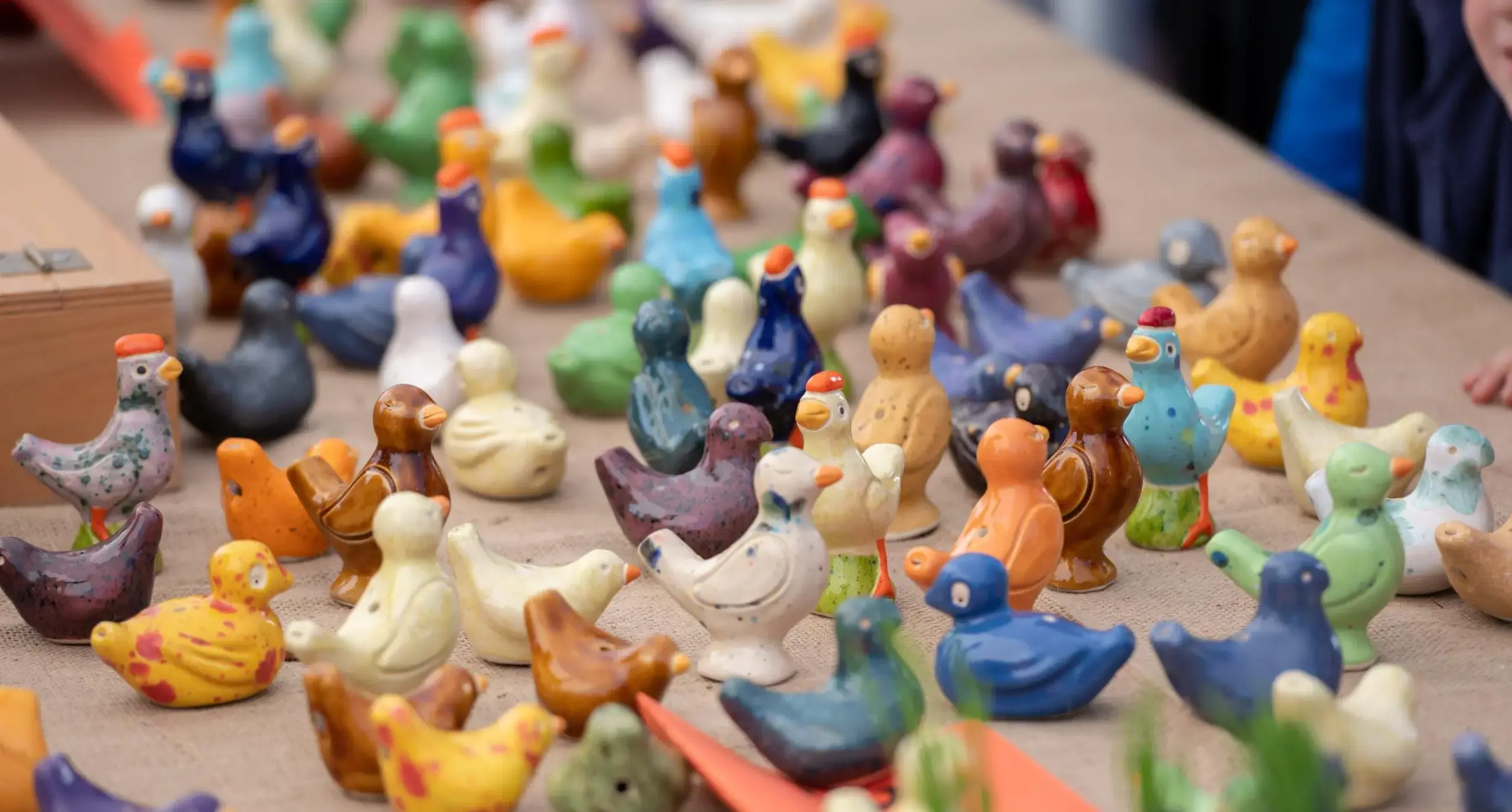
On Easter Monday, Luxembourg celebrates Emaischen, a lively pottery festival held in Nospelt (the historic home of the tradition) and Luxembourg City's Fëschmaart.
The star of the festival is the Péckvillchen, a small ceramic bird whistle. Originally made by local potters, these whistles were sold only once a year. Today, each edition has a new design and many families collect them year after year.
Children love the music, the crafts, the stands and, of course, the cheerful whistling that fills the streets.
Children's activity
Here is a child‑friendly, copyright‑safe video you can share about colouring Easter eggs with natural ingredients: 🔗 https://youtu.be/G7TUDLGhQZw?si=zq7awE_vguoZbJyL
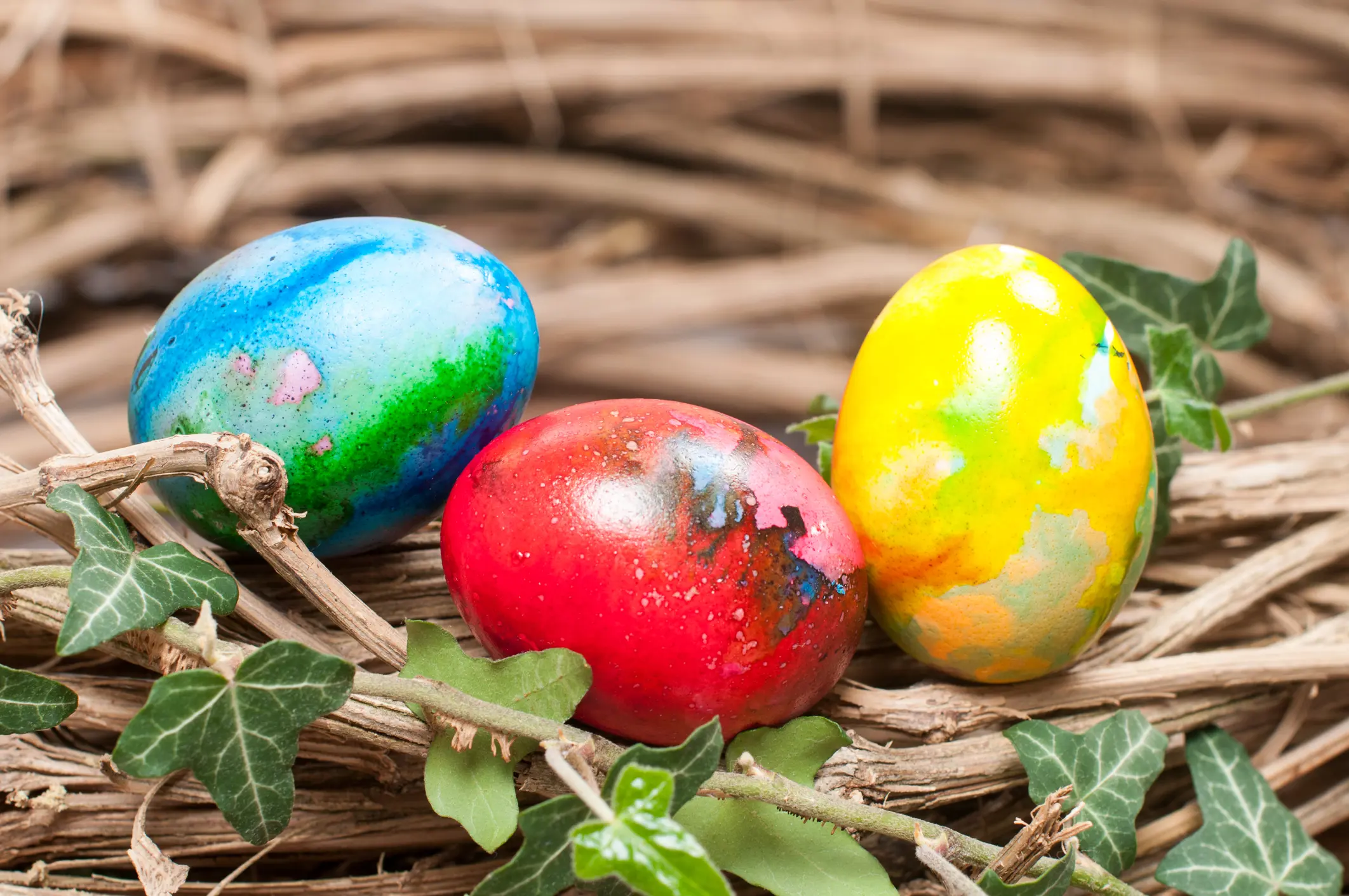
Photo © dreamstime
Word of the Week
Péckvillchen
Phonetics: [peck-vill-shen]
The traditional ceramic bird whistle sold only at Emaischen — colourful, cheerful, and a beloved symbol of Luxembourg’s Easter traditions.
Example: “Mir hunn dëst Joer e ganz faarwege Péckvillchen kaaft.”
It means "We bought a very colourful Péckvillchen this year."
You might choose one new Luxembourgish Easter word at dinner this week — Péckvillchen, d’Ouschtereeër (Easter eggs), or d’Klibber (clapper). It’s a simple way to bring a little language and tradition into your home.
Recipe: Isabelle’s mini Easter yeast wreaths
These little mini yeast wreaths are one of my favourite Easter bakes – soft, lightly sweet and just the right size for children’s hands. Each wreath holds a coloured egg in the centre, which makes them perfect for an Easter breakfast table or as a small homemade gift.
They also bring back memories of when my children and I spent whole afternoons dyeing eggs together – the kitchen full of colour, vinegar smells and little fingers proudly holding up their creations.
Ingredients
Makes 8 mini wreaths
- 500 g flour
- 70 g sugar
- 1 cube fresh yeast or 1 packet dry yeast
- 250 ml lukewarm milk
- 80 g soft butter
- 1 egg
- 1 pinch of salt
- Optional: a little lemon zest or vanilla
- 8 dyed, hard‑boiled Easter eggs
- For brushing: 1 egg yolk + 1 tbsp milk
Instructions
1. Dissolve the yeast in lukewarm milk.
2. Combine flour, sugar, salt, butter and egg in a bowl.
3. Add the yeast mixture and knead into a smooth dough.
4. Let rise for about 1 hour until doubled in size.
5. Divide the dough into 8 equal pieces.
6. For each piece: roll two thin strands and twist them into a small wreath.
7. Place the wreaths on a baking tray and let rise again for 20–30 minutes.
8. Brush with the egg‑milk mixture.
9. Bake at 170°C (fan) for 15–18 minutes until lightly golden.
10. Once cooled slightly, place one dyed Easter egg in the centre of each wreath.
These little wreaths look beautiful on the table and make Easter morning feel extra festive. And if you still enjoy dyeing eggs with your children – or even on your own – they’re the perfect way to show them off.
As we step into this bright and hopeful season, I wish you and your family a gentle, joyful Easter, full of small discoveries, shared moments and the kind of laughter that lingers long after the day is over. May your home be filled with colour, light and the simple happiness that comes from being together.
I hope the coming days bring you a peaceful walk, a beautifully dyed egg, a freshly baked wreath on the breakfast table, or perhaps a cheerful little Péckvillchen song. Whatever Easter looks like for you this year, may it be warm, meaningful, and wonderfully yours.
Schéin Ouschteren - Frohe Ostern — Happy Easter — Joyeuses Pâques
– Isabelle
- This article is part of our “Inside Luxembourg” series, celebrating the stories, flavours and traditions that shape our local culture.