News
Inside Luxembourg: Cycling legend Elsy Jacobs
15 April 2026
By Isabelle Frisch-Koopmans
Some stories spark curiosity even before you begin to tell them. The life of Elsy Jacobs is one of those stories — full of determination, resilience and the kind of pioneering spirit that inspires children and adults alike.
St George's is celebrating the inauguration of our new building named “Elsy Jacobs” this week and I would like to dedicate this week’s newsletter to her. It is a wonderful opportunity for our school community to discover who she was and why she remains such an important figure in Luxembourg’s sporting history.
When my children first heard about her, they were amazed: a young woman from a small Luxembourgish village who became the first women’s road cycling world champion. A woman who trained on quiet country roads, challenged expectations and opened doors for future generations of girls in sport.
A Pioneer for All Ages
Elsy Jacobs was born on 4 March 1933 in the small village of Garnich, the youngest of 11 children. Cycling ran in the family: several of her brothers were competitive cyclists and bicycles were simply part of daily life. But for a girl in the 1940s and 1950s, the idea of becoming a professional cyclist was almost unthinkable.
Elsy grew up helping on the family farm, cycling long distances between villages and watching her brothers race. She often trained alone, riding through the countryside at a time when women’s cycling had little recognition and almost no support. Her talent, however, was impossible to overlook.
In 1955, she entered her first official races and immediately impressed. Her strength, endurance and fearless racing style quickly earned her attention beyond Luxembourg’s borders.
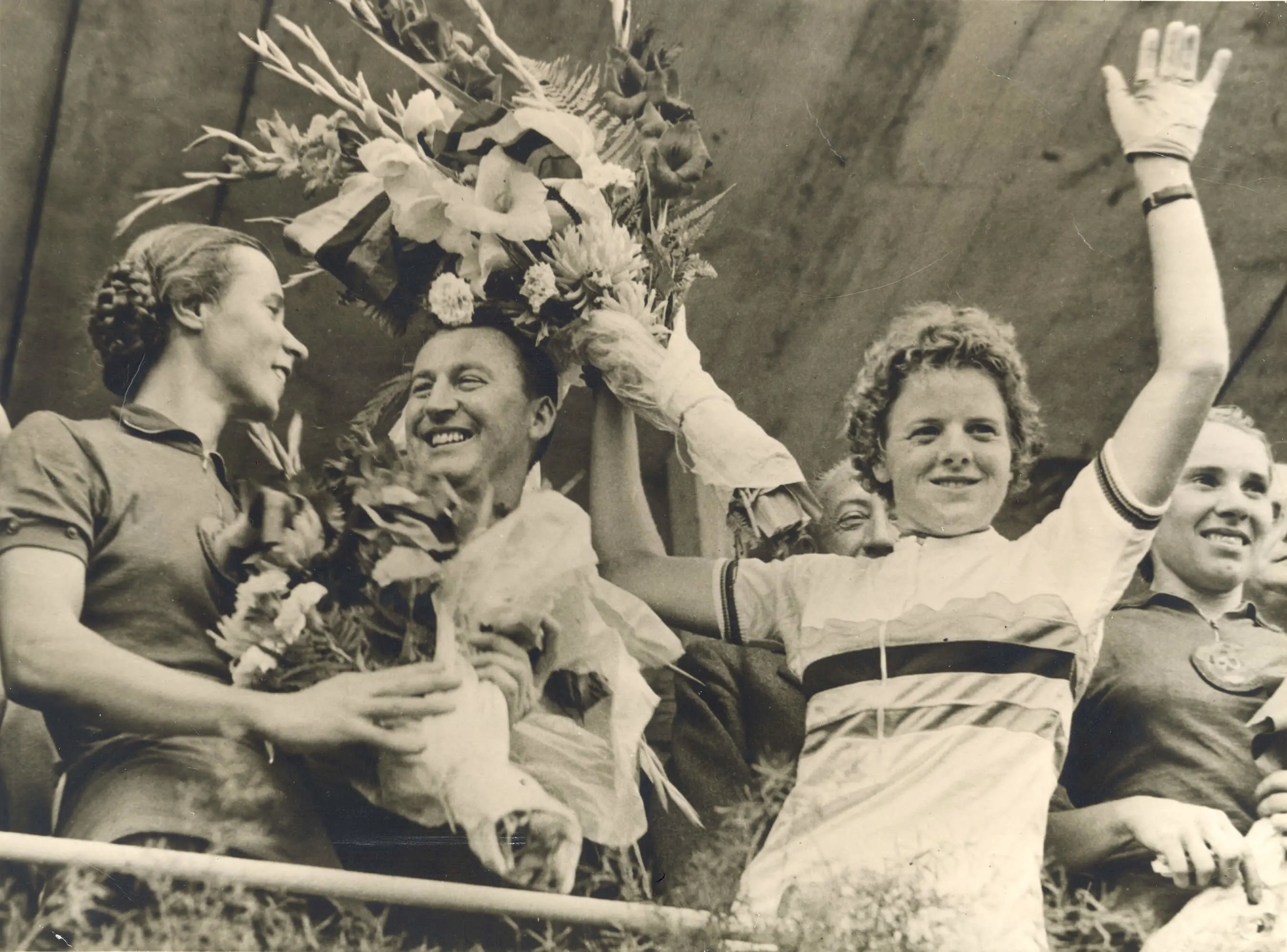
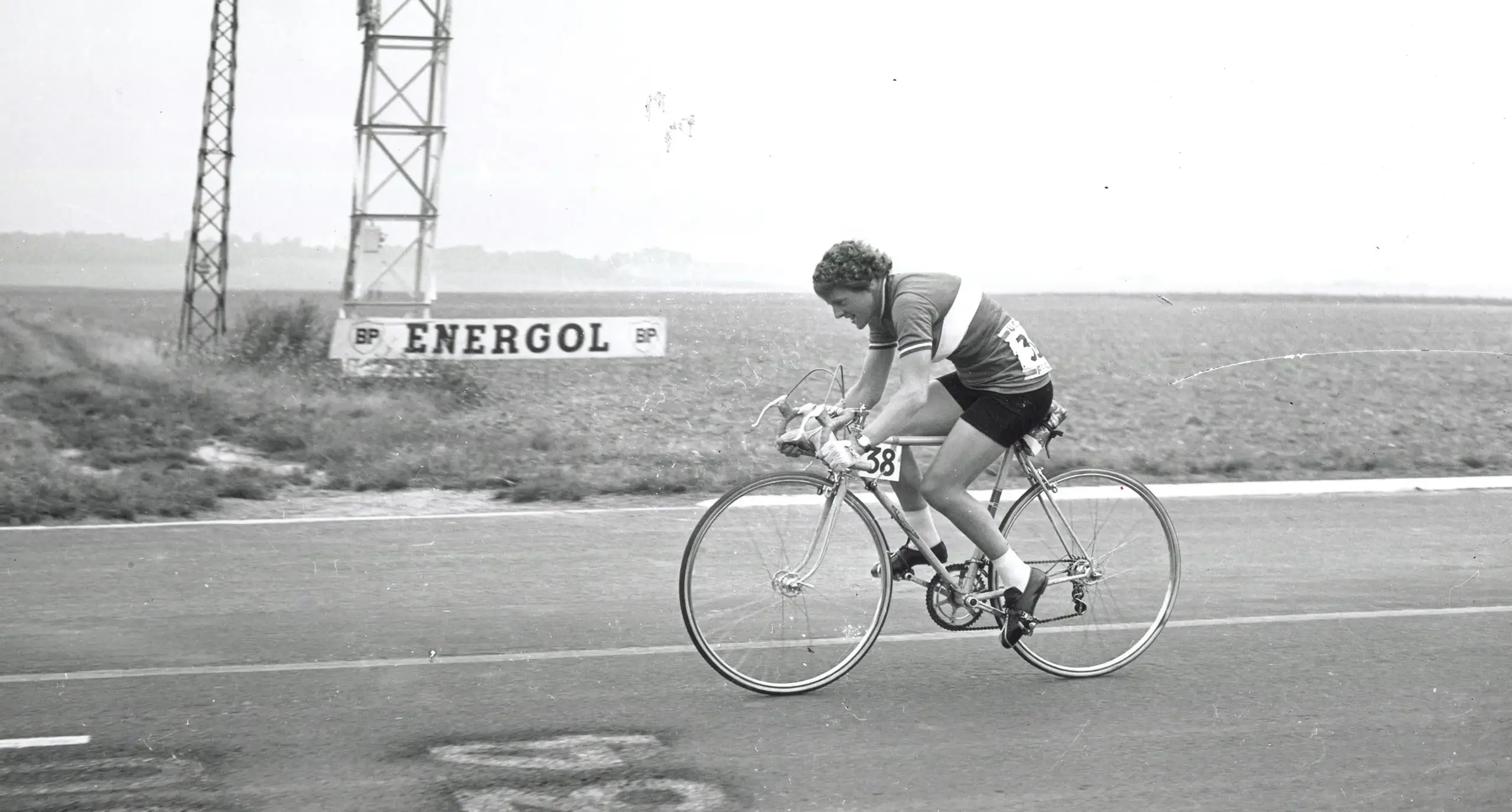
Her breakthrough came in 1958 in Reims, France, where she competed in the first-ever UCI Women’s Road World Championship. Against a strong international field, Elsy rode with intelligence and power, breaking away and crossing the finish line alone. She became the first women’s world champion in road cycling — a title that placed her in the history books forever.
Just weeks later, Elsy set another milestone: the women’s hour record on the track in Milan. She covered 41.347 km in one hour — a record that remained unbroken until 1972. This achievement was extraordinary not only for its athletic difficulty but also because she trained without the resources, coaching, or equipment available to male cyclists at the time.
Throughout the 1960s, Elsy continued to race across Europe, often competing against stronger teams with better support. She won numerous races, including national championships, and became known for her tactical intelligence, remarkable endurance, calm, focused racing style, and kindness and humility off the bike
She was admired not only as an athlete but also as a role model for young women who dreamed of entering sports.
After retiring from competition, Elsy remained connected to cycling and to her community. Today, she is remembered as:
- a pioneer of women’s cycling
- a symbol of courage and perseverance
- one of Luxembourg’s most important athletes
- an inspiration for girls and women in sport
Her legacy lives on in races, memorials and now in our own school building that proudly carries her name.
Festival Elsy Jacobs
Every spring, the region around Garnich and Steinfort celebrates her legacy with the Festival Elsy Jacobs, an international cycling event filled with colour, energy and community spirit.
Families especially enjoy:
- child‑friendly cycling activities
- safe viewing spots along the race route
- village celebrations with music and food
- the chance to meet professional cyclists
- a welcoming atmosphere that encourages movement and curiosity
You can find the full programme at www.elsy-jacobs.lu
Discovering Elsy’s World
If you’d like to explore the places that shaped Elsy Jacobs' life, here are some lovely options:
Garnich Village Walk: A short loop through the village where she grew up — perfect for children who enjoy stories connected to real places.
Steinford Adventure Park: Combine a bit of history with climbing, nature, and playtime.
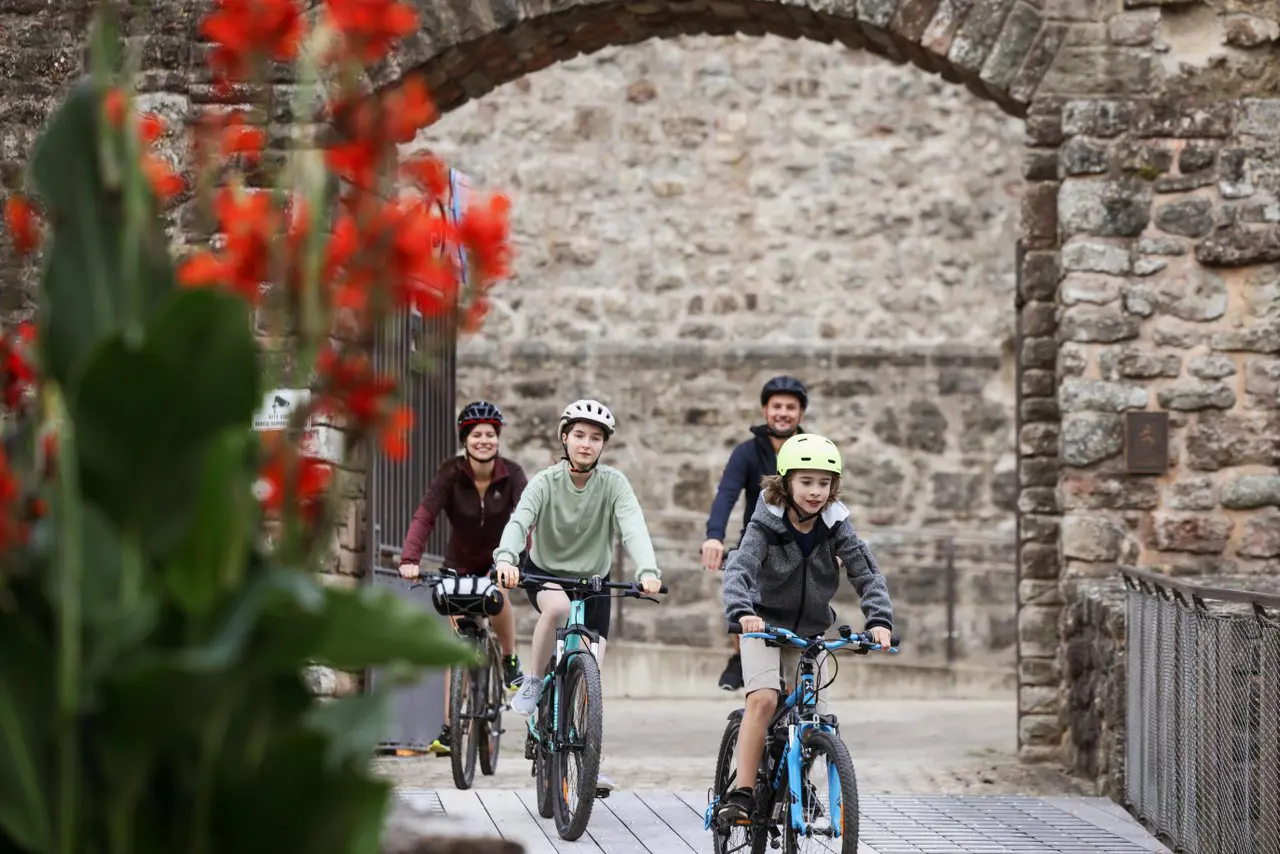
Family cycling in Useldange © Sophie Margue, Visit Guttland
Mini‑Mission for Kids
Find three things Elsy Jacobs might have seen on her training rides.
- a farm
- a forest path
- a village fountain
Children love discovering history through small challenges.
Cycling for everyone
The region also offers low‑threshold or accessible cycling options:
PC 12 – Attert Cycle Path: A flat, wide route ideal for young cyclists, bike trailers, balance bikes, or wheelchairs.
Steinfort – Bambësch Section: Shaded, calm, and perfect for relaxed family rides.
A Mini Cycling Adventure at Home
You don’t need a race to celebrate Elsy Jacobs. Try creating your own little cycling day.
- set up a small obstacle course in the garden
- time a “family hour challenge” (just for fun!)
- tell Elsy’s story as a bedtime or circle‑time tale
- let children design their own cycling jersey
- talk about moments when they showed courage, just like Elsy
Children connect deeply with stories of real people who dared to try.
Word of the Week
Vëlo – Vëloen
Phonetics: [vˈəloː]
Meaning: bicycle – bicycles
Luxembourgish example: “D’Kanner sinn haut mam Vëlo duerch d’Duerf gefuer.”
In English it means: “The children rode their bikes through the village today.”
Recipe: Energy Banana Bars for Little Cyclists
Ingredients
- 2 ripe bananas
- 120 g oats
- 1 tbsp honey
- 1 tbsp oil or butter
- Optional: nuts, chocolate chips, cinnamon
Instructions
- Mash the bananas.
- Mix everything together, then spread on a baking tray.
- Bake for 15 minutes at 180°C.
- Let cool, then cut into bars.
As we celebrate the opening of our new Elsy Jacobs building, I hope her story brings you and your family moments of inspiration, curiosity and joy. Whether you explore her home region or simply enjoy a bike ride nearby, may you find courage in the small things — a steady pedal stroke, a new path, a breath of fresh spring air.
Léif Gréiss
– Isabelle
- This article is part of our “Inside Luxembourg” series, celebrating the stories, flavours and traditions that shape our local culture.