
News
Inside Luxembourg: Culinary heritage
4 March 2026
By Isabelle Frisch-Koopmans
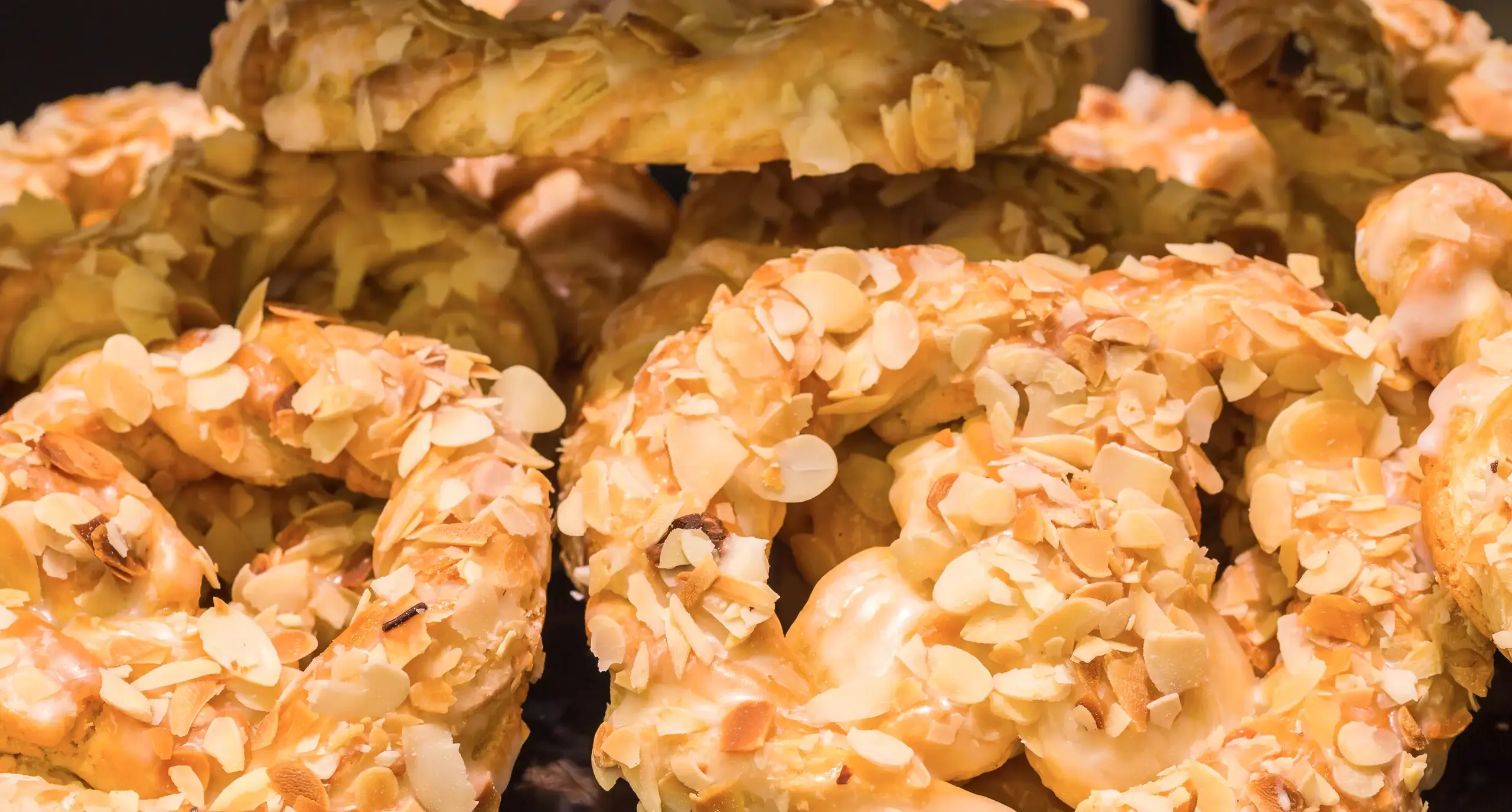
As we move toward Bretzelsonndeg, this special Pretzel Sunday in the middle of Lent, I would like to invite you on a small culinary journey through Luxembourg. On this day, people traditionally give each other sweet pretzels made from puff pastry with icing and almonds (pictured above) – originally as a playful declaration of love. It is a light‑hearted tradition, but it says a lot about how important food is for our relationships and our sense of belonging.
Luxembourg’s cuisine is often described as simple, hearty and comforting, yet beneath the surface it is surprisingly rich and diverse. The Grand Duchy lies between Belgium, France and Germany, and our food reflects that crossroads: French refinement and sauces, German heartiness and preserved meats, Belgian pastries and café culture all meet on our plates. Over time, this mix has created a culinary identity that is both familiar and unique – a kitchen where rural roots and urban creativity coexist.
A Small Country with Big Flavours
Because of its history, Luxembourg’s food culture has always been open to influences from outside. During the Burgundian and later French periods, refined techniques, wine‑based sauces and elaborate presentation entered the kitchens of the nobility and the growing bourgeoisie. From the east, Germanic traditions brought robust soups, sausages, smoked pork and generous portions, often centred around potatoes and beans. Belgian neighbours contributed not only waffles and chocolates across the border, but also a love of fried snacks, sweet bakes and relaxed café life.
At the same time, traditional Luxembourgish cooking remained deeply rooted in local agriculture. Pork, potatoes, beans, cabbage, apples and dairy products formed the basis of everyday meals, especially in rural families. Even today, many of the dishes we think of as typically Luxembourgish grew out of this countryside tradition: practical, filling and shaped by the rhythm of the seasons.
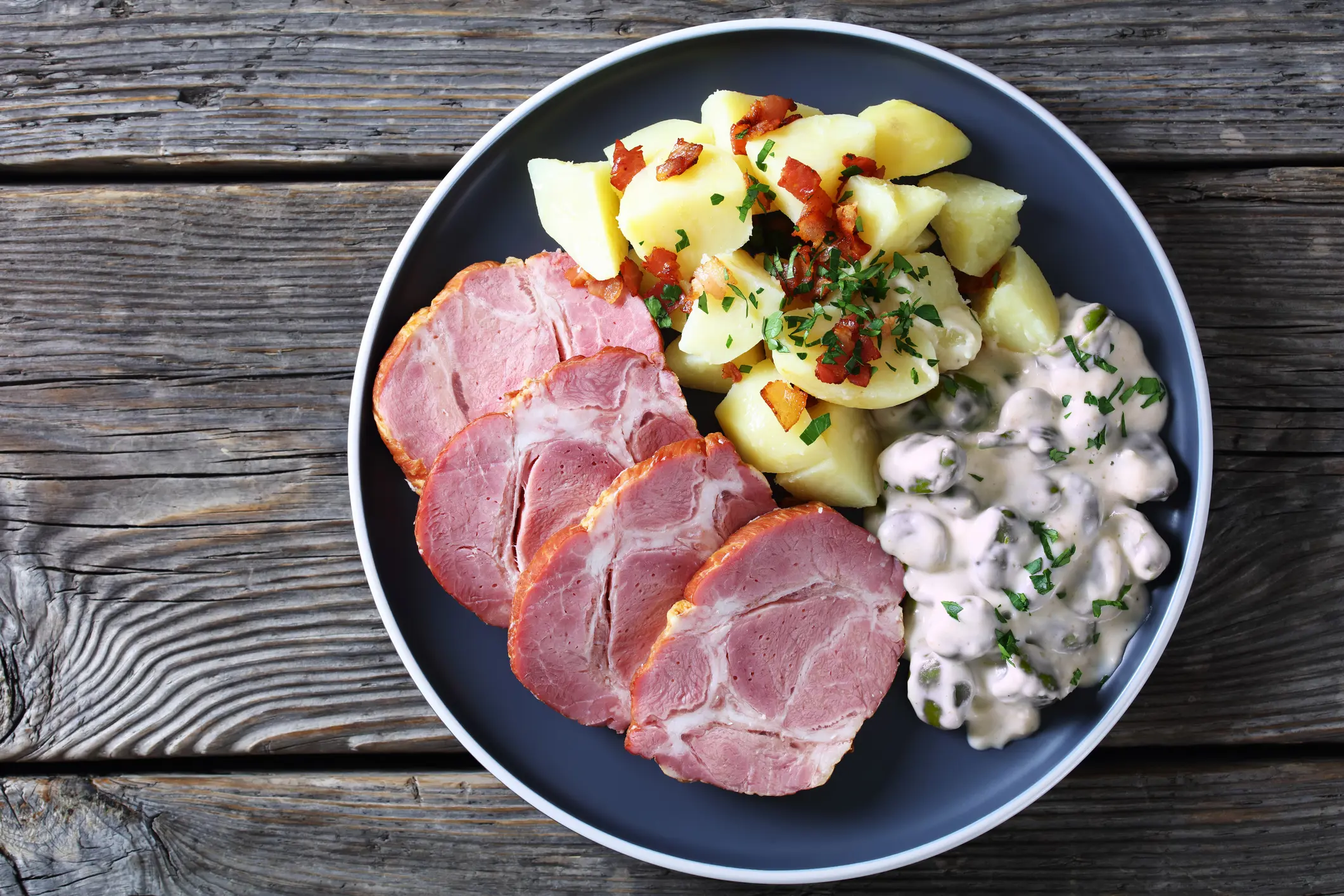
Judd mat Gaardebounen © Dreamstime
Dishes That Tell Our Story
If you look at a typical Luxembourgish menu, you can almost read the country’s history from the plates. Some dishes have become true culinary symbols.
- Judd mat Gaardebounen (pictured above) – smoked pork collar served with creamy broad beans and potatoes, widely recognised as Luxembourg’s national dish and a classic of peasant cooking.
- Kniddelen – simple flour dumplings, often served with a bacon and cream sauce; humble ingredients, big comfort.
- Kachkéis – a melted cheese spread eaten with rustic bread, once everyday food, now a nostalgic speciality.
- Bouneschlupp – a thick green bean soup with potatoes and bacon, perfect for cold days.
- Gromperekichelcher (pictured below) – crispy potato fritters, often sold at markets and fairs, best eaten hot with apple sauce or mustard.
From the Moselle region come dishes that highlight the country’s wine culture.
- Fritür – small fried river fish, traditionally served along the Moselle and still a favourite in riverside restaurants.
- F’rell am Rèisleck – trout in a Riesling wine sauce, a dish that combines local fish with the region’s white wines.
When it comes to sweets, Luxembourg has a rich calendar of seasonal treats.
- Quetschentaart – plum tart that announces late summer and early autumn.
- Bamkuch – a layered spit cake, often prepared for weddings and big celebrations.
- Verwurelter – twisted carnival doughnuts, linked to the joyful excess of Fuesent.
- Boxemännchen – sweet brioche figures given to children around St. Nicholas.
- Sweet Bretzel for Bretzelsonndeg – made from puff pastry with fondant icing and almonds, symbolising affection and, according to some, two lovers intertwined.
Each of these dishes is more than just something to eat; it carries memories of fairs, family gatherings, village festivals and Sunday lunches.
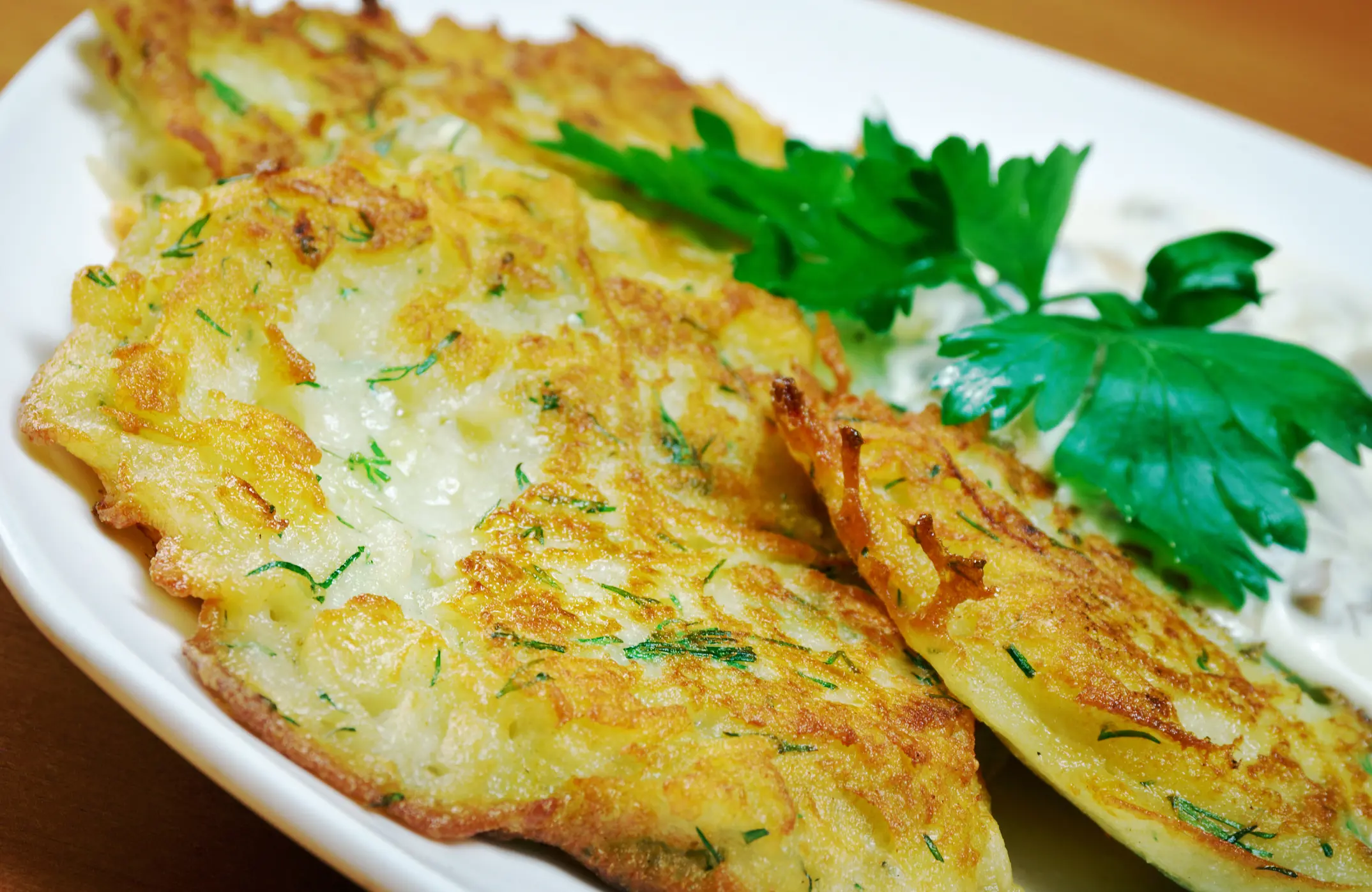
Gromperekichelcher © Dreamstime
A Living Culinary Heritage
Luxembourg’s culinary heritage is not frozen in time. While the classics remain popular, the country has also embraced new flavours. With people from around the world settling here, restaurants and home kitchens now feature Portuguese, Italian, Balkan, Asian and many other cuisines alongside traditional dishes. In many families, it is completely normal to have Judd mat Gaardebounen one weekend and sushi, curry or tacos the next.
What remains constant is the way food brings people together. Cooking for guests, baking for a school event, sharing a Quetschentaart with colleagues – all these everyday gestures keep traditions alive in a quiet, unpretentious way. In that sense, every cook in Luxembourg, whether following a recipe from their grandmother or from the internet, becomes part of the country’s ongoing food story.
Schmulltaart – Luxembourgish semolina custard tart
This Schmulltaart is a light semolina custard tart on a soft yeasted base – simple, comforting and very Luxembourgish in spirit.
Ingredients
- 220 g flour
- 6 g instant yeast
- 35 g sugar
- 120 ml lukewarm milk
- 1 egg
- 40 g soft butter
- pinch of salt
Filling - 500 ml milk
- 90 g fine semolina
- 70 g sugar
- 1 sachet vanilla sugar (or 1 tsp vanilla extract)
- zest of 1 organic lemon
- 2 eggs
- pinch of salt
- Icing sugar for dusting
Method
- Mix milk, yeast and a little sugar, then combine with flour, remaining sugar, salt, egg and butter. Knead to a smooth dough and let rise until doubled.
- Press the dough into a greased 24 cm tin, forming a small rim, and let rest. Preheat the oven to 180°C.
- For the filling, heat milk with sugar, vanilla, lemon zest and salt. Sprinkle in semolina while whisking and cook until thick, then cool slightly.
- Stir in the egg yolks. Beat the egg whites to soft peaks and fold gently into the semolina mixture.
- Pour the filling onto the dough and bake for about 30–35 minutes, until the edge is golden and the centre just set. Let cool and dust with icing sugar.
More Than Food: A Piece of Identity
Luxembourg’s cuisine is much more than a list of specialities – it is a part of how we understand ourselves. In every dish, rural tradition meets foreign influence and daily routine meets celebration. Family recipes are passed on, adapted and reinvented, yet their heart remains the same: sharing food as an expression of closeness, memory and belonging.
Whether it is Judd mat Gaardebounen at a village fair, Quetschentaart in late summer, Fritür by the Moselle or a sweet Bretzel on Pretzel Sunday, these moments create a sense of home that you can literally taste. They speak of Sundays with family, neighbourhood celebrations and long conversations that start in the kitchen and continue long after the plates are empty.
When we talk about Luxembourg’s culinary heritage, we are really talking about how a small country lives its diversity: between French and German, town and countryside, tradition and modern life. Everyone who cooks, bakes, experiments and passes recipes on helps to keep this heritage alive. Perhaps that is the most beautiful thought of all: that our culinary Luxembourg is not something kept behind glass in a museum, but something that is created anew every day at the table.
Luxembourg’s cuisine may not be as famous as that of our larger neighbours, but it carries the warmth of our villages, the history of our borders and the creativity of a country shaped by many cultures. I hope this little culinary journey inspires you to rediscover a favourite dish – or to try something new.
– Isabelle Frisch-Koopmans
- This article is part of our “Inside Luxembourg” series, celebrating the stories, flavours and traditions that shape our local culture.