
News
Inside Luxembourg: Carnival season
4 February 2026
By Isabelle Frisch-Koopmans
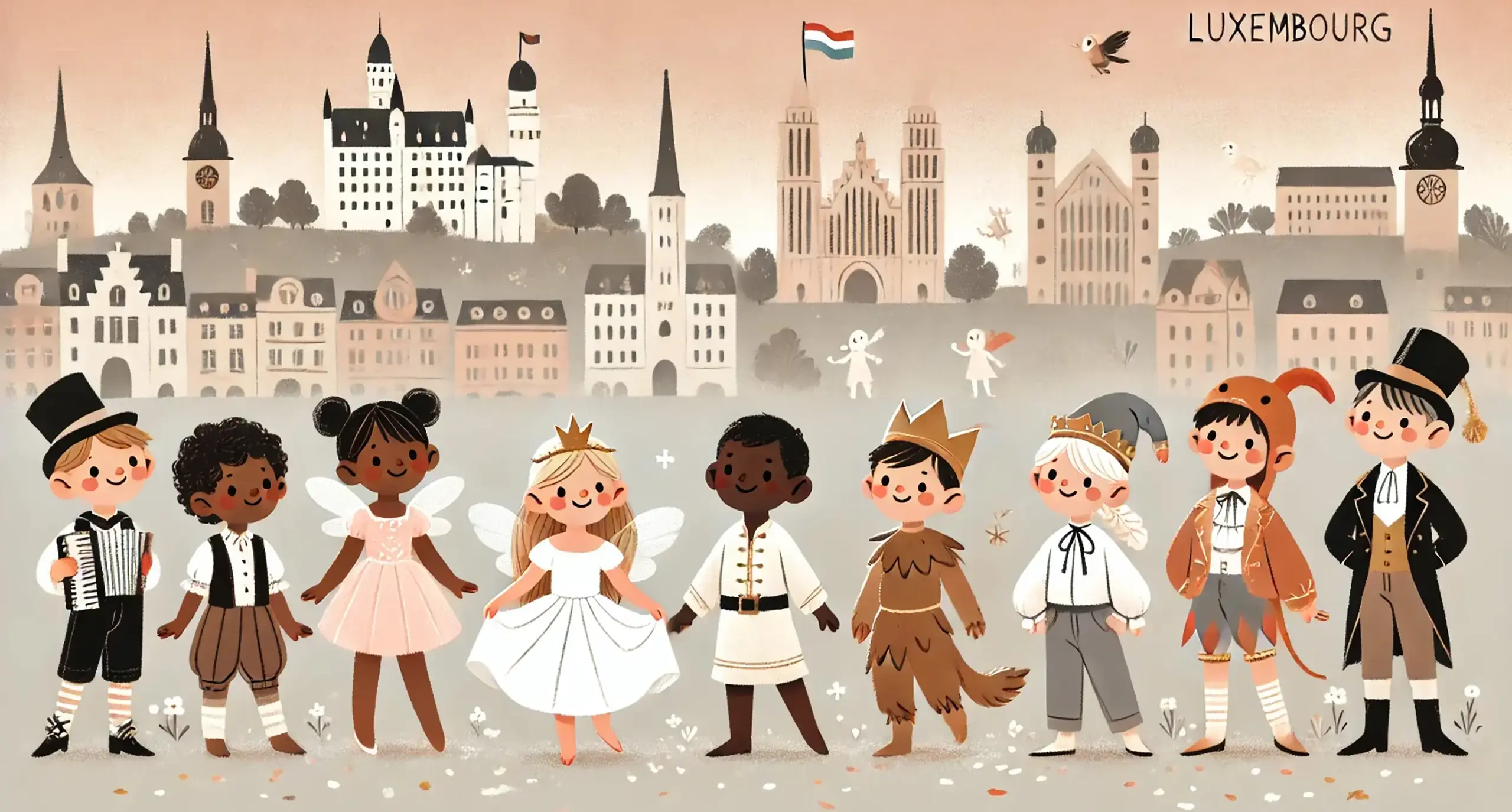
As February begins, Luxembourg enters one of its most colourful and joyful times of the year – Carnival season, known locally as Fuesent.
Carnival season has always held a special kind of magic in our home. My children adored this time of year, crafting colourful decorations at school and celebrating every moment with bright eyes and full hearts. Now they’re grown and although they celebrate differently, the joy is still there. Our daughter is preparing for her final school exams this year and has less time to join the festivities, yet some traditions remain unchanged, especially our cherished ritual of baking Fueskichelcher together. And my son, now a student, will once again dive into the celebrations in one of Germany’s carnival strongholds, even if it’s no longer here in Luxembourg.
And as our own family traditions continue to evolve, it feels like the perfect moment to look beyond our home and revisit the rich customs that shape this season for the whole country.
While many people associate Carnival with parades, costumes and confetti, its roots in Luxembourg go much deeper – and they begin right after Liichtmëssdag, the celebration of light on 2 February. Traditionally, Liichtmëssdag marks the symbolic high moment of the main Carnival period, which continues until Ash Wednesday, the start of Lent.
This week, I would love to take you on a small journey through Luxembourg’s Carnival traditions, from children singing in the streets to the delicious fried treats that fill kitchens across the country.
Historical roots of Carnival
The origins of Carnival reach far beyond Luxembourg and stretch back to ancient times. Long before Christianity, many European farming communities held midwinter festivals to drive away darkness and welcome the returning light. These celebrations often involved masks, loud processions and symbolic acts meant to chase away evil spirits and bring good fortune for the coming year.
With the spread of Christianity, these older customs gradually merged with the church calendar. Carnival became the festive season leading up to Lent, the 40 days of fasting before Easter. The word Carnival is often linked to the Latin expression carne vale – “farewell to meat” – marking the last opportunity to enjoy rich foods before the fasting period began.
In Luxembourg, these traditions blended with local customs, creating the lively and colourful Fuesent we know today. Costumes, music, playful mischief and delicious fried pastries all reflect this mixture of ancient winter rituals and Christian tradition. The season ends on Ash Wednesday, which marks the beginning of Lent and the transition from celebration to reflection.
Carnival traditions across Luxembourg
In many parts of Luxembourg, Carnival is a time for creativity and cheerful mischief. Children dress up, villages organise small celebrations and families enjoy the cosy atmosphere of winter slowly giving way to spring.
A particularly charming custom can be found in northern Luxembourg and in several villages across the country:
On Fetten Donneschdeg (Fat Thursday), children dress up in costumes and walk from house to house, singing Léiwer Härgottsblieschen to wish households good health and happiness. In return, they receive sweets or small coins – a joyful echo of the Liichtmëssdag tradition.
Interestingly, in these villages, a different song is sung on Liichtmëssdag, because Léiwer Härgottsblieschen is reserved for Carnival time. This creates a lovely regional variation that many families cherish.
Sweet treats of the Carnival season
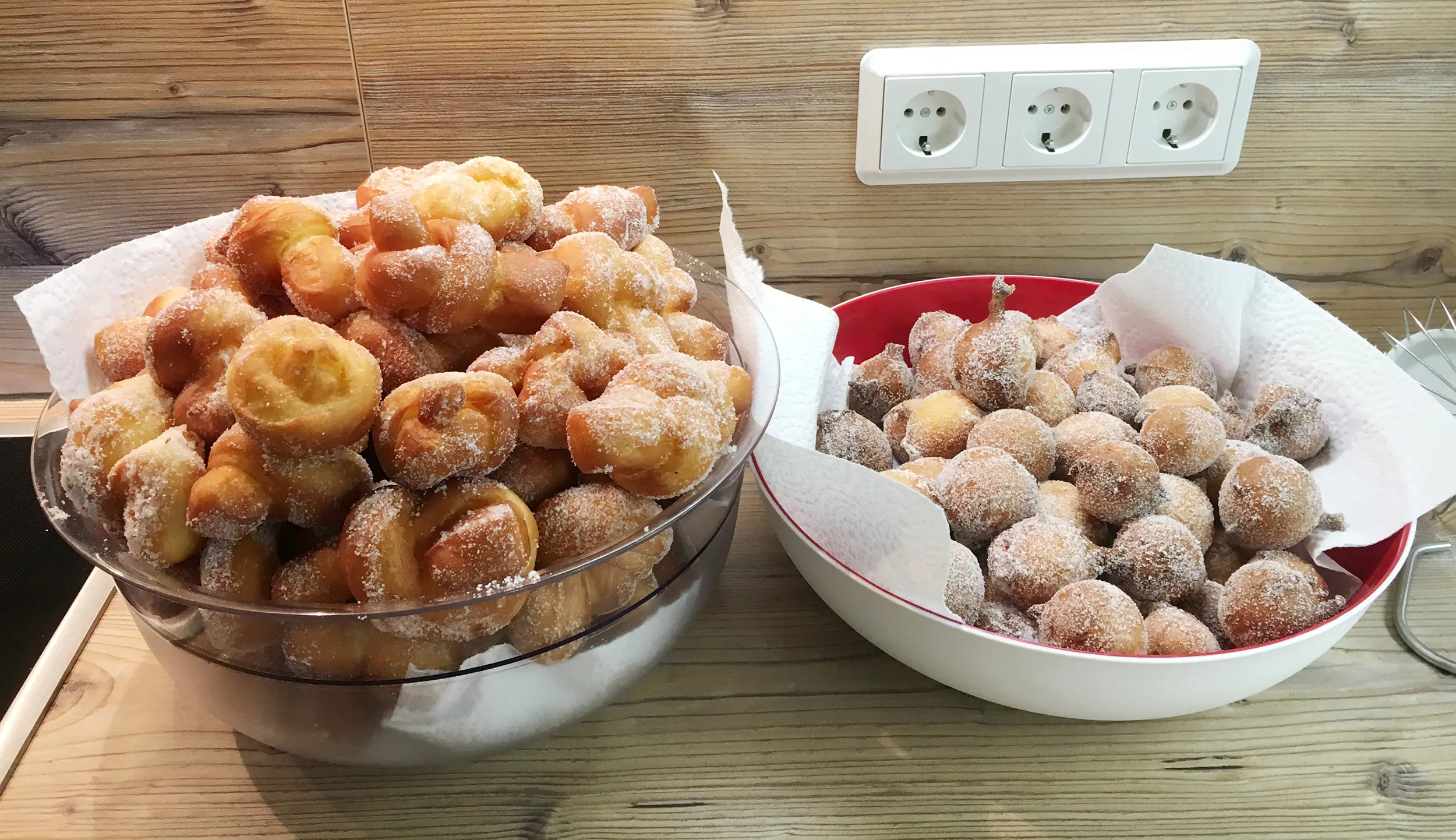
No Carnival in Luxembourg would be complete without its traditional fried pastries. These recipes have been passed down through generations and bring warmth and comfort to cold February days.
Below you will find three classic Luxembourgish Carnival treats you can easily prepare at home.
Fuesend Knots (Fuesend)
Ingredients
- 1 kg flour
- 150 g lukewarm melted butter
- 3 tbsp liquid cream
- 1 small packet of yeast
- ¼–½ L lukewarm milk
- 160 g sugar
- 2 whole eggs
- 3 egg yolks
- 1 pinch of salt
- Powdered sugar
- Oil for frying
Instructions
Mix eggs, yeast and milk. Add salt, cream and sugar. Slowly incorporate the melted butter and the sifted flour. Knead into a smooth dough, cover and let rise. Fold the dough, let rise again, then roll out and cut into strips. Tie each strip into a knot, let rise briefly and fry at 180°C until golden. Drain on kitchen paper and dust with powdered sugar.
Verwuerelter
Ingredients
- 500 g flour
- 125 g melted butter
- 125 ml cream
- 125 g sugar
- 3 eggs
- 1 packet baking powder
- 1 pinch of salt
Instructions
Beat eggs and sugar until pale. Add flour, cream, salt and baking powder. The dough should remain soft. Roll out, cut into strips, tie into knots and fry at 180°C. Dust with powdered sugar.
Nonnefäscht
Ingredients
- 500 g quark
- 3 cups sugar
- 6 eggs
- 2 packets vanilla sugar
- 800 g flour
- 2 packets baking powder
- 1 pinch of salt
- 12 tbsp milk
- 12 tbsp oil
- Oil for frying
Instructions
Mix quark, sugar, vanilla sugar and eggs. Add flour, milk, baking powder and oil to form a dough. Cover and rest for 30 minutes. Heat oil to 170°C. Using two spoons, form small balls and drop them into the oil. They turn by themselves and should be golden but not too dark. Drain and dust with powdered sugar.
Where to see Carnival parades in 2026
If your family would like to experience some of Luxembourg’s Carnival traditions live, several colourful parades will take place across the country in 2026. A selection of child-friendly cavalcades in Diekirch, Kayl, Pétange, Wasserbillig and Remich can be found here on the official Visit Luxembourg website www.visitluxembourg.com/events
Word of the Week
Our word of the week is Fuesent – the Luxembourgish word for Carnival.
Phonetic pronunciation: /ˈfuː.zənt/
Luxembourgish example: "An der Fuesent verkleeden sech vill Kanner." It means: "During Carnival, many children dress up."
Carnival in Luxembourg brings together many small traditions that make this time of year unique – from songs and costumes to the familiar smell of freshly fried Fuesent pastries. I hope this overview gives you and your family a useful insight into the season and perhaps encourages you to explore one or two of these customs at home.
– Isabelle Frisch-Koopmans
- This article is part of our “Inside Luxembourg” series, celebrating the stories, flavours and traditions that shape our local culture.