
News
Inside Luxembourg: Buergbrennen
11 February 2026
By Isabelle Frisch-Koopmans
As the colourful whirlwind of Carnival slowly settles, Luxembourg shifts into a gentler rhythm. Ash Wednesday – Äschermëttwoch – marks this turning point each year. After weeks filled with costumes, music and the joyful chaos of Fuesent, the country takes a collective breath. The days feel quieter, more reflective, yet still deeply rooted in tradition.
In our home, this moment has always carried its own kind of calm. When our children were younger, they would come home still buzzing from school or playing outside during the holidays, only to find the kitchen already filled with the familiar smell of our Ash Wednesday meal – gebakene Fësch – with my homemade remoulade. Even now, with their lives growing busier and more independent, this simple dish remains one of the small rituals that gently anchors us after the festive season.
The Stréimännchen of Remich
One of Luxembourg’s most striking Ash Wednesday customs can be found in Remich. There, the celebrations end with the burning of the Stréimännchen, a large straw puppet carried through town before being set alight on the Moselle riverbank.
The puppet symbolises the end of Carnival — a final, fiery goodbye to winter mischief before Lent begins. Children watch with wide eyes, adults smile knowingly and for a moment the whole town stands together in the glow of the flames. It’s a tradition that blends humour, symbolism and community in a way that feels uniquely Luxembourgish.
Welcoming the light back
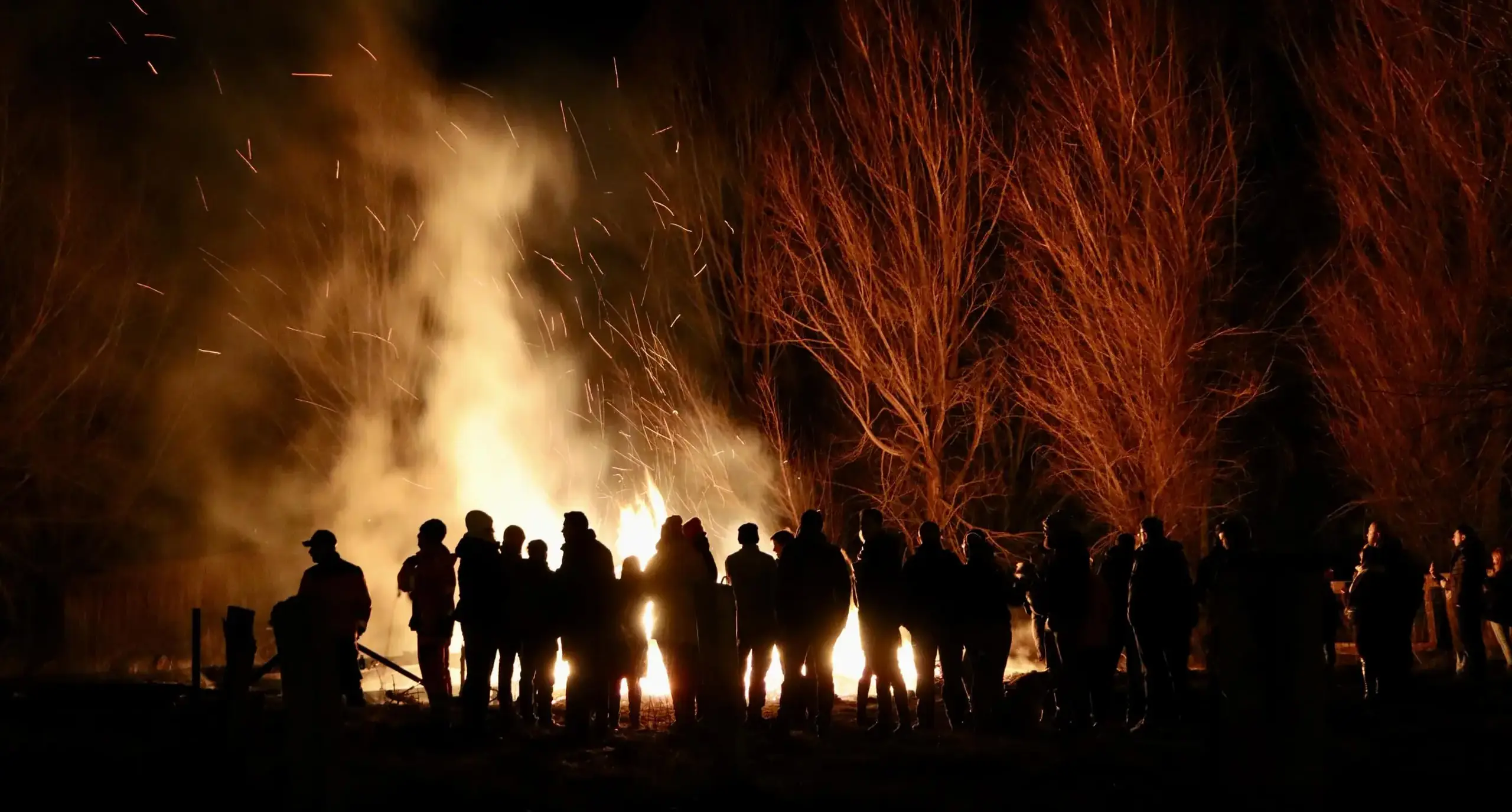
Just a few days later, on the first Sunday of Lent, another fire tradition lights up the country – Buergbrennen.
Across Luxembourg, villages build tall wooden structures — sometimes simple towers, sometimes beautifully crafted crosses — and set them ablaze at dusk. The origins reach far back into pre-Christian times, when communities lit fires to chase away winter and call back the sun. Over the centuries, the custom merged with Christian symbolism, but its heart remains the same: warmth, renewal and the promise of brighter days.
For many families, Buergbrennen is a deeply cherished tradition. It brings the whole village together, creating a moment of shared warmth and celebration.
Gebakene Fësch with Isabelle’s homemade rémoulade and fresh salad
This Ash Wednesday dish is a classic in many Luxembourgish homes. Traditionally, baked fish is served with green salad and French fries — a combination many families look forward to after the indulgence of Carnival.
In our home, though, I prefer a lighter version. The fish itself is already quite rich, so instead of fries I prepare a colourful mixed salad plate: crisp green lettuce, refreshing cucumber salad and a touch of sweet carrot salad. A squeeze of fresh lemon over the hot fish brings everything together beautifully.
Ingredients
For the fish
- Fish fillets (cod, pollock or another firm white fish)
- Flour
- 2 eggs, beaten
- Salt and pepper
- Oil for frying
- Lemon slices (to squeeze over the hot fish before serving)
For the beer batter
- 125 g wheat flour
- 125 ml light beer (lager or a local Luxembourgish beer)
- 2 eggs (separated into yolks and whites)
- 1 tbsp melted butter (or oil)
- 1 pinch of salt
- Optional: 1 pinch of turmeric for a golden colour
Note: The batter is traditionally made with beer, but you can replace it with a mixture of sparkling water and milk. The texture stays light, but the flavour will be slightly different.
Another tradition: Many families eat a whole fish on Ash Wednesday. I prefer using fillets — they are simply easier to enjoy without worrying about bones.
For Isabelle’s homemade rémoulade
- 1 egg
- 200–250 ml oil
- 1 tbsp red wine vinegar
- 1 tbsp mustard
- Salt
- 2 hardboiled eggs, mashed
- Chives, finely chopped
- Parsley, finely chopped
- About 6 small pickles, finely diced
- A splash of cream
- A little pickle brine
- A pinch of sugar
- Pepper & salt to taste
For the salad plate
- Green lettuce
- Cucumber salad
- Carrot salad
Instructions
1. Prepare the beer batter
In a bowl, whisk together the flour, beer, egg yolks, melted butter and a pinch of salt.
If you prefer a lighter version, replace the beer with a mixture of sparkling water and milk — the texture stays airy, but the flavour will be slightly different.
In a separate bowl, beat the egg whites until stiff, then gently fold them into the batter. Set aside to rest.
2. Prepare the rémoulade
Place the raw egg, vinegar, mustard and a pinch of salt in a tall container. Blend with a hand mixer while slowly adding the oil until a thick mayonnaise forms.
Stir in the mashed boiled eggs, chives, parsley and diced pickles.
Add a splash of cream and a little pickle brine.
Season with sugar, pepper and salt until perfectly balanced.
Chill until serving.
3. Prepare the fish
Pat the fillets dry and season with salt and pepper.
If using the beer batter, dip each fillet into the batter until well coated.
If not using batter, prepare three bowls: one with flour, one with beaten eggs, one with breadcrumbs — then coat the fillets in flour, egg and breadcrumbs.
Heat oil in a pan and fry the fish gently until golden and crisp on both sides.
Drain on kitchen paper and finish with a squeeze of fresh lemon.
4. Prepare the salad plate
Arrange green lettuce, cucumber salad and carrot salad on each plate.
(Traditionally, this dish is served with green salad and French fries — I prefer the lighter salad trio and skip the fries, as the fish is rich enough on its own.)
5. Assemble and serve
Place the warm fish next to the fresh salad, add a generous spoonful of rémoulade, and enjoy this comforting Ash Wednesday tradition.
A little musical note
Braddel Babbel has released a new Carnival song this year, and you can now find it directly in the brand‑new Braddel Babbel spp. Search for New Carnival Song 2026
As we move from the colourful joy of Carnival into the quieter days that follow, I hope these traditions bring a little warmth and meaning into your home as well. Whether you join a Buergbrennen fire, visit Remich for the Stréimännchen, or simply enjoy a peaceful Ash Wednesday meal together, may this season offer you moments of light, reflection and togetherness.
And for those who observe Lent, I wish you a gentle and meaningful start to the season.
To all families, I wish beautiful and restful holidays.
– Isabelle Frisch-Koopmans
- This article is part of our “Inside Luxembourg” series, celebrating the stories, flavours and traditions that shape our local culture.