STUDENT JOURNEY
British curriculum explained
Learn about IGCSE, A level and BTEC qualifications at St George’s and how they compare with other options in Luxembourg.
Secondary students at St George's follow a curriculum that combines academic breadth with increasing choice and specialisation. They start with a wide range of subjects in Key Stage 3 before selecting qualifications that reflect their strengths, interests and future plans.
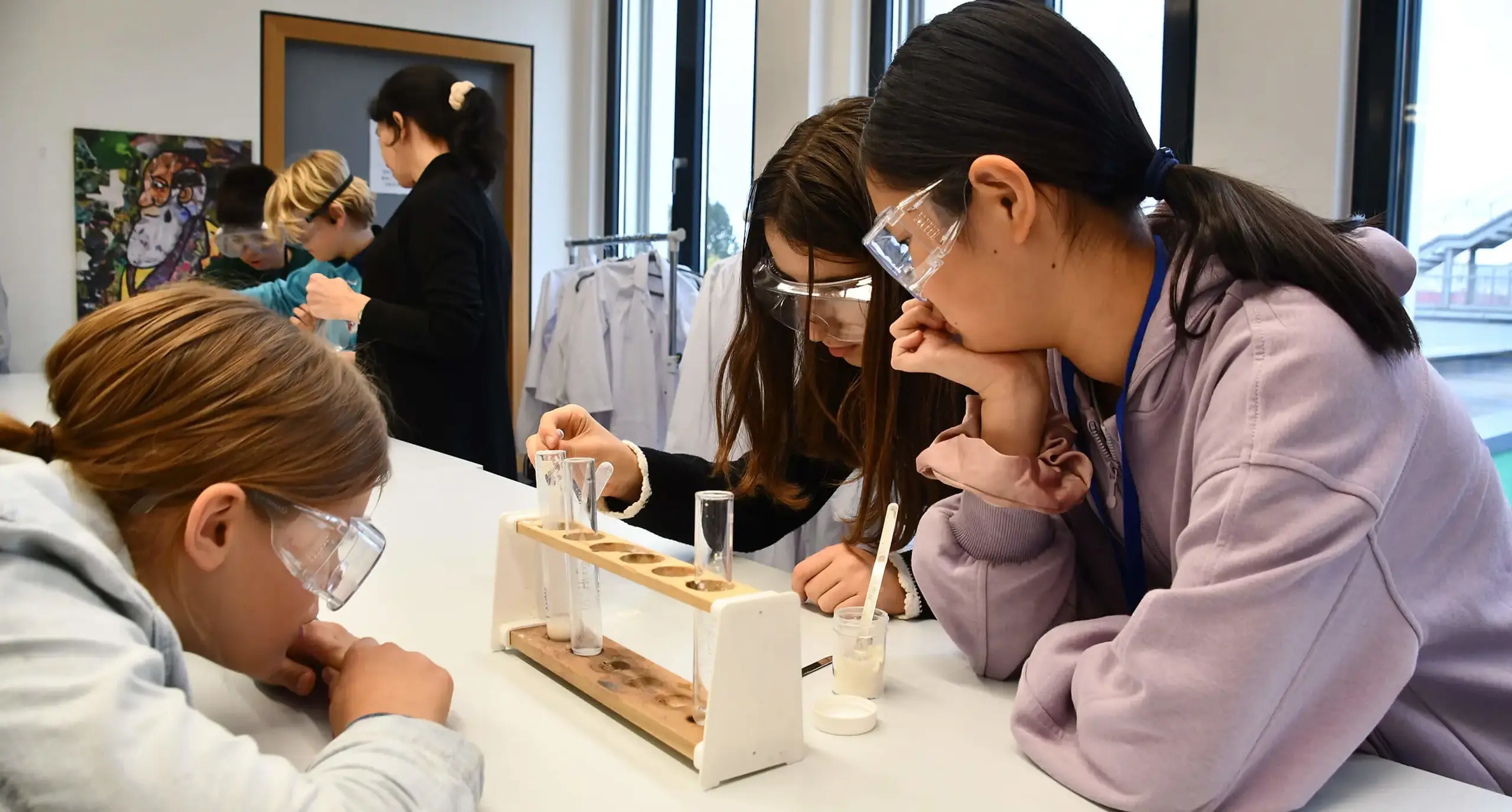
In Years 7 to 9 (Key Stage 3), students study 13 subject areas, including English, mathematics, science, languages, humanities, creative subjects, computing and physical education. This broad curriculum helps students develop essential skills and discover where their interests and strengths lie.
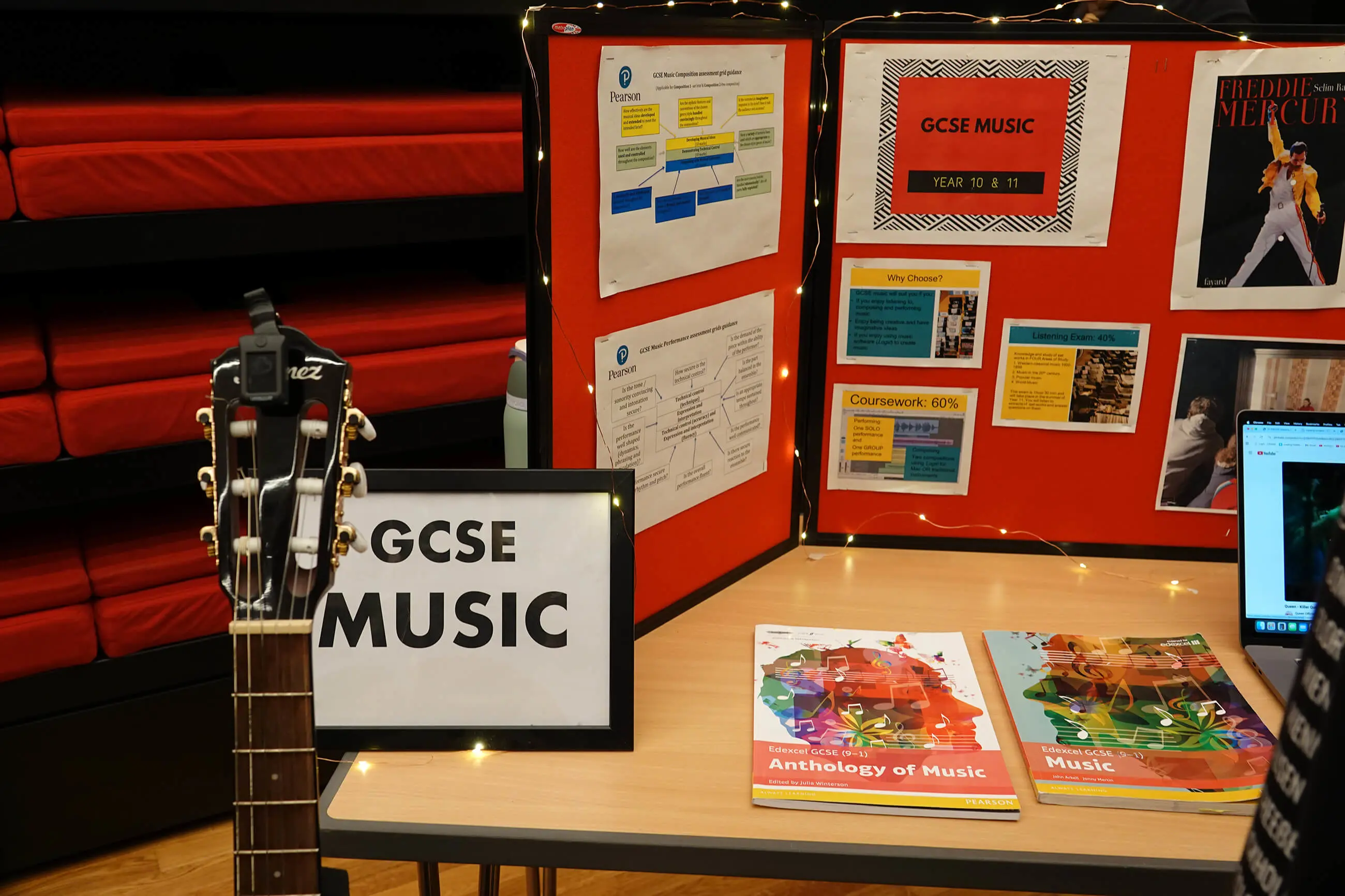
In Years 10 and 11 (Key Stage 4), students work towards a minimum of 10 qualifications, normally through a combination of IGCSEs and, where appropriate, Level 2 BTECs. English, mathematics and science form part of every student’s programme, alongside a range of chosen subjects.
In Years 12 and 13 (Key Stage 5), most students choose three A level and/or BTEC subjects. Some may begin Year 12 with four subjects before reducing their programme to three. Studying fewer subjects allows students to explore them in greater depth and prepare for university, further education or employment.
 Why choose IGCSEs, A levels and BTECs?
This pathway may suit students who want to:
- Focus on their strongest and most relevant subjects
- Combine academic and practical qualifications
- Choose courses that match their preferred way of learning
- Prepare for a particular university course or career
- Develop independence and in-depth subject knowledge
There is no single pathway that is right for every student. At St George’s, teachers, pastoral staff and careers specialists work closely with students and families to help them make informed and ambitious choices.
Contact our Admissions team to learn more about the Secondary curriculum at St George’s.
Frequently Asked Questions
| How many IGCSEs do students take? |
|---|
| Students in Years 10 and 11 work towards a minimum of 10 qualifications, which can be made up through a combination of IGCSEs and Level 2 BTECs. |
| How many A levels do students study? |
| Most students study three A level and/or BTEC subjects in Years 12 and 13. Some students choose to study four A level subjects. |
| How do A levels compare with the International Baccalaureate |
|
The International Baccalaureate Diploma Programme requires students to study six subjects alongside Theory of Knowledge, an Extended Essay and Creativity, Activity and Service. A level and BTEC students usually focus on three or four main subjects. In simple terms:
Both pathways are internationally recognised and can lead to university. |
| How do A levels compare with the European Baccalaureate? |
|
The European Baccalaureate follows a broad, multilingual curriculum. Students continue studying compulsory subjects, including languages, mathematics, science and humanities, alongside optional courses. By comparison, A levels and BTECs allow students to specialise more strongly in their chosen subjects during their final two years of school. |
| Are A levels better than the International Baccalaureate |
| Neither pathway is better for every student. A levels may suit students who are ready to specialise, while the IB may suit those who prefer to continue studying a broader range of subjects. |
| Can students combine A levels and BTECs? |
|
Yes. Where the timetable and subject offer allow, students can combine A levels and BTECs to create a programme suited to their strengths and future plans. |
LEARN MORE
Student Journey
Continue exploring St George's!