News
Exciting and rare Skype session with Fabien Cousteau
26 June 2014
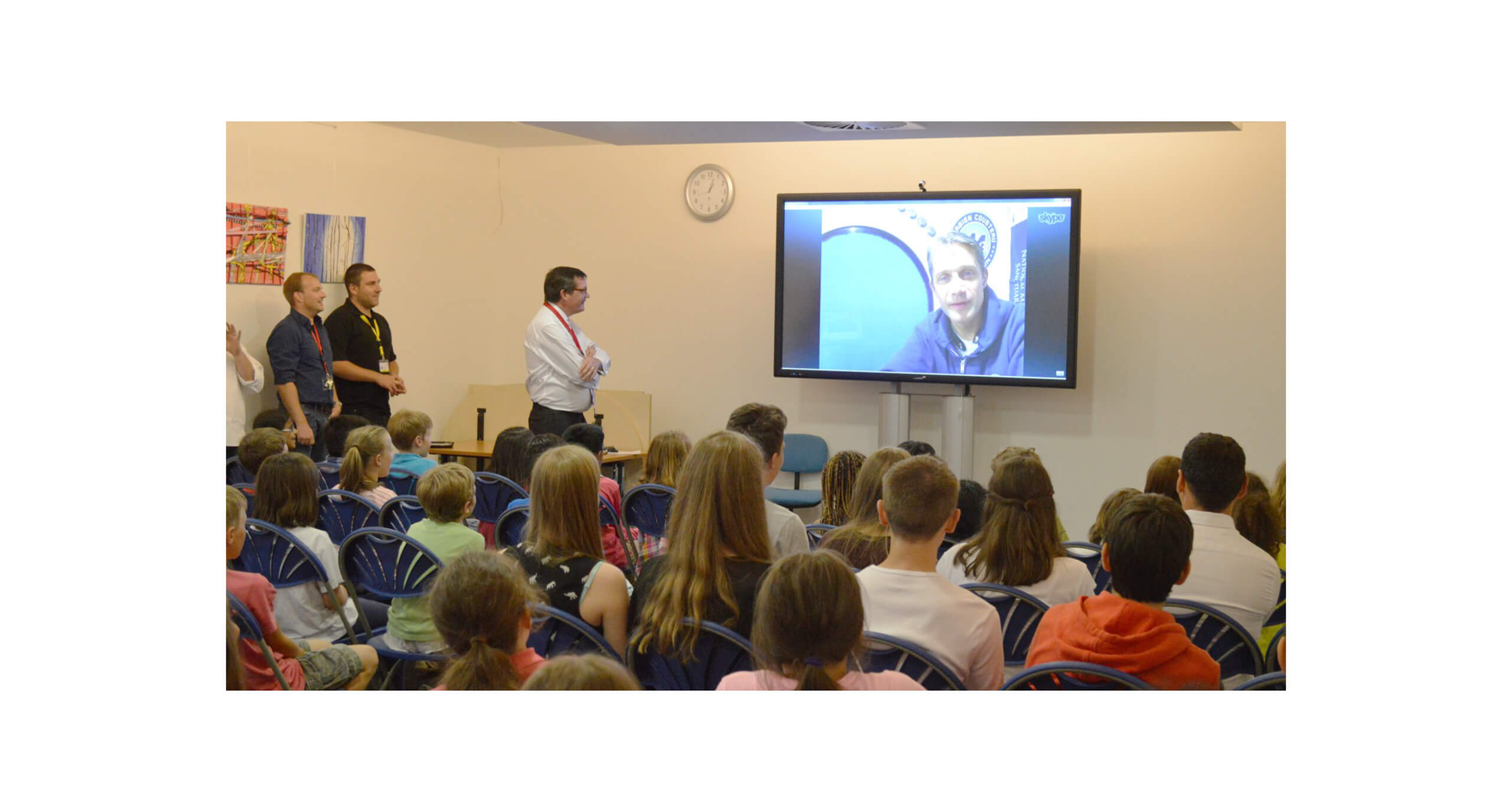
A group of approximately 60 students from Year 4 and Year 10 at St George’s in Luxembourg had the experience of a lifetime on Thursday, 26th June when they were able to have a live Skype session with Fabien Cousteau, grandson of the famous deep-sea explorer Jacques-Yves Cousteau.
Cousteau is heading a 31-day living experiment in an underwater marine exploratory off the coast of Key Largo, Florida. The Aquarius lab, which is approximately the size of a mobile home and shelters six people and their equipment for the duration of the mission, is the only underwater marine habitat and lab in the world. The mission coincides with the 50th anniversary of his grandfather’s ground-breaking 30-day living experiment in the Red Sea.
For over twenty minutes, students were able to ask thought-provoking questions such as “How does your body feel when you’re that far under water?” “Have you discovered any new creatures?” “Do you feel cut off from the rest of the world?” “How was your team chosen?” and “How do you get food and supplies?”
Cousteau explained that the atmospheric pressure is 3 times higher under the sea than on land, meaning that breathing is more difficult and the ears are also more sensitive. Prior to coming back on land, the team will have to close the bulkhead doors and wait for the pressure to slowly readjust before leaving the lab. While on board, the team relies on freeze-dried food packets, using hot water and a microwave to prepare meals. He also said that the US Navy delivers special food and goodies – even M&Ms, as the students were delighted to hear – on occasion.
When asked by the students of the psychological effects of being cut off from the rest of the world for such a long time, Cousteau laughed, made a funny face, and said that he actually did not miss the outside world. The lab is fitted with wireless internet and Skype, meaning that participants are able to connect with friends and family, but Cousteau said that he did not miss anything and was “at peace” in the lab – although he admitted it may be very enjoyable to breathe in some fresh air. The team will re-surface on Wednesday, 2nd July.
The Mission 31 team is spending their time underwater observing predator and prey behaviour, sponges, and the effects of pollution on the water environment. He said that the underwater living arrangements make it possible to conduct six months of research in as little as 17 days, without the necessity of arranging several different dives. He hopes that the experiment will inspire future aquanauts to attempt even longer underwater missions.
Mrs Smith, one of the teachers organising the event along with Skype, wrote: “It was a huge success and I know that the children and staff who were present really learned a lot about his research. He is a very charismatic and inspiring explorer.”
Click here to view an article about mission 31 in The Guardian.